

Gathering marked international Drug Poisoning Awareness Day


MOUNT FOREST – Community members and organizations gathered in downtown Mount Forest on Aug. 20 to mark international Drug Poisoning Awareness Day, which falls on Aug. 31.
The event saw more than 10 local organizations and plenty of community members come together to recognize and support those struggling with substance addiction as well as mourn and remember those lost to drug poisoning.
“We are here because every one of us has seen or felt the impact of the toxic, unpredictable, unregulated drug supply in our communities,” said Mount Forest Family Health Team peer coordinator Joe Wettlaufer during the event.
“Whether through the loss of a loved one, supporting someone who uses substances, or witnessing the ripple effects across our community, these harms touch all of us.”
He added, “This event will honour those who have died from drug poisoning, support individuals and families who continue to grieve and raise awareness about the importance of compassionate, health-focused responses and services to help prevent future loss, as communities continue to face the toxic and unpredictable, unregulated drug supply.
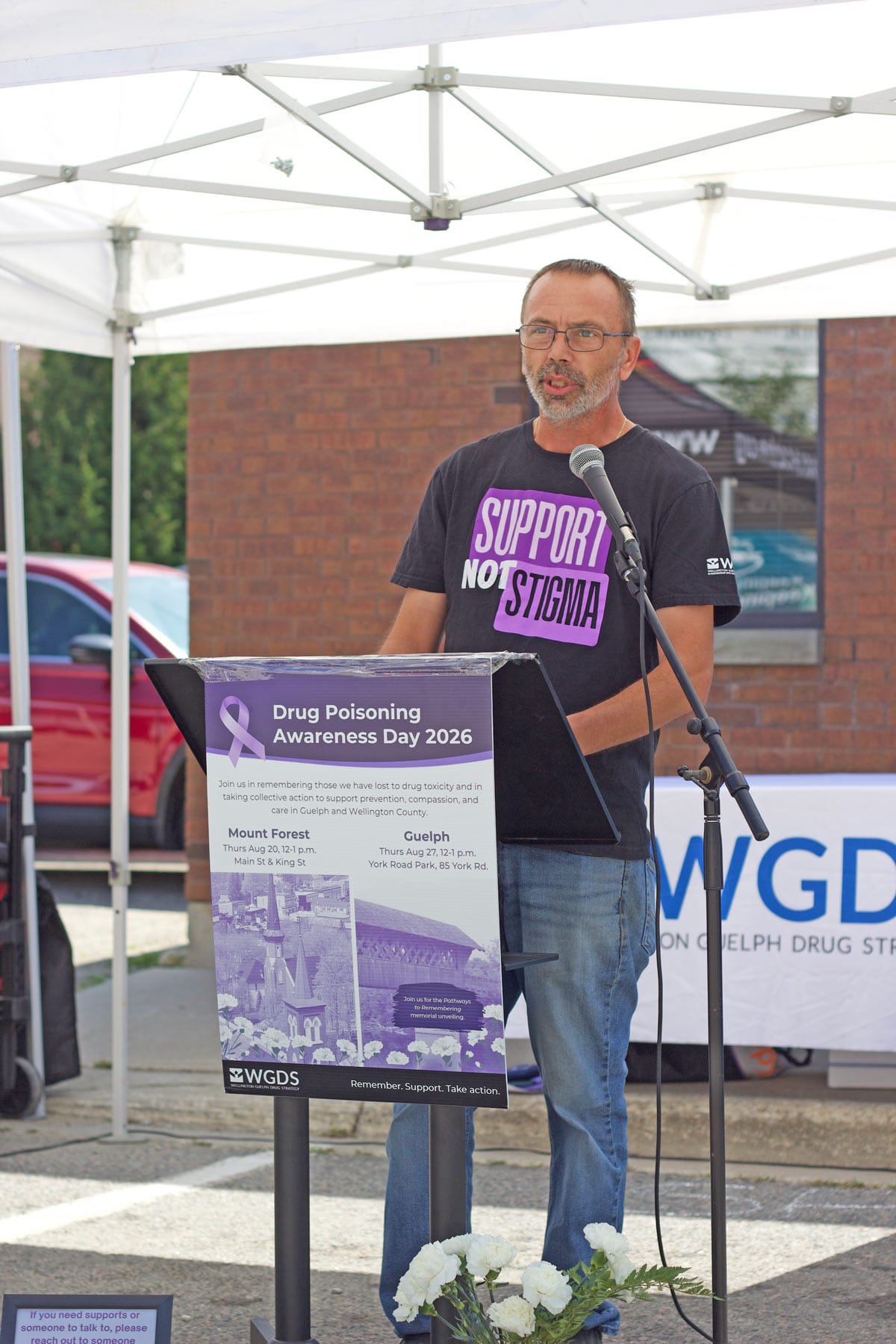
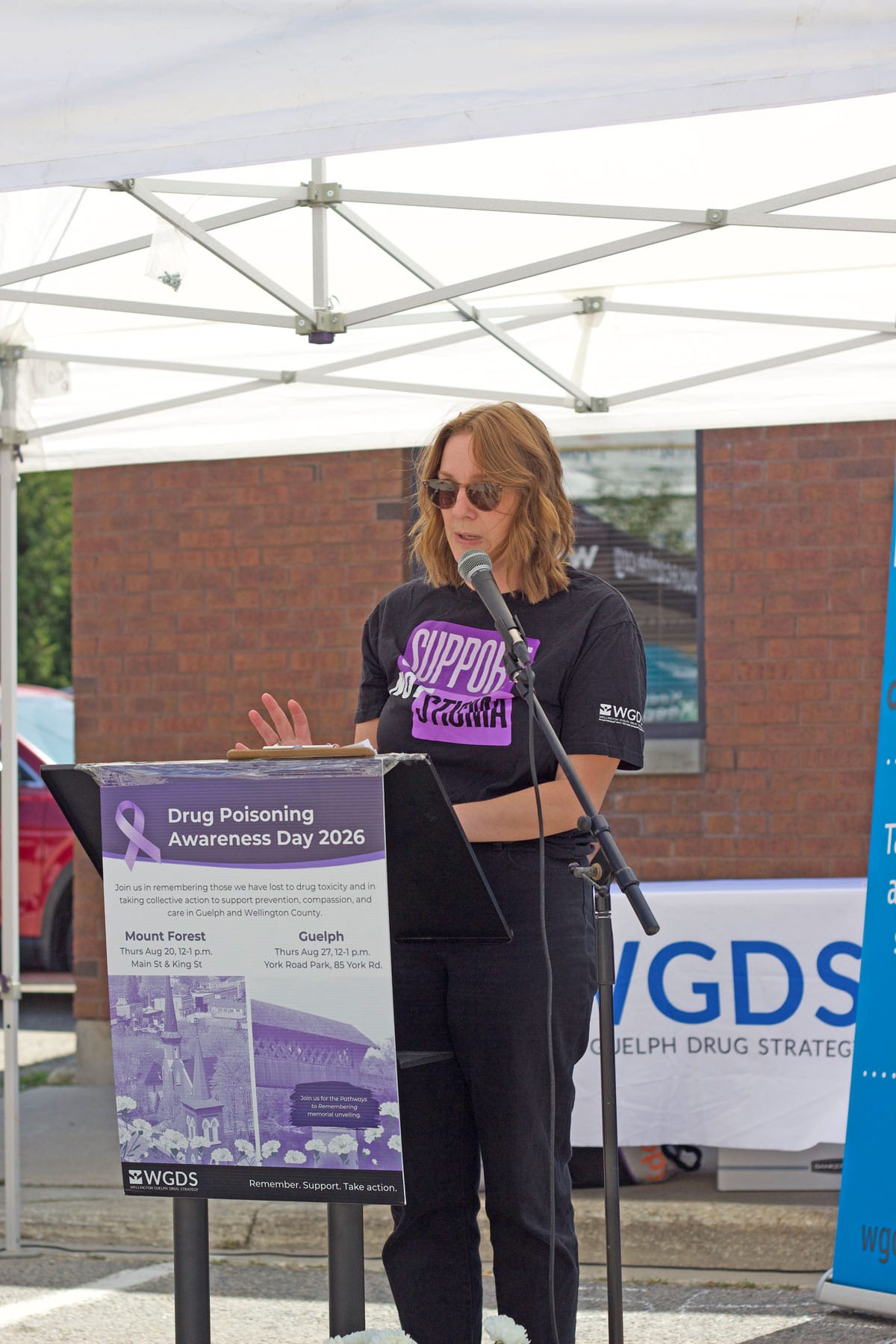
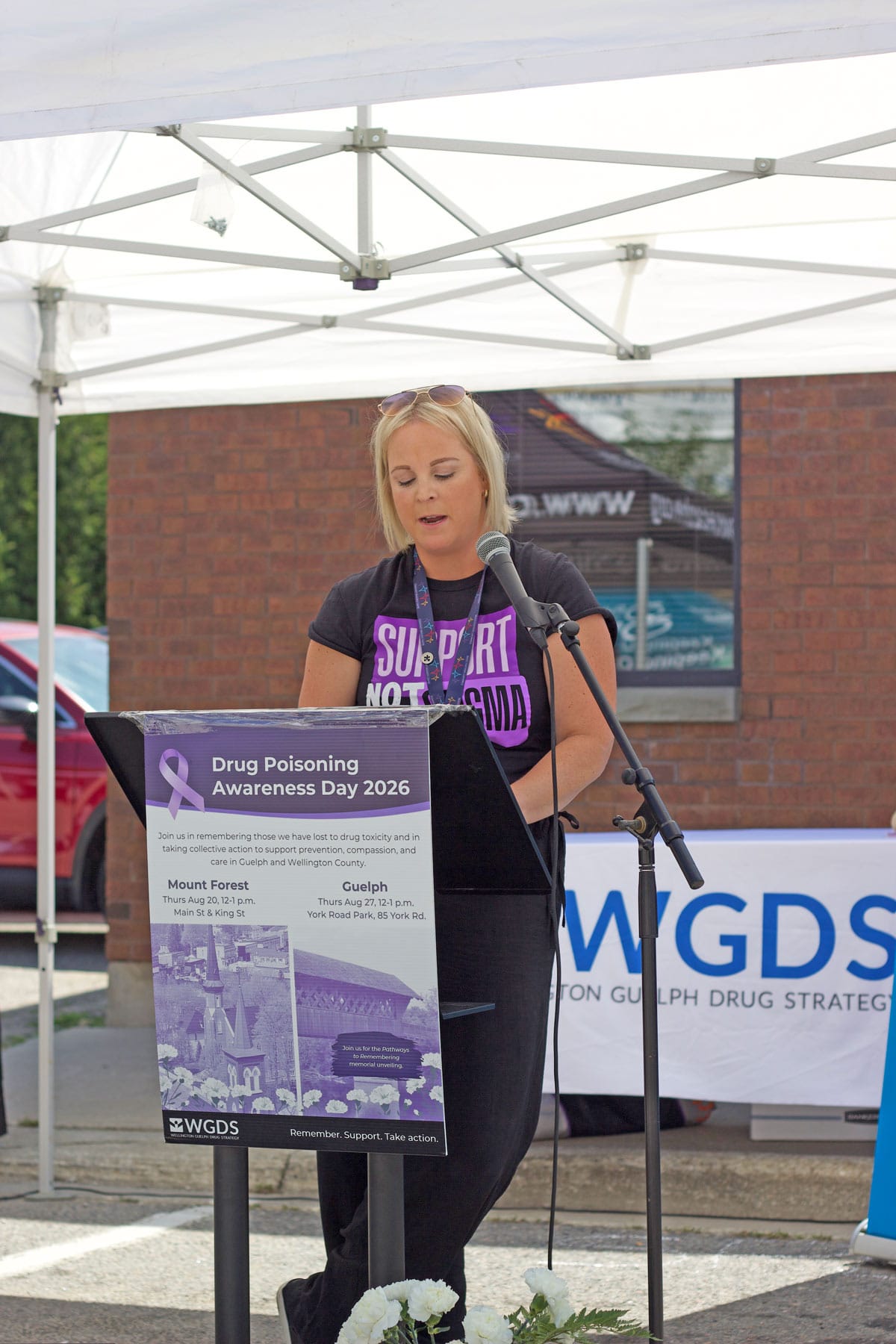
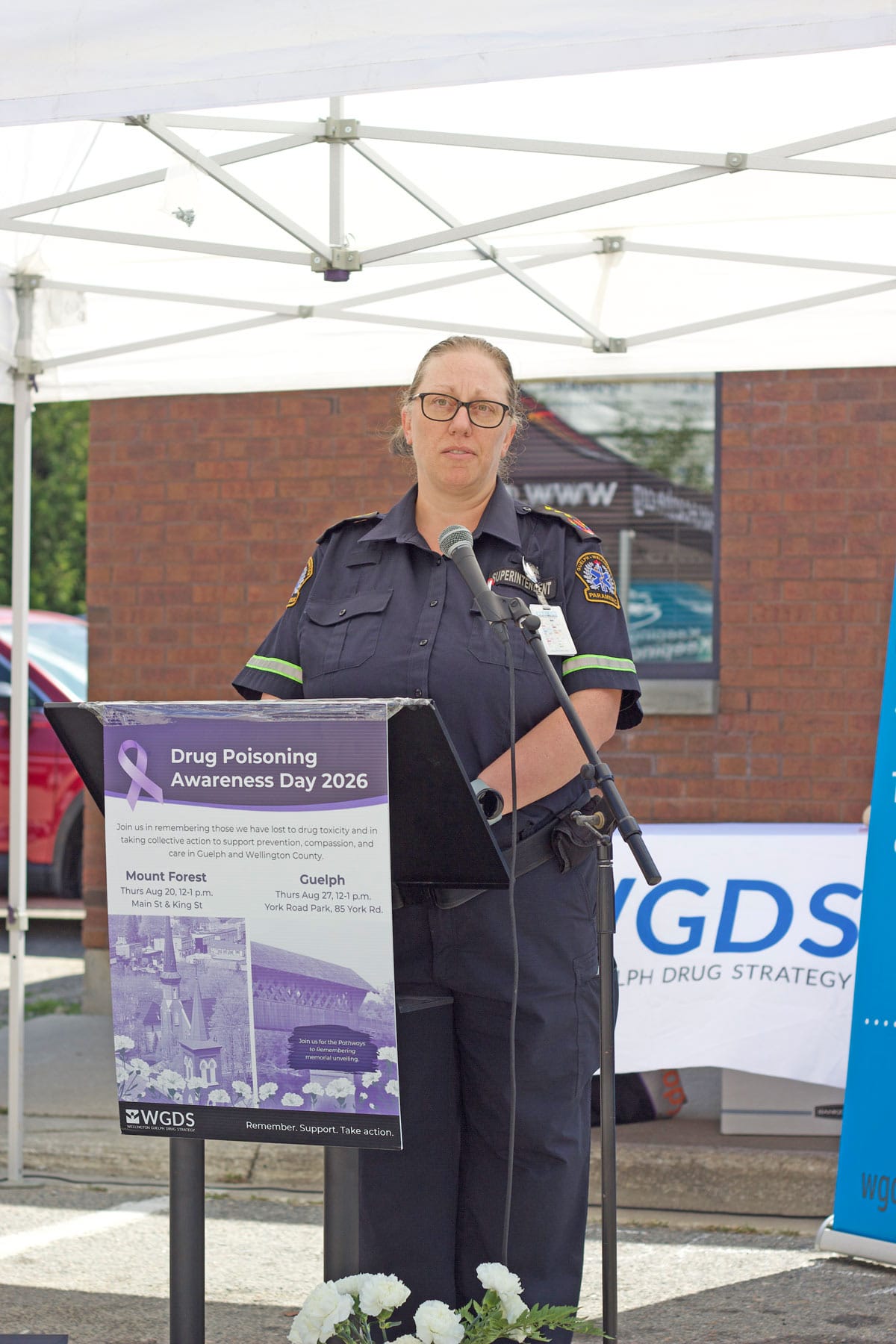
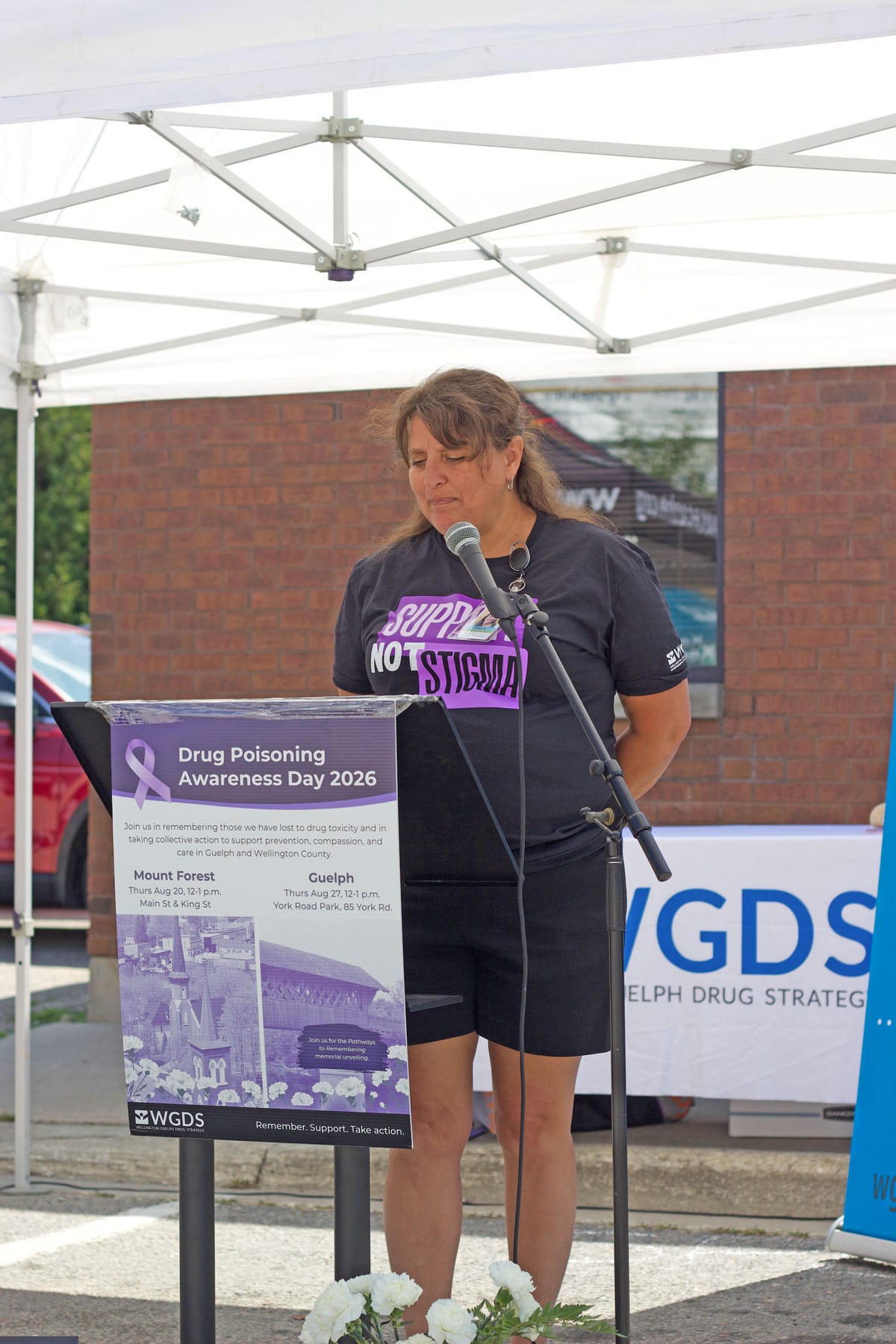
Drug Poisoning Awareness Day – From left, Mount Forest Family Health Team peer coordinator Joe Wettlaufer, Wellington Guelph Drug Strategy manager Jean Hopkins, Community Resource Centre of North and Centre Wellington community outreach and support services manager Lauren Carney, Emily Cooper of the Guelph-Wellington Paramedic Service Community Paramedic Program and Wellington North primary care peer worker Angie Mitchell. Photos by Ellouise Thompson
“Drug Poisoning Awareness Day serves as an opportunity to remember, learn and come together for those that have been impacted within our communities,” he said.
Wellington Guelph Drug Strategy manager Jean Hopkins stressed the importance of language when discussing substance use.
“Communities mark International Overdose Awareness Day at the end of August, and here we intentionally call it Drug Poisoning Awareness Day, and that language matters,” she said.
“It matters because it shapes how we understand what we’re seeing in our community. And when we talk about drug poisoning, we’re recognizing that harm is not simply the result of someone using too much of a substance. It really is about a toxic and unpredictable drug supply.”
Hopkins added, “Often, people don’t know what’s in their substances, or how potent they might be. And the word poisoning helps us to put the focus where it belongs, on the toxicity of unregulated substances and the conditions that put people at risk.”
According to Hopkins, officials are seeing an increase in the presence of tranquilizers like medetomidine and other substances in the unregulated drug supply, something she says is “making how we respond to drug poisonings more complex.
“This is one of the reasons why it’s so important that we understand substance use as a health issue. It is not a moral failing, and it can’t be addressed through judgment and stigma.”
She added, “A health-focused approach recognizes that substance use impacts people from every background, every age and every walk of life. And just like any other health issue, there is no single path. People need different types of supports at different times, and to be met with dignity and compassion, no matter where they might be on their journey.”
Hopkins shared data with the crowd, citing the 879 reported drug poisonings across Guelph and Wellington County since Jan. 1, 2025.
“These are not just numbers; they represent 879 moments when someone’s life was at risk, and when families, friends, first responders and community members were impacted. And sadly, some of those incidents have also ended in loss,” she said.
Of the 879 incidents, there have been 55 fatalities with 37 of those deaths occurring within Wellington County.
“Across Canada, we lose approximately 15 people every day from drug poisonings, and there are some new reports that show that we’re beginning to see some of those fatalities trend downwards in some areas of the country, and that’s really encouraging,” said Hopkins.
“The Public Health Agency of Canada said that this decline is linked to public education, to wider ... access to naloxone and harm reduction measures that help to keep people alive.”
Lauren Carney from the Community Resource Centre of North and Centre Wellington shared a story written by a woman named Stephanie about her brother-in-law Nick, who passed due to drug poisoning.
“What would become of you and your relationship to your nephew and niece? That is the question I ask myself almost daily,” reads the letter.
“Nick started using out of high school and went down a rough road.
“He was witty, smart and knew everything about everything with an engine. He was the type of person who loved life, the fast lane and [was] one of the best truck drivers you would find out there.
“He was with some friends in Hanover using, and unknown to him, his drugs were laced, and when he became unconscious, his friends called 911 and then left the location.
“When the ambulance arrived, they found him with his dog. They administered Narcan, I believe three times in total, and rushed him to the hospital where he never recovered,” the letter states.
“That’s right, they left him there, and when Nick’s mom asked them why they left him there, they said they didn’t want to get into trouble, but at least they called for help.
“That’s true. They called for help, but at the same time, it was too late.
“Had they administered Narcan while calling 911 and stayed, maybe he’d still be here.
“Maybe he’d be teaching his nephew all about driving, everything John Deere and everything that an uncle can teach.
“My kids do not really remember their uncle, but I will keep telling the stories of the Nick I knew.”
Emily Cooper from the Guelph-Wellington Paramedic Service Community Paramedicine Program shared her thoughts on the crisis from a medical perspective.
“Drug poisoning is a medical emergency that paramedics see far too often in homes and in shelters, in urban settings and rural settings, in people of many ages and stages of life,” she said.
“Paramedics see the lives that have been lost, and the grief of the friends and the family is still here.”
Cooper added, “Drug poisoning awareness is about readiness, compassion and rapid action. Learn the signs, avoid using alone. Access overdose prevention services where it’s available. Carry naloxone. Call 911.
“From the paramedic perspective, the best outcome often begins before the ambulance arrives, with a bystander who recognizes the emergency and chooses to act.
“The drug toxicity crisis is real, and our collective awareness and action could save lives.”
Last to speak was Angie Mitchell, a primary care peer worker for Wellington North who shared a poem reflecting on the grief of losing a loved one to drug poisoning:
At the rising of the sun and at its going down, we remember them.
At the blowing of the wind and in the chill of winter, we remember them.
At the opening of the buds and in the rebirth of spring, we remember them.
At the blueness of the skies and the warmth of summer, we remember them.
At the beginning of the year and when it ends, we remember them.
As long as we live, they too will live, for they are now a part of us as we remember them.
When we are weary and in need of strength, we remember them.
When we are lost and sick at heart, we remember them.
When we have decisions that are difficult to make, we remember them.
When we have achievements that are based on theirs, we remember them.
For as long as we live, things we will live, for they are now a part of us, and we remember them.
Following the speaker presentations, visitors were invited to participate in a “die-in” or a “chalking” – an activity where one person traces the other leaving behind an outline to represent someone lost to drug poisoning.
By the end of the activity more than 30 outlines were scattered across the sidewalks, some with the names of those lost, which were read.


