

Little Tree nursery on the native-plant track


FERGUS – Little Tree Garden Market in Fergus is not only following the native gardening trend, in some respects, it is leading the way.
Manager Barry Vanderveer, known online as “Plant Daddy B,” said the business has stopped selling invasive plants and is increasing its stock of native plants – a trend that helps the pollinator population and improves the environment.
“It’s important to incorporative natives into the garden, now more than ever,” he said.
“People garden as a hobby and for their personal benefit. I want to hear that people are gardening to help the environment. And it’s my responsibility to bring that philosophy to the people.”
Mikhail Maksymuk and Rhys Lampkin work at the nursery and call themselves “native plant enablers.”
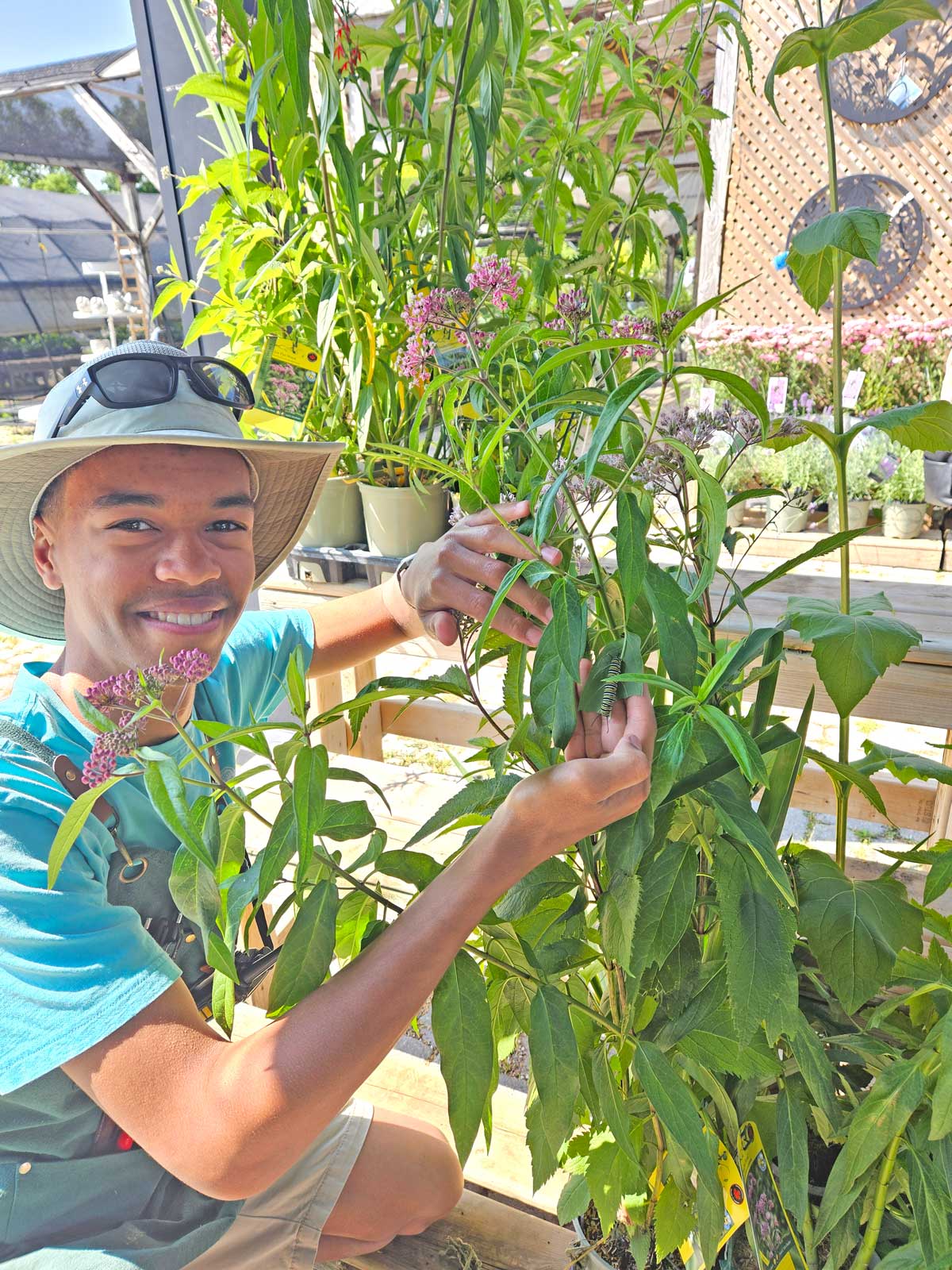
During a tour of the garden centre, they pointed out pollinator plants and discovered a monarch caterpillar on a milkweed plant.
Monarch butterflies might feed on many different plants, but they only lay eggs on milkweed. And monarch caterpillars need to eat milkweed leaves in order to grow and transform into butterflies.
So even though the word weed is in its name, milkweed is a good native plant to have in your own garden.
“We are losing biodiversity every day,” Maksymuk said. “If every person had one native plant in their garden, it would make such a difference.”
Maksymuk and Lampkin are passionate about native plants and agree there needs to be a shift among gardeners around what is considered beautiful.
Native plants get tall. They get sloppy in late summer and their flower heads, when finished blooming, need to be left on the plant and not deadheaded because pollinators are still feeding.
Also, expect bugs. That’s what pollinators are, after all – bees, butterflies, flies and wasps. They will not only pollinate your plants, but might eat them too.
Native plants are also drought-tolerant, disease resistant and tend to be rabbit resistant too.
Lampkin is a student of landscape design at Fanshawe College, and the focus is on pollinator plants there too.
“We have the opportunity to focus on the future. Designers have to look at the bigger picture,” he said.
This applies to garden hobbyists planning their own gardens.
“You don’t have to get rid of everything,” Maksymuk emphasized.
“Make your goal 25 per cent native,” Lampkin added. “Start with one plant.”
As Little Tree has increased its supply of native plants, “the amount of species diversity here is incredible,” Maksymuk said.
“Natives work. They are easy to grow and can handle drought.”
Maksymuk and Lampkin can suggest native alternatives to the non-native plant you might be looking for.
Miscanthus is out but little bluestem grass or switch grass are in. Instead of periwinkle or goutweed, plant wild ginger or Canada anemone. Instead of daylilies or hostas, plant purple coneflower or black-eyed susans.
Little Tree sells native plant kits with collections suited to sun, shade, wet or dry conditions.
But gardeners with a little know-how can put together their own collections.


