


‘Do I not have value?’ Centre Wellington woman pleads for access to drug to treat rare disease
Lisa McColeman says time is running out as province refuses to fund only Health Canada-approved treatment for rare bone condition

CENTRE WELLINGTON – A local woman with a rare genetic bone disease is pleading for help to access a potentially life-changing but prohibitively expensive drug.
Lisa McColeman has lived with weakened bones her entire life. Growing up on a farm in the 1970s, she broke bones falling off a teeter-totter and slipping on ice.
She said she also had weak teeth and experienced breathing trouble and clumsiness.
"I just thought I had really poor health and I just got the short end of the straw," she told the Advertiser.
“Why can't I run like the other kids at school?” she asked herself. “I just figured that was just the way I was made.”
McColeman wouldn’t find out why her bones so easily broke until she was in her early 50s.
After her daughter suffered several fractures, Hamilton rheumatologist Jonathan Adachi began questioning a genetic link and started ordering blood tests.
Results showed low alkaline phosphatase, an enzyme bones need to properly harden. Following genetic testing, McColeman, 52 at the time, was diagnosed by Adachi with paediatric-onset hypophosphatasia (HPP) in 2020.
The rare genetic condition has left McColeman’s body unable to produce enough of the enzyme needed to build and heal her bones.
Adachi, who has treated bone diseases since 1984, said he has diagnosed 12 patients with HPP since it arrived on his radar around 15 years ago.
For McColeman, the diagnosis provided an answer – “it put a lot of pieces together” – but a treatment that could improve her quality of life remains out of reach.
Priced out of treatment
Bisphosphonates, the most commonly prescribed osteoporosis drugs, are not only ineffective for HPP but increase fracture risk.
Strensiq (asfotase alfa), the only Health Canada-approved drug to treat HPP, is an enzyme replacement therapy given by injection that supplies what McColeman’s body can’t.
It was approved for adult and paediatric use in Canada in 2015, but is priced by manufacturer Alexion (owned by AstraZeneca) at more than $2 million per year, and must be taken for life.
What provinces actually pay is lower and confidential.
Adachi called the drug “groundbreaking” and said it offered HPP sufferers a chance at a relatively normal life.
“It could turn her life around; right now she’s in constant pain, right now she’s afraid to do anything,” Adachi told the Advertiser.
Canada's Drug Agency (then the Canadian Agency for Drugs and Technologies in Health) recommended in 2017 that public plans fund the drug only when treatment begins in childhood, citing both the limited evidence of benefit in adults whose growth plates have closed and the higher cost of treating them.
However, provinces set their own funding rules.
“Since [2017] there have been adult trials that have been done … that data would suggest [Strensiq] does work in adults as well,” Adachi said.
Ontario’s Exceptional Access Program, a case-by-case drug coverage program, won’t fund the drug unless a patient is diagnosed before turning 12 and treated before turning 18.
Adachi said he has applied three times without success.
“What we want to be able to do is to treat her,” Adachi said. “She’s losing out, it’s really frustrating.”
McColeman, a retired teacher of nearly 30 years and co-owner of LangSon Farms near Fergus with her husband Rob, is making a final plea for her life.
“I’m only 58. Do I not have value? Does my life not count for something?” she said.
“I just want them to take the time to actually get to know me, to know my story.”
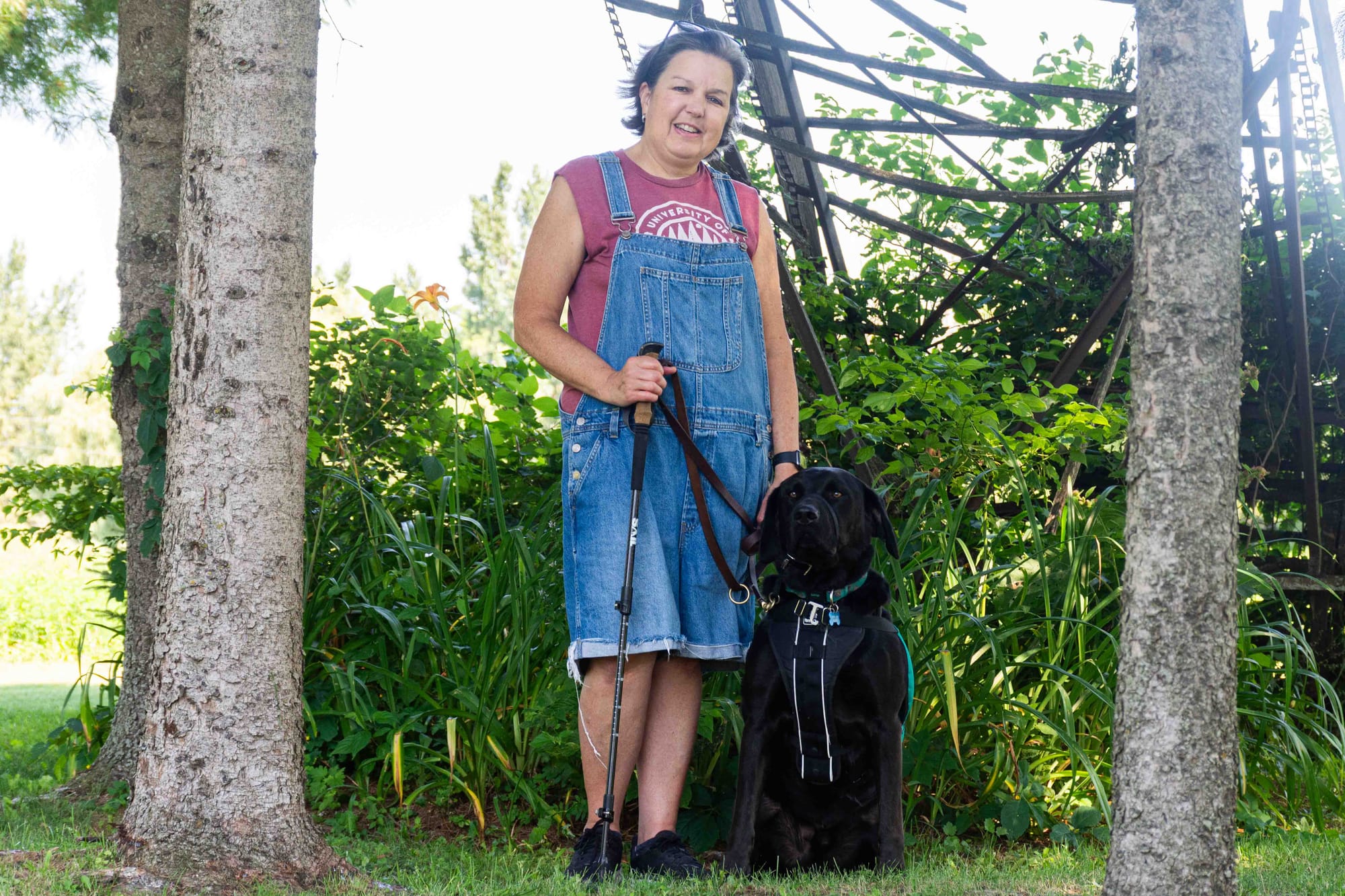
McColeman ran to stay healthy and carried 50-pound feed bags around the farm.
Now she can't lift anything over 10 pounds, climb stairs, walk beyond flat ground without a pole, or play with her grandchildren.
And constant pain means taking medication to manage what little she's still able to handle.
McColeman wants the provincial government to work out a deal with Alexion to fund the drug.
Adachi said he met with the company to advocate for McColeman and, “They said that they would certainly consider trying to help.”
“It can come out as a big win for them, but it could also come out as a big win for the [government]; they could both look good,” he said, adding he only wants McColeman to get treatment.
Alexion confirmed to the Advertiser it approached the province in mid-July to discuss McColeman’s case directly, offering to work with the government on a solution that would get her on therapy “without delay.”
"We have not yet received a response," the company said in a statement to the Advertiser.
Alexion said the province has the authority to reimburse the drug for adults on a case-by-case basis "if they choose," noting Health Canada's approval covers paediatric-onset HPP, including in adults.
Letters she sent to health minister Sylvia Jones and Premier Doug Ford have gone unanswered, according to McColeman.
The premier’s office did not respond to a request for comment.
Wellington-Halton Hills MPP Joseph Racinsky’s office confirmed to the Advertiser he met with McColeman and raised her case with Jones.
Jones' spokesperson, Lily Barnes, stated in an email it's up to Alexion to apply for adult funding through Canada's Drug Agency, and that Ontario's case-by-case reviews are still assessed by age criteria.
Barnes declined to comment on McColeman’s case, citing patient confidentiality.
The ministry’s response to Racinsky suggested McColeman's physician contact Alexion for compassionate supply.
Alexion did not directly answer a question from the Advertiser about whether it offers compassionate supply for Strensiq.
'Writing's on the wall'
Without treatment, McColeman said she is seriously weighing medical assistance in dying.
“They’ll pay for me to die, but they won’t give me the money to live,” she said.
Unhealed spinal fractures affect her breathing, she experiences pain from a past hip fracture, has weakened feet and a left leg from multiple fractures, and in March, a hug from one of her children snapped a rib, McColeman said.
“The writing’s on the wall for me,” she said tearfully.
Without the drug, McColeman said her body will continue breaking down with each fracture.
“I will lose the ability to walk, I will be totally dependent on my husband, and the pain will be excruciating,” she said, adding she intends to fight for treatment as long as she can.
"When I have nothing in me to fight with, I will then have to stop," she said.
“I don't want my kids and husband to ever think that I didn't fight hard enough to be here.”


