


Minto residents hear early pitch for possible wind, solar projects
'We don’t have a plan, we just have a potential vision': Prowind official

HARRISTON – Prowind, a renewable energy company based in Germany, is exploring the possibility of developing wind and solar projects in Minto.
Still, officials say no sites have been selected and no landowners have been approached as the company begins what it describes as an early consultation process with residents.
Helmut Schneider, vice-president of Ontario operations for Prowind, said the company is gathering public input before determining whether a project is even feasible.
“We have not planned a wind or solar project here in the Town of Minto, or in this entire area,” Schneider told residents during an information meeting on June 25. “We are coming to the community first.”
Schneider said Prowind has met with municipal staff and council, who recommended the company consult with residents before pursuing any planning.
“We have not talked to any landowners at this point in time. We don’t have a plan, we just have a potential vision,” he said.
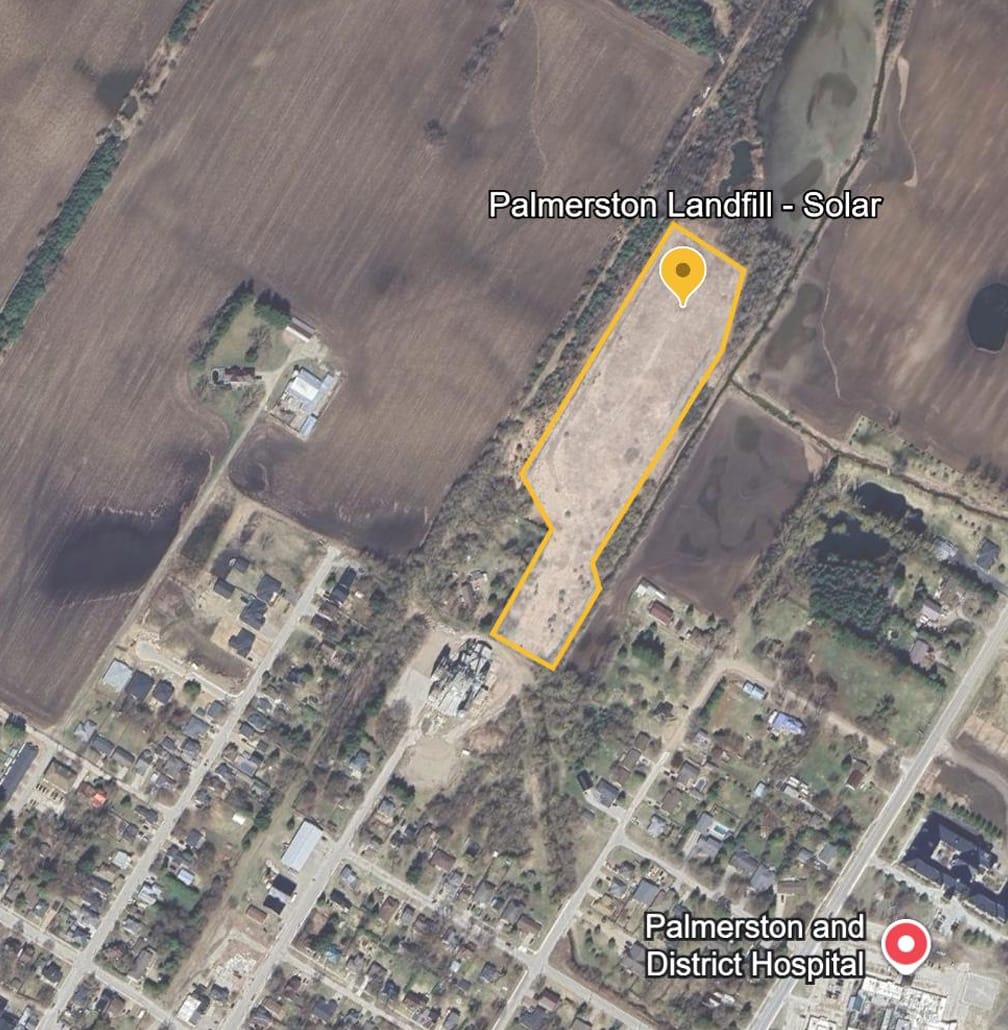
However, areas of interest for wind development have been identified between Clifford and Drew. The company has also identified the Palmerston landfill site as a potential location for a solar project, according to a May 19 report to Minto council.
That report also outlined a preliminary vision for a 24-megawatt solar project and a 70-megawatt wind project with up to 10 turbines. It stated the solar facility could generate enough electricity to power about 5,000 homes, while the wind project could supply up to 20,000 homes.
Prowind has operated in Ontario for about 14 years and owns the 10-turbine Gunn’s Hill wind farm in Oxford County. Schneider said the company began looking at Minto after reviewing official planning maps showing areas designated as secondary agricultural land, and because of existing transmission lines that could support a renewable energy project.
He also noted to the public in attendance that Prowind wants to “stay away” from building on prime agricultural farmland. Schneider said they are “not allowed” to build solar on prime agricultural land because a solar farm occupies more space, and the company prefers secondary land if possible.
He added Ontario’s growing electricity demand also makes communities such as Minto worth exploring for future renewable energy generation.
It was emphasized throughout the public meeting that the company is still years away from any potential development. A wind project would likely take four to six years to complete, while a solar project could take one to two years, depending on its size and permitting requirements.
Any proposal would require environmental assessments, municipal approvals and voluntary agreements with participating landowners.
“We want to be transparent all through the process,” Schneider said. “We don’t want to appear to do anything that is not public.”
Schneider said Prowind’s model includes offering community ownership opportunities. He pointed to the Gunn’s Hill Wind Farm, where nearly half the project is community-owned and investors receive quarterly dividends.
The project also includes First Nations ownership, lease payments to participating landowners and municipal tax revenue.
Public discussion
Residents raised questions throughout the meeting about turbine size, environmental impacts, electricity demand, wildlife, property agreements, energy storage, noise, battery storage and the potential effects on neighbouring farms.
One attendee said the presentation focused heavily on the benefits of renewable energy and suggested the community also needs information about potential long-term environmental, social and economic impacts.
Schneider agreed those concerns should be examined, saying environmental studies are a required part of the approval process.
“We need to address those issues or those questions through the environmental assessment,” he said.
He noted Prowind relies on peer-reviewed research and government-approved environmental consultants to study issues such as bird and bat mortality, noise and other potential impacts before any project can proceed.
Schneider also addressed concerns about landowner participation, saying the company does not support expropriation for renewable energy developments.
“The landowner has the full right to either say ‘yes’ or ‘no’ in any case whatsoever,” he said. “We would never even think about that.”
Schneider said the meeting was intended to begin a conversation rather than promote a finalized proposal.
“We are here to listen,” he said. “That’s the only purpose for this today.”
It was mentioned that additional public meetings are expected to be planned following the municipal election as Prowind continues assessing, with the town and residents, whether a renewable energy project in Minto is viable.

