

Erin teacher bound for France on mission to bring Canada’s wartime history to life
Upper Grand high school teacher selected to join Canadian educators on 10-day tour


ERIN – Julia Scappin first visited France in 2017 during a high school trip for the 100th anniversary of the Battle of Vimy Ridge.
This weekend the Erin resident is embarking on a return trip as a high school history teacher on a mission.
Scappin, a supply teacher with the Upper Grand District School Board, was selected by the Juno Beach Centre Association’s Summer Institute to join educators on a trip to France from July 25 to Aug. 3 to explore Canada’s wartime involvement.
She’s joining other educators from across Canada.
The Juno Beach Centre, founded by veterans and volunteers, is Canada’s only museum on the D-Day landing beaches in Normandy, France.
Scappin, who teaches high school history and English, said she wants to update her knowledge about specific battles to help students become engaged.
“They (students) actually care if they see that you care,” she said.
Scappin intends to take photos to show students and help enliven her lessons.
“They can actually get some real context to it instead of just reading it about it and forgetting about it,” she said.
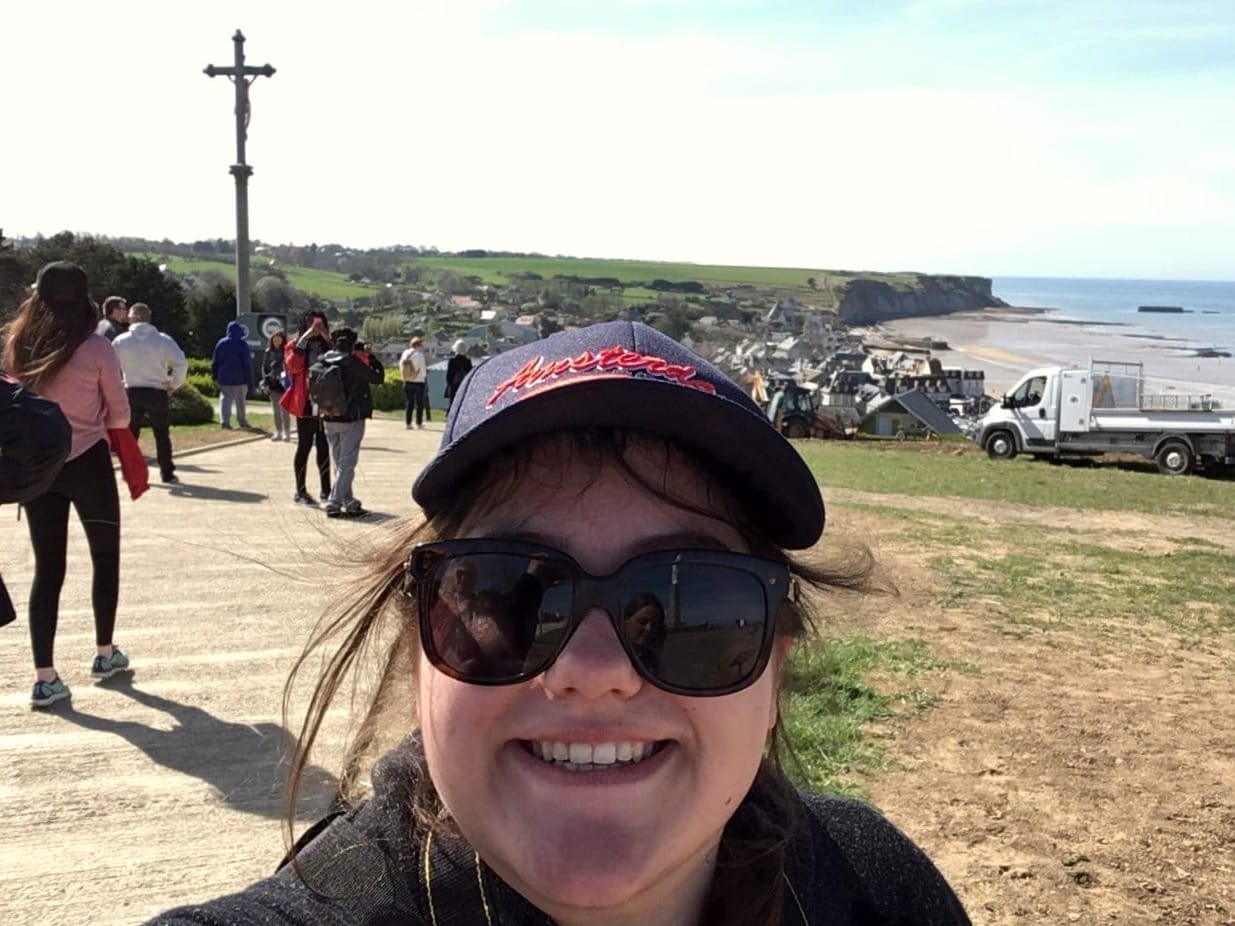
Bringing history to life is a challenge Scappin rises to by sharing the history of her great grandfather, Giovanni Cocchetto, who fought in the Second World War for Italy, which aligned with Germany before joining the Allies.
Cocchetto later became a prisoner of war, was rescued by Canadians and moved here.
“That’s how my family came to Canada,” Scappin said.
Since 2005, around 400 educators have travelled with the Juno Beach Centre Association’s Summer Institute to the battlefields of Belgium and France for a first-hand learning experience.
The association’s head of education Marie Eve Vaillancourt said the goal of the trip is to help educators better teach students about Canada’s wartime involvement.
Teachers with first-hand experience, she said, “transmit that history themselves” in the classroom, adding students can “feel that difference.”
“What you see and learn and experience and feel on this trip is hard to transmit in history books,” Vaillancourt said. “It stays with you for the rest of your life.”
Scappin, 27, was chosen from a list of applicants with the hope she will one day return with her own students, Vaillancourt said.
“We try to have diversity of age, but for sure the younger teachers are good investments for us because they’re going to teach this for years and years to come to thousands of students,” Vaillancourt said.
The 10-day trip is partially subsidized with philanthropic support, costing the institute about $150,000 or $7,500 per teacher.
Scappin said she is covering around $4,000 of the trip, with no costs covered by the school board.
The personal expense is worth it, she said, adding, “I think it’s a fantastic experience, and I’m really excited to go.”
Scappin is most looking forward to returning to the Vimy Memorial in Givenchy-en-Gohelle, France. The Battle of Vimy Ridge is Scappin’s favourite to learn about and teach.
“That was the first battle where everyone knew what the objective was … it was all the different parts of Canada coming together and working as one force for the first time,” Scappin said.
“The Battle of Vimy Ridge was like the birth of a nation. Before that people were very regional,” she said, explaining the war brought about a collective sense of Canadian identity.
Teachers will be guided through visits to Canadian First and Second World War memorial sites, battlefields, cemeteries and museums, such as Vimy Ridge, Beaumont-Hamel, Dieppe, D-Day landing beaches, and the Juno Beach Centre.


