


Drug poisonings up substantially in Guelph, Wellington County
Data shows 65% of 2026 fatalities occurred in county

GUELPH – Local public health officials are warning Guelph and Wellington County residents of a “toxic and unpredictable” drug supply after a record number of poisonings in May.
“Drug poisoning incidents have increased significantly in the first half of the year,” stated a June 1 press release from the Wellington-Dufferin-Guelph Public Health (WDGPH).
“May 2026 recorded the highest number of drug poisoning incidents in Guelph-Wellington region since local surveillance began.”
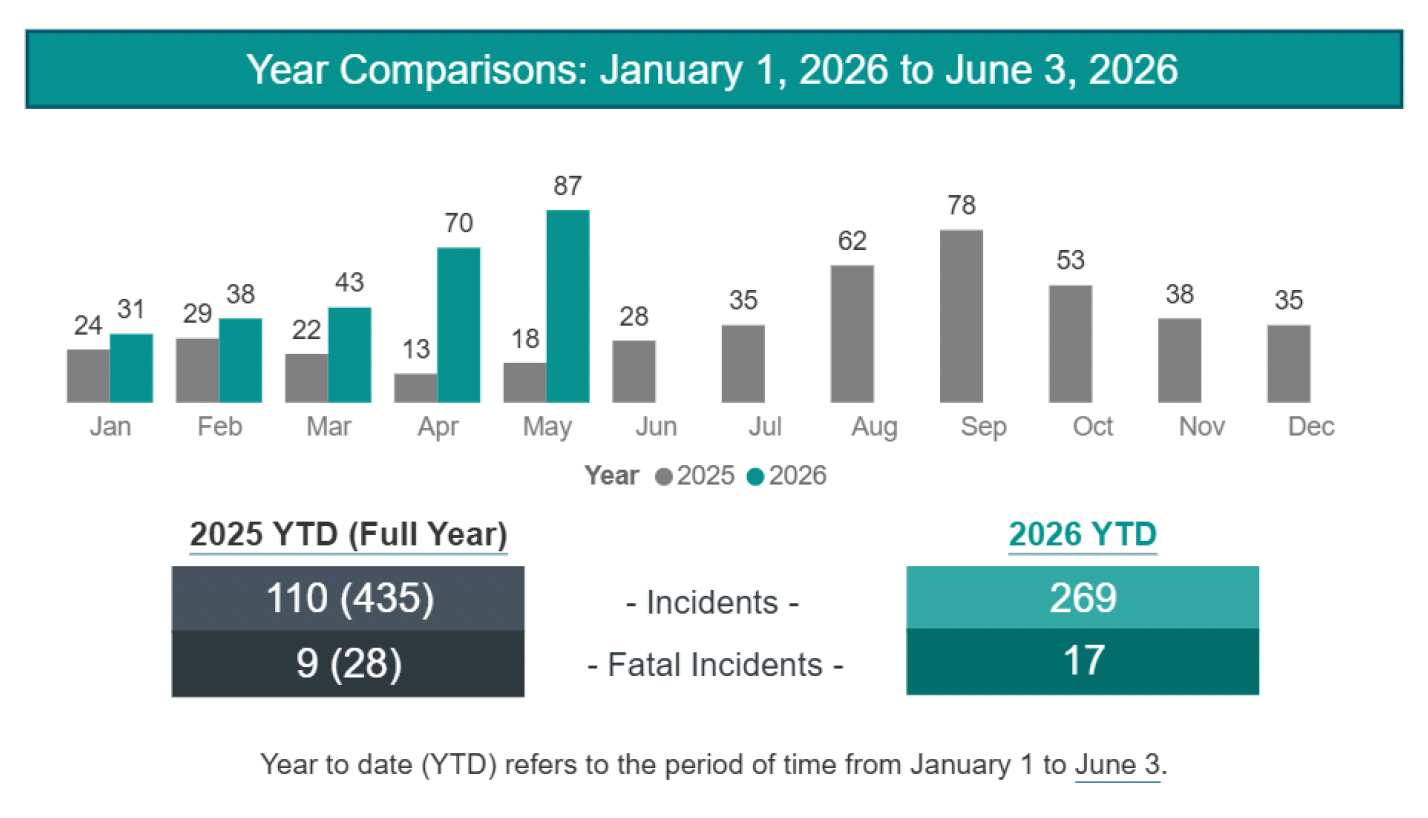
The advisory, released in cooperation with the Wellington Guelph Drug Strategy (WGDS), states there were 87 incidents in the region last month, almost five times the number in May of 2025 (18).
That followed a similar pattern from April, when there were 70 poisonings, up from 13 in April 2025.
Year to date there have been 269 incidents, more than double the 2025 total of 110 at this point in the year. There have been 17 fatal incidents in 2026, double the number through five months last year (nine).
Data shows that 248 of the 269 drug poisoning incidents (92%) this year occurred in Guelph; but 11 of the 17 fatalities (65%) were in Wellington County.
“The unregulated drug supply remains increasingly toxic and unpredictable, with the presence of sedatives such as medetomidine that can contribute to prolonged sedation, unresponsiveness and other serious health risks,” stated WDGPH officials.
“The impacts of the drug toxicity crisis continue to have a significant impact on the community.”
Strategy officials offer the following tips to reduce the risk of drug poisoning:
- carry naloxone (it’s important to note it will not reverse non-opioid toxicity);
- avoid using substances alone or, if alone, call the National Overdose Response Service at 1-888-688-6677;
- share harm reduction information and resources from public health and the WGDS;
- connect to substance use and mental health supports and/or reacheout to Here 24/7;
- start low and go slow (with any new substance, start with one-third of a normal dose);
- test substances whenever possible;
- stay hydrated and nourished;
- know the signs of drug poisoning (due to opioid toxicity) and be aware that non-opioid toxicity can show up as other symptoms (slow, shallow or absent breathing, blue/grey lips or fingernails, unresponsive or cannot be woken, gurgling or choking sounds, unable to rouse or remain alert); and
- call 911 immediately if you suspect a drug poisoning.
For more information on responding to a drug poisoning, visit wdgpublichealth.ca. More details about drug testing can be found on the WGDS website.


