

U of G unveils new Honey Bee Research Centre


GUELPH – The University of Guelph last week hosted a grand opening ceremony for its new Honey Bee Research Centre (HBRC).
“It’s wonderful to have our donors, our faculty, our staff, our students and our partners here together to mark this special event,” said Dr. John Cranfield, dean of the Ontario Agricultural College, at the June 25 event.
“The Ontario Agricultural College began apriculture training and research in 1894,” said UofG president and vice chancellor Dr. Randy Van Acker.
In 1920 a dedicated apriculture building was established on campus, the first facility of its kind in North America devoted to beekeeping studies.
“And when we think about that line back to the origin of our work in this area, it’s quite remarkable,” said Van Acker.
“For more than 130 years, generations of students, researchers, educators and partners have contributed to a body of knowledge and expertise that has made the Honey Bee Research Centre what it is today.”
The HBRC manages over 300 honey colonies, which allows both researchers and students to cultivate honey and beeswax as well as create innovative ways to strengthen the bee keeping industry and safeguard hive health.
The facility features 15,000 square feet of education space, including research labs, classrooms, workshops, bee breeding facilities and state-of-the-art equipment.
Officials say the new facility will greatly increase the space available to the HBRC, which has been housed “in a ‘60s-era bungalow for many years.
“The expanded centre offers greater opportunities to advance honey bee health and sustainable beekeeping through research, education and industry collaboration, supporting resilient pollinator populations and the agri-food systems that depend on them,” they stated.
The centre has been named for donor Lydia Luckevich and her late husband, Don Pinchin, founder of environmental consulting firm Pinchin Ltd.
Luckevich is a longtime supporter of honey bee preservation efforts at UofG, leading efforts to build a new centre after attending one of the HBRC’s weekend courses.
For more information visit hbrc.ca.

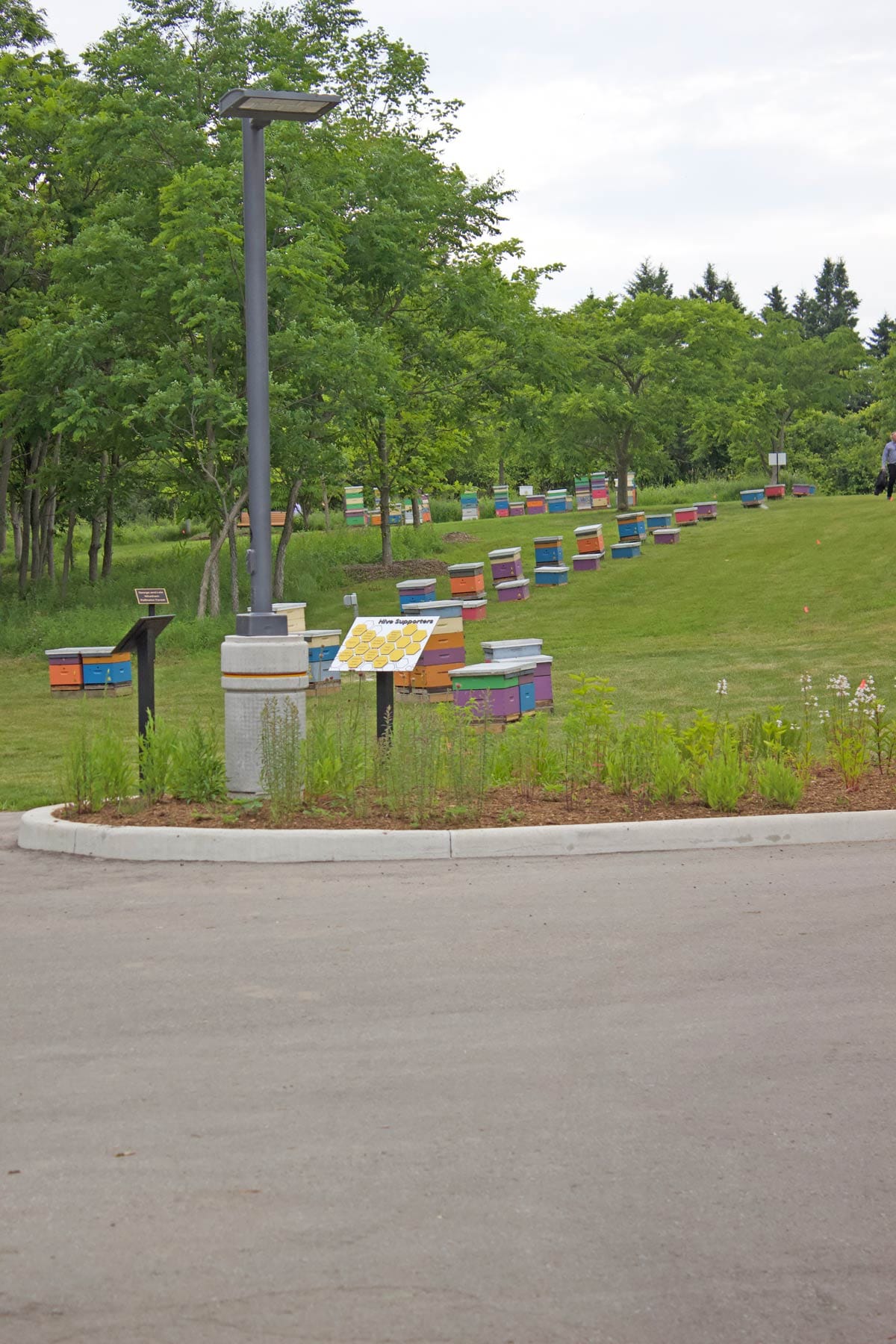
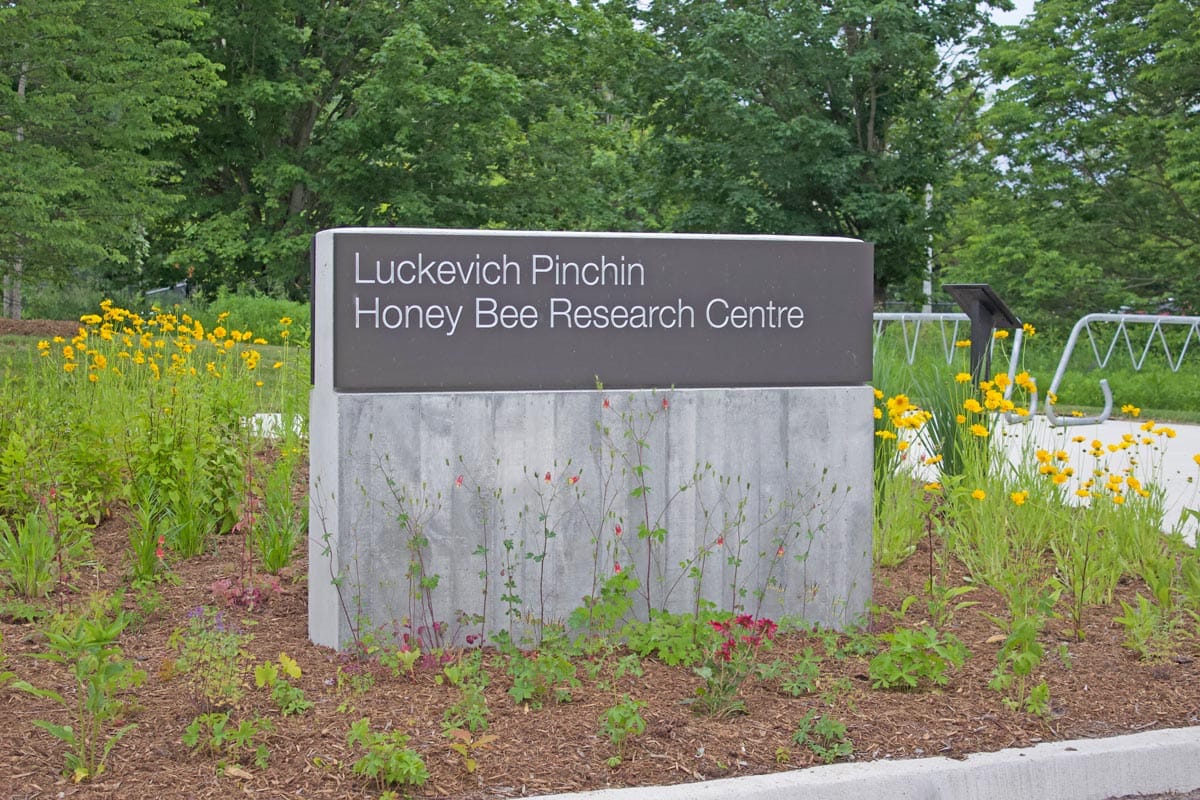
Ceremony – The University of Guelph hosted a ceremony to officially openits new Honey Bee Research Centre June 25. PHOTO 1: From left, Jason Moreton, vice-president (external), Dr. John Cranfield, dean, Ontario Agricultural College, Lydia Luckevich, donor, Dr. Ernesto Guzman, professor and researcher, Dr. Rene Van Acker, president and vice-chancellor and Paul Kelly, research and apiary manager of HBRC. PHOTO 2: Hives on the property. PHOTO 3: The sign outside of the building. Photos by Ellouise Thompson

