

Remaining ‘Bringing Nature Home’ garden tour set for September


GUELPH – Visitors had a chance to explore native plant habitats in small suburban city properties in Guelph on July 19.
It was the second of three free tours and reached maximum capacity.
Enthusiastic resident gardeners and other knowledgeable volunteers were on hand to answer questions and guide visitors through the habitats on the two properties in Guelph.
“The attendees appreciated the opportunity to see what transformations urban gardeners are able to create with native plants,” officials say.
“The chance to connect with other native plant enthusiasts was valuable for all.”
While the properties have quite different histories, there were many similarities and varied growing conditions.
Visitors peppered the volunteers with questions and positive comments.
A special moth paid a visit and posed for pictures.
“Recent smoke-filled, oppressively hot days reminds us of the critical importance of these eco-gardens,” officials say.
“While thousands die in record breaking heat domes and others are forced out of their homes by fire or floods, these native plant habitats demonstrate how we can create positive change in our own urban spaces.
“It was reported by a recent visitor to my garden that the tree filled back area was about 10C cooler than the driveway, stone, asphalt area in the front of the house.”
Bringing Nature Home garden tours, named after Douglas Tallamy’s seminal book, began this year offering real examples of how easy and fulfilling creating native plant habitats can be.
Manicured, mowed, sterile landscapes with exotic, often invasive plants, require many inputs of time, water and chemicals.
Once established, native plants are low maintenance requiring little of gardeners. Lazy gardening is all that is required – where observation and non interference rule.
Of course, knowledge and curiosity are also needed for gardeners to work with nature instead of against her.
Often positive changes are quickly observed, such as giant swallowtail butterflies circling to lay eggs on hop trees – one of only two of their native host plants – as they are being planted.
Pollinators, birds and other creatures are welcomed to make use of the native plants they rely on.
Many native bees are specialists on just one genus of native plants, such as monarch butterflies with milkweed.
The first nature home tour took place on May 10 showcasing native spring, often ephemeral, plants before they disappeared.
It was fully subscribed and visitors had positive comments having learned from the enjoyable experience, officials say.
The fall edition of the tour is set to take place on Sept. 13, with a guided tour at 11:30am.
Organizers say it “will feature two more native plant gardens in glorious fall golden splendor – often a highlight for native plant gardens and a boon for hungry pollinators and birds readying for migration.”
To register, visit pollinationguelph.ca/local-events.
Visitors may wish to bring their magnifying glasses and field guides to fully appreciate the vibrant life within these spaces.
Each garden is alive with activity – featuring a wide array of native plants and trees that make up different and diverse habitats that support native bees, butterflies, caterpillars, moths, birds, and small mammals, officials say.
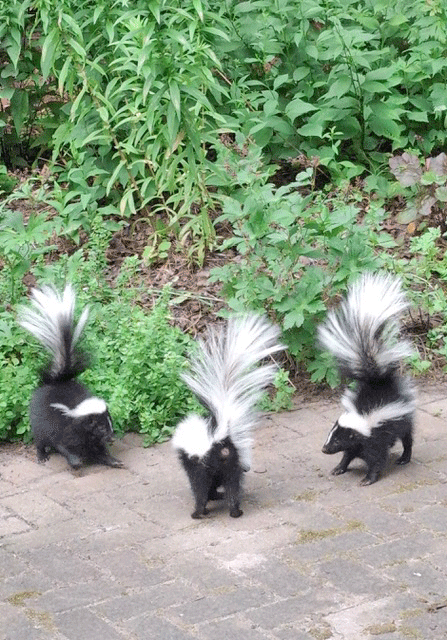
These native gardens will demonstrate how residential yards can be transformed into thriving ecological sanctuaries.
In addition to self-guided exploration, attendees will have the opportunity to connect with fellow gardeners and the owners themselves and hear firsthand stories of success, challenge, and discovery.
“In September, as many assume the gardening season is winding down, these vibrant landscapes reveal a vital and often overlooked chapter,” organizers say.
“Fall-blooming plants play a crucial role in sustaining wildlife, providing essential food sources for birds preparing for migration and for countless other species getting ready for the colder months ahead.”
Garden and homeowner’s addresses will be shared about one week before the event date for those who register online.
Parking is available at each location; however, as these are residential areas, visitors should expect street parking only.
“We thank the six home owners who have generously offered their time, expertise and habitats for viewing,” officials say.
“Pollination Guelph generously sponsored the project and Nature Guelph supported us in a number of ways.
“We sincerely thank all those involved in getting this tour organized and operating.”
For more information contact Lorne Widmer of Pollination Guelph by phone at 226-820-3534 or by email at pollinationguelph@gmail.com, or email Catherine Goddard at hepatica.goddard@gmail.com.

