

Pioneer Septic Solutions: At the Forefront of Environmental Awareness


If you live in a rural area, chances are you’re familiar with the use and maintenance of a septic system. They are an integral and essential part of rural life. The waste and water from homes and farms must be treated and disposed of responsibly and according to government regulation. With good reason, of course. Maintaining and ensuring the health and stability of our environment is crucial.
Kevin and Lisa Dolderman are the owners of Pioneer Septic Solutions, which is absolutely the ‘go to’ outfit for the installation, service, and maintenance to this crucially important utility. They are fully aware of the responsibility and the reliability of sewage collection and disposal. They are also passionate about the environment and the potential effects of mismanagement when it comes to sewage disposal. Unfortunately, when it comes to the disposal of pumped sewage, there’s something of a crisis in the province of Ontario. Basically, there is a province-wide shortage of treatment plants for valid and correct sewage disposal.
This has become a major issue, leading to cases of environmental disrespect and carelessness by folks less mindful of the environmental impact. The problem is exacerbated by the increasing number of building permits being granted for rural applications. This means more septic installations. Now, you might think this is good news for a company that specializes in septic system installations, but Kevin and Lisa see beyond that. They care deeply about the environment. Adding to an already over-burdened system is unquestionably problematic.
Kevin and Lisa are doing what they can to bring this situation to the forefront with hopes of finding a solution. They are very active in OASIS – Ontario Association of Sewage Industry Services. They are also proud members of the Ontario Onsite Wastewater Association, a provincial not-for-profit association dedicated to promoting the value of onsite and decentralized wastewater management through education, improved practices, and advocacy for policies across Ontario. Their websites are great sources of information if you wish to learn more.
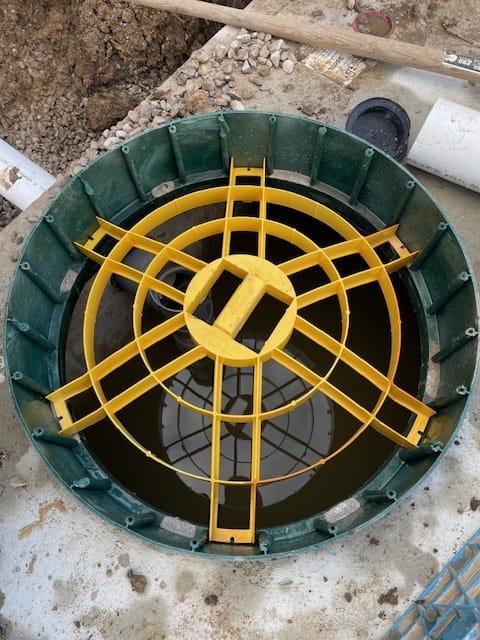
In other news: As of January this year, new septic systems must have safety screens fitted beneath the septic tank riser lids. These high-strength protective ‘starfish’ barriers are designed to prevent accidental falls into tanks and can support a weight of 350lbs. They will also be required for septic systems in ‘sensitive’ sites, such as schools, daycares, and churches. Such places will also be advised to fence off the septic tank for additional safety.
Being aware of where your septic tank is located is critical. Though it isn’t mandatory, adding safety screens to your access lids is worth consideration. If your access lids are buried, you need to know where they are in case of emergency, or when service is required. Consider adding Polylok lids and risers to your tank to bring the access openings to grade for easier maintenance during all seasons. Manage your system correctly. If the product can be safely consumed by the body, it can go into the septic system. In other words, if it can’t be digested, it should not be flushed. And please beware claims of ‘flushable’! Those (supposedly) ‘flushable’ wipes cause all manner of problems in pumps, filters, and piping. It’s also important to choose the appropriate cleaning products and toiletries. Harsh chemicals should never go into the aquifer.
If you’re considering relocating to a rural property, it’s beneficial to learn more about the rules and regulations pertaining to these systems and the importance of environmental protection. You should also be aware that the lifetime of a septic system is affected by use. For example, an elderly couple are likely to make less demands on a system than a young family. So, if you’re purchasing a property with an older system, be aware of the usage before and after purchase. Going from light to heavy usage will affect the continued lifetime of a system.
Spring and fall are the optimum times to have the system filters cleaned and checked. Homeowners can access the effluent filter through the tank’s outlet lid. In spring and fall, remove the filter and hose it down to clear waste and debris to help prevent clogs or sewage backups. This is an inexpensive procedure, but crucial, since it can prevent future issues that might end up being costly in more ways than one. Consider using the garden hose as a reminder. Bringing out the hose in the spring should remind you to clean the filter. Putting the hose away in the autumn, same thing! Alternatively, mark your calendar to have Pioneer’s maintenance team, Snork’s Septic Service, clean your filters for you.
When it comes to pump tanks, it’s important to have a high-level alarm, which is designed to notify homeowners that the tank is full, or that the pump isn’t working. If you don’t have one, it’s worth the investment and the subsequent peace of mind knowing you’ll be alerted to any issues.
When choosing what kind of system to install on a new property, the type of septic system required depends on varying factors. The size of the home or facility, which usually dictates the level of use, is the first thing to consider. The permeability of the soil is another factor. Contact Pioneer Septic Solutions for more information and to find out how to move forward when it’s time to install a new septic system, or a new septic tank.
Don’t hesitate to call Pioneer Septic Solutions if you have any questions about your septic system. This highly professional group has a wealth of experience. Whether it’s a small or large project, the team at Pioneer works with integrity, knowledge, and professionalism, offering friendly local service to the Wellington County area and beyond.
Pioneer Septic Solutions
Tel: 519-763-3349
www.pioneersepticsolutions.ca


