White, Kennaley clash over delegation rules, controversial hidden quarry
Mayoral candidates dominate discussion at Guelph/Eramosa all-candidates meeting

MARDEN – Guelph/Eramosa mayoral hopefuls Chris White and Dan Kennaley clashed at an all-candidates meeting here on Sept. 29.
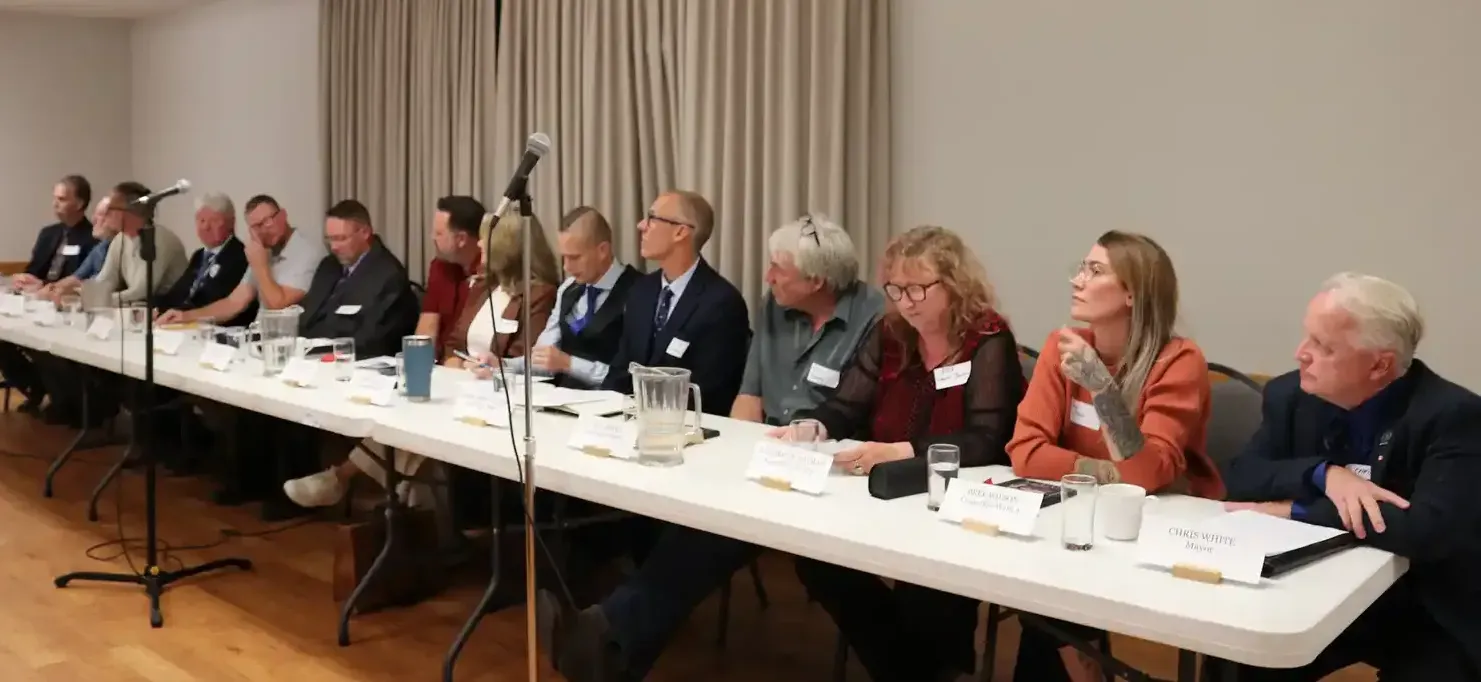
Fourteen candidates in total attended the event, but discussion was dominated by the two men seeking the top chair on council.
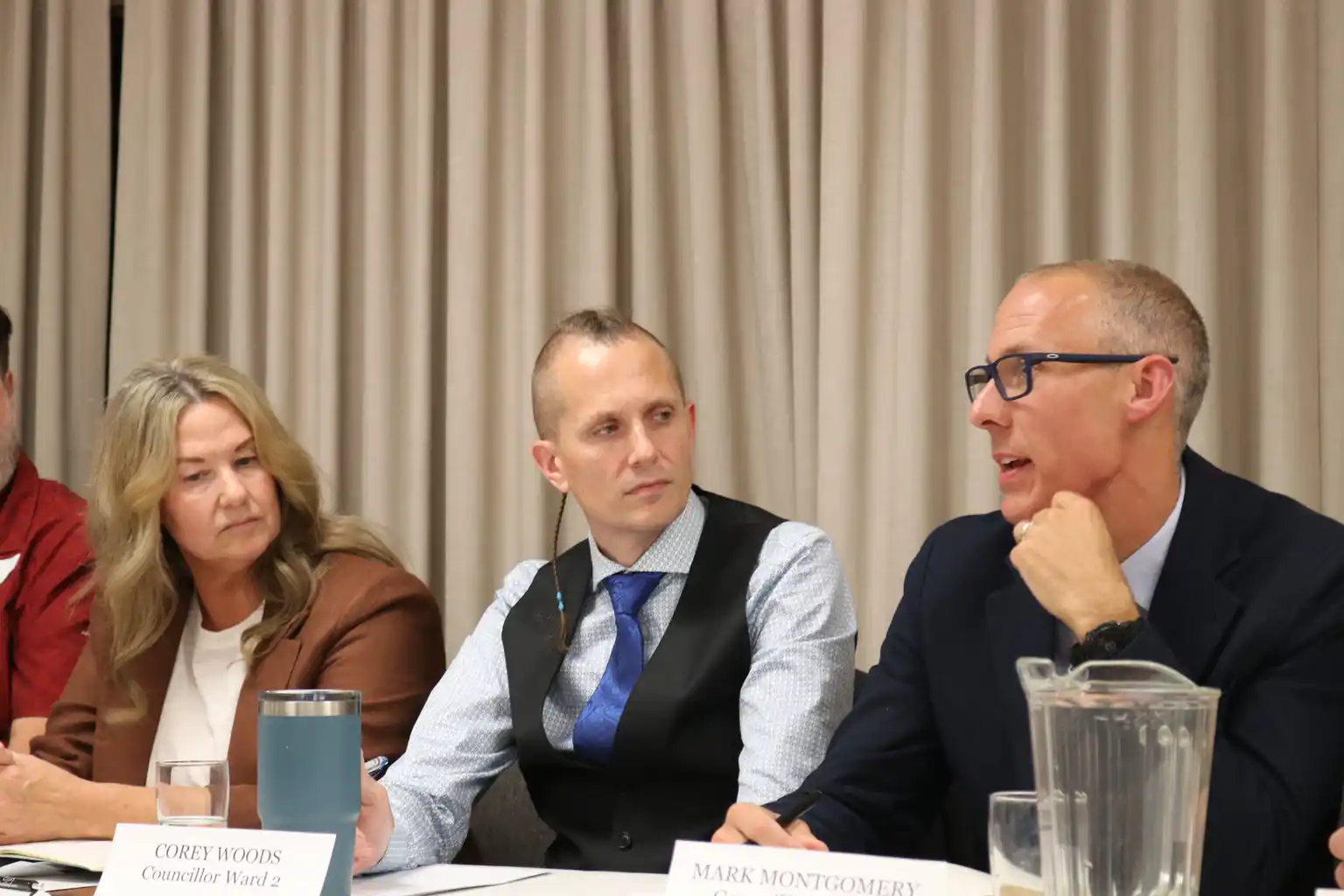
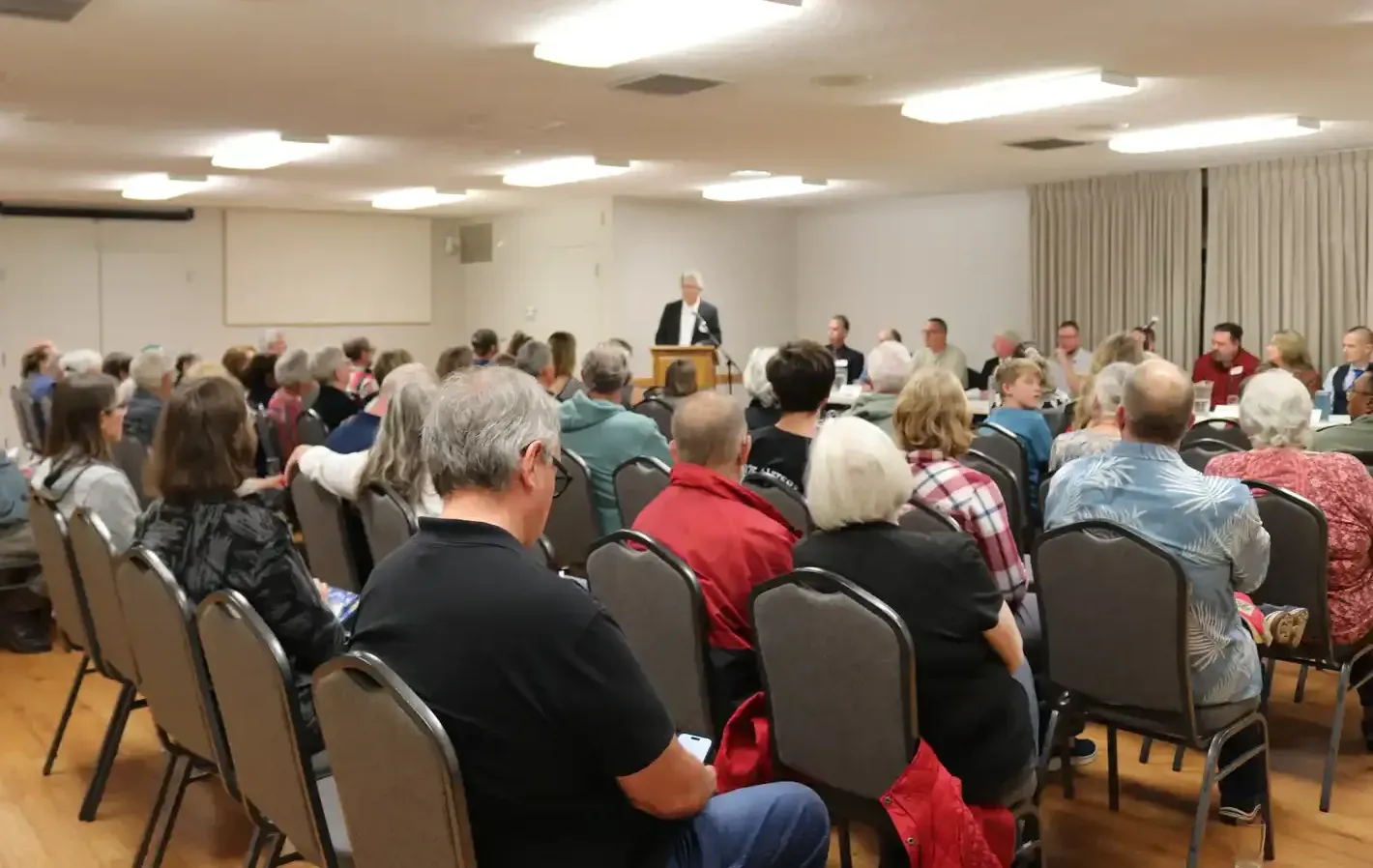
Present at the event, which was moderated by Warren Harris and hosted by the Guelph Township Horticultural Society at the Marden Community Centre, were:
- Ward 1 candidates Jason Baldwin, Philip Mullis and Bill Weima;
- Ward 2’s Jason Peart and Corey Woods;
- Ward 3’s Tara Groves-Taylor, Steven Liebig and Lisa Logan-Dayman;
- Ward 4’s Mark Bouwmeester, Mark Montgomery and Bree Wilson; and
- acclaimed county councillor Matthew Bulmer (Ward 7).
White vs. Kennaley
During candidate introductions Kennaley used his allotted time to highlight the current council’s “poor track record with regards to land-use planning decisions,” he said.
“The environmental disaster we see today at the Hidden Quarry site on Highway 7 is the ugly legacy of the current mayor and council,” Kennaley added.
The controversial site was granted an extraction licence by the province on Oct. 31, giving James Dick Construction the right to remove 700,000 tonnes of aggregate annually from the 60-acre open-pit mine for the next 20 years.
Kennaley was part of an opposition group, the Concerned Residents Coalition, that raised concerns about the quarry, including flyrock, haul truck volume, noise, dust and possible groundwater contamination.
“The current mayor and council also failed the community around the proposed refrigeration plant” on Jones Baseline near Highway,” he added. “That refrigeration plant should have never been approved because of the proximity of residential uses.”
After introductions concluded Harris opened the floor to the public for questions. One audience member asked how candidates would achieve a balanced tax base while managing sustainable and responsible growth.
“When we talk about trying to remain a rural community, you get a lot of pressure to develop,” White said. “We don’t want urban sprawl.”
He continued, “We understand there’s a housing crisis … but the County of Wellington is growing at eight per cent and it’s exceeding the provincial average. We’re doing our share for the housing crisis so I don’t think we need to take the rest of our prime [agricultural lands] and build subdivisions out.”
Referring to the refrigeration plant mentioned by Kennaley, Whites said, “That would have been 300 well-paid jobs with little water use and little environmental impact. It was Canadian manufacturing … and we only have 500 acres of industrial land in this township.”
According to White, the township has a full team “striving” to utilize that land to “keep the tax base where it needs to be.”
Ward 1 candidate Weima interjected, stating, “There’s always a trade-off. There’s a give and a take and it comes down to what are you people willing to sacrifice.”
“We need to try to keep the community rural … and that comes at a cost as well,” Weima added.
Delegation rules
Another audience member questioned council’s role in public engagement.
Ward 3 candidate Groves-Taylor stated the importance of community members knowing they have a “direct voice.”
“They can delegate at council any time themselves and bring their expertise,” she said.
Kennaley jumped on that point, saying, “There is a problem right now with the existing council and how they treat delegations.”
Those wanting to delegate to Guelph/Eramosa council must submit a request form to the municipal clerk and they must limit their comments to an agenda item.
“That’s very restrictive and it leads to less public consultation, not more,” said Kennaley. “People should be able to talk to their council about anything they want, whenever they want it.”
White responded, “Council meetings are a business meeting. You have to have agendas in order to conduct it properly.”
If speaking council meetings become a “free for all,” then “it won’t work,” White said, adding staff and council’s time would be wasted.
Agenda items need to be “integral to decisions the council can make,” he added. “There’s no point in us talking about national defence for four hours.”
White agreed with Kennaley in regards to the public having access to councillors and the ability to bring ideas forward.
“But there’s a proper place and time,” he said. “You’ll notice the vast majority of councils operate this way because it works.”
Kennaley disagreed, stating none of the municipalities he’s worked with as a planning consultant have the “kind of restrictions that exist in Guelph/Eramosa Township. It’s got to change.”
(Every lower-tier municipality in Wellington County requires delegations to register in advance. At least two strictly limit delegations to items on the agenda; the others have different rules/restrictions).
Harris stepped in and told the mayoral candidates they would have to “agree to disagree.”
“I might suggest that you connect with the clerk’s office just to verify that point for your own information,” Harris told Kennaley.
Lastly, an audience member asked the group where they could find information regarding tax increases over the last four years.
“Every year, the county publishes a copy of its budget and its 10-year plan,” Bulmer said. “It has every detail you could ever want to know about where your taxes go in the county.”
The inch-thick package is “sitting in every library across the county,” he added.