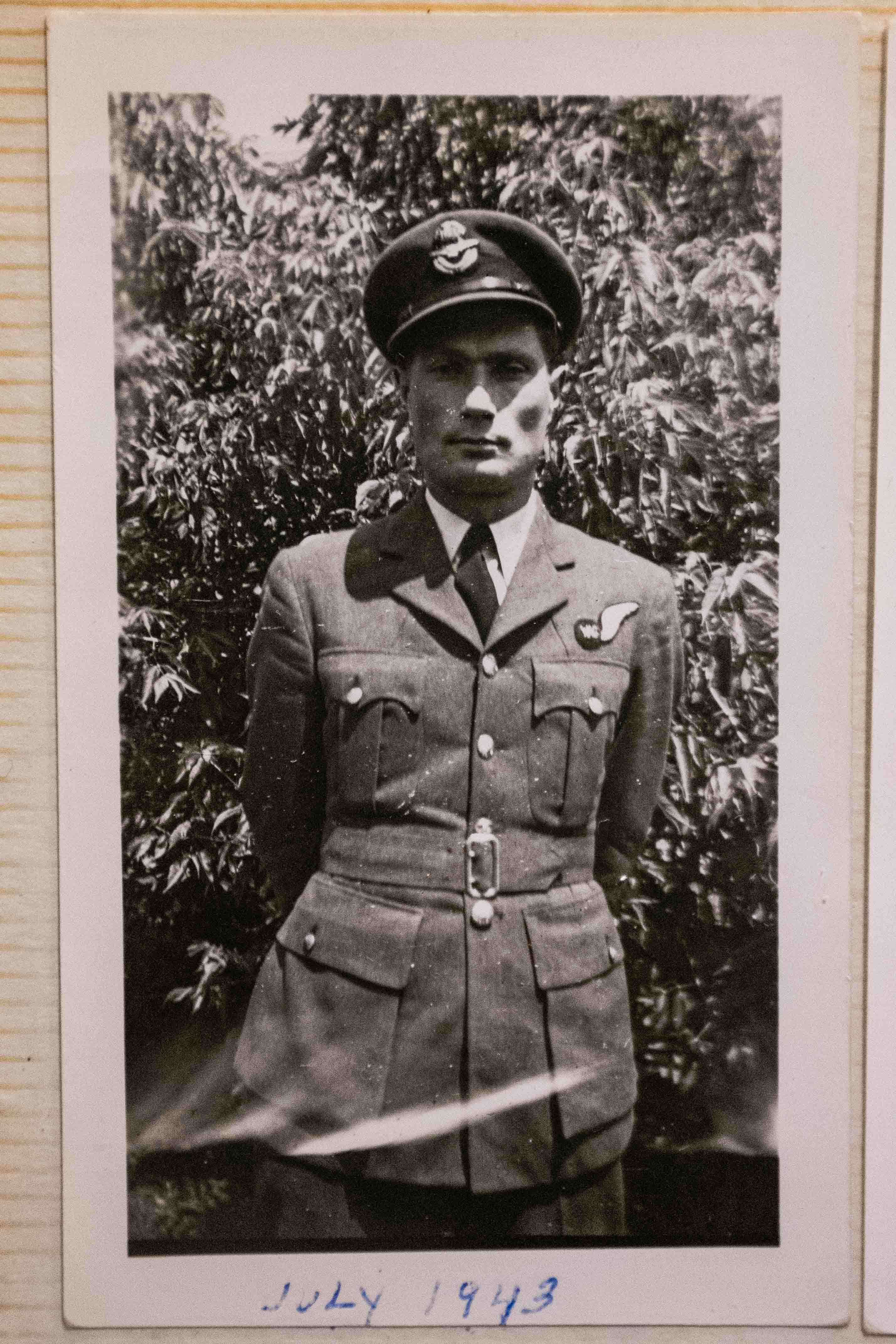
The final flight of Eramosa airman Bill Parkinson
Parkinson enlisted in Second World War at 27; fought in bombing missions over Belgium


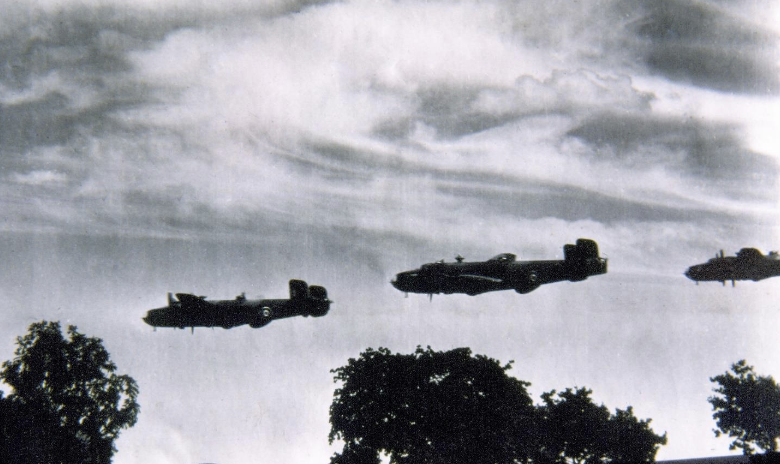
GUELPH/ERAMOSA – Under the glow of a full moon, the Halifax LW594’s four massive engines popped to life.
The 71-foot beast shook down the runway until its 104-foot wingspan climbed into England’s skies.
It was 1:30am above East Moor as pilot Stan Hawkins, seated beside flight engineer Harry Ibbotson on the upper flight deck, aimed the bomber toward a Belgian rail yard more than 600km away.
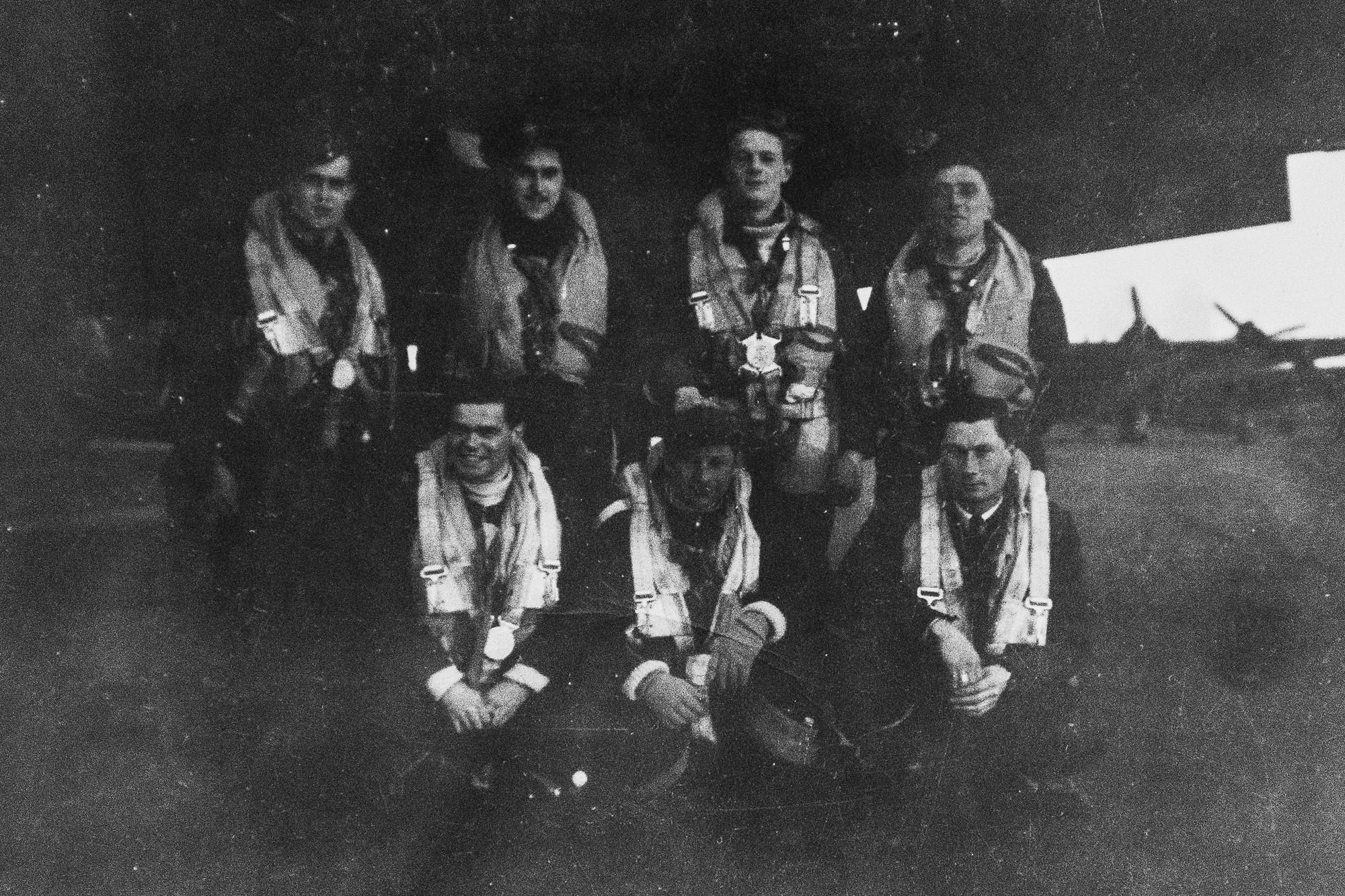
Seated on the deck below, Bill Parkinson found himself far away from his Eramosa home as the seven-member crew flew toward their Haine-Saint-Pierre target, the skies ahead dense with German night fighters.
Parkinson, an extremely quiet 29-year-old, would have rather been back in Canada hunting, processing fox furs or fishing.
He admitted in a letter to his brother Archie in Guelph that he was “plenty scared sometimes.” But the crew wouldn’t know it; he wasn’t one to get riled up, no matter how tight of a spot they found themselves in.
Parkinson worked the multicoloured knobs of a Marconi T1154/R1155 radio system, listening for transmissions from Bomber Command in England, while tuning to German ground-control frequencies and jamming their radios with transmissions of the bomber’s loud engines.
By now, he had flown seven missions, accumulating more than 65 hours of flying time over enemy territory. He was considered an expert wireless operator in the Royal Canadian Air Force and was slated to become the squadron’s signals leader.
Alvin Raetzen navigated the roughly two-hour trip on a table ahead of Parkinson. Further ahead, in the plane’s glazed nose, was bomb aimer M.B. O’Leary. Gunners Gordon Hand and Robbie “Rod” Banks manned Browning machine gun turrets on the top and at the tail of the plane.
Theirs was one of 123 aircraft, across five squadrons, that departed England between 1 and 2am on May 9, 1944.
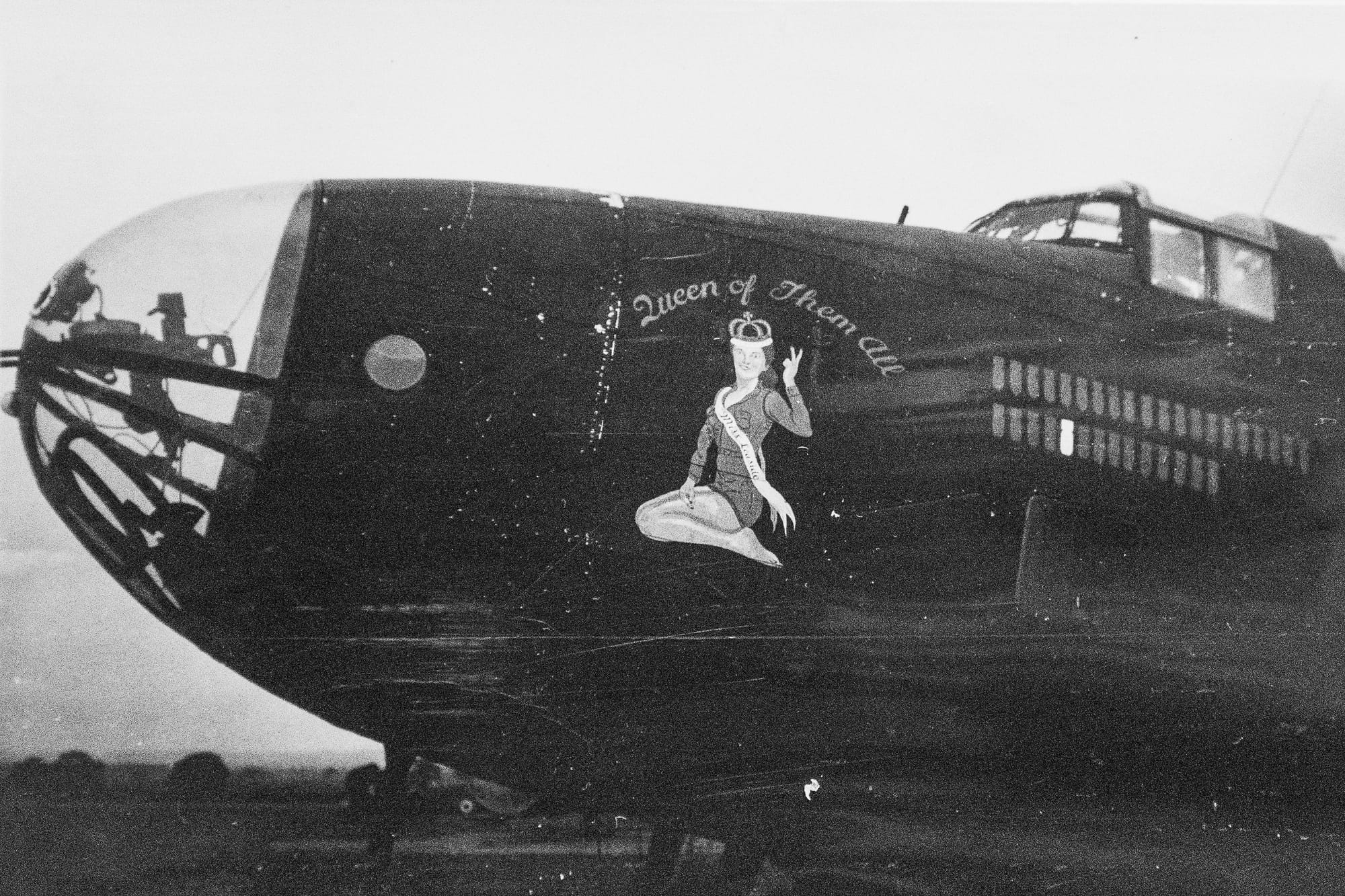
D-Day was looming and Bomber Command, now under American General Dwight Eisenhower’s control, was targeting infrastructure in occupied Europe to soften German defences under the “Transport Plan,” part of Operation Overlord.
Bombing raids between March and August destroyed rail yards and lines, bridges and repair shops in France and Belgium to prevent the movement of German troops and supplies toward the Allies in Normandy.
Parkinson’s crew located flares dropped by illuminator planes marking the targets and released its payload of bombs shortly before 3:30am. The destruction added to earlier bombing runs on the yards between March and May.
Half the Haine-Saint-Pierre yards, along with locomotive sheds, were severely damaged as hundreds of tonnes of bombs rained down from the sky. At least 23 civilians were killed.
Heinz-Wolfgang Schnaufer, an ace night-fighter pilot in the Luftwaffe (German air force), approached from below and behind the Halifax as it turned back for England.
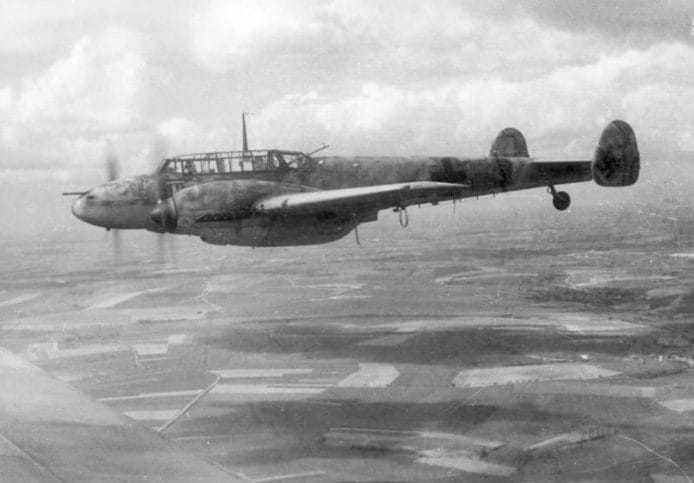
Parkinson and his crew were unaware Schnaufer — the “Spook of St. Trond” — who had already claimed 61 kills, was hunting from below in his Messerschmitt Bf 110.
With the behemoth clearly outlined above against the moonlit sky, Schnaufer took aim and fired at the Halifax, striking both port engines.
Inside the Halifax, the crew helplessly deployed fire extinguishers before Hawkins, the pilot, brought the plane into a nose dive in a last ditch effort to try and overcome the flames.
‘All you do is fly, sleep and eat’
William Henry Parkinson was the youngest of three sons born to William and Elizabeth Parkinson in Eramosa on March 8, 1915.
After graduating Guelph Collegiate at 17, he worked on fur farms and by the time the Second World War was underway, he had found work as a drill operator at a gold mine in Timmins, before returning to fur.
He enlisted in Hamilton on April 29, 1942, and attended the No. 4 Wireless School in Guelph in August.
He arrived in Patricia Bay, BC at the No. 32 Operational Training Unit on April 3, 1943, after training as a gunner at the bombing and gunnery school in Saskatchewan.
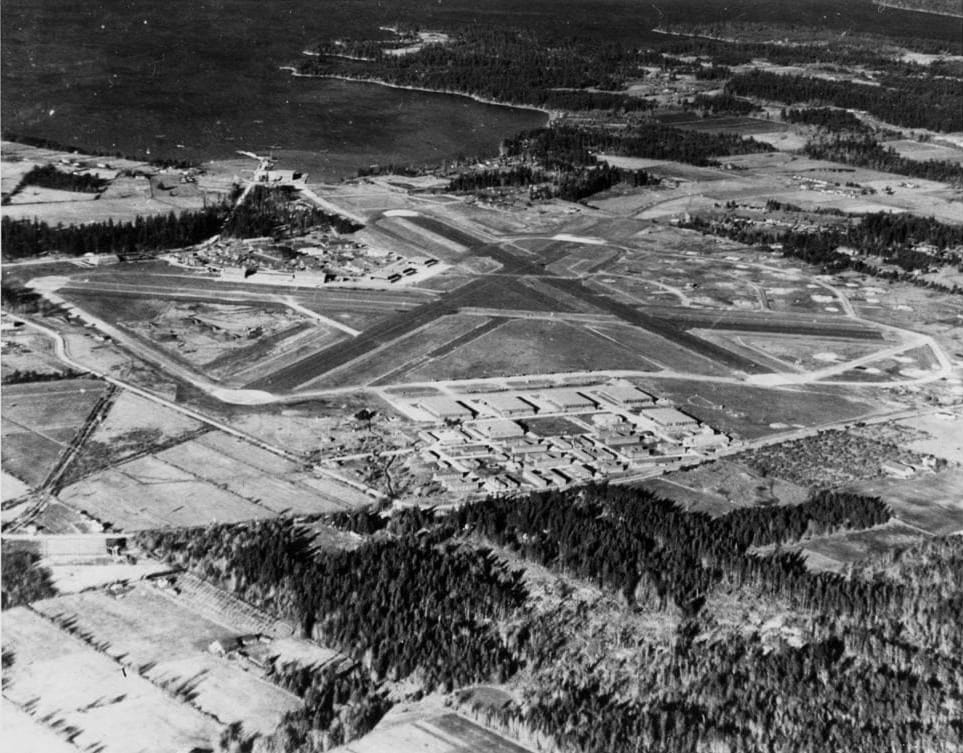
The day before embarking on a six-day Atlantic crossing to England, Parkinson wrote from Halifax, “This is a big camp and when you hear of a contingent of airforce arriving overseas, they’re not kidding.”
He arrived in England on July 22, 1943 and later trained at a North Yorkshire base.
“London is crowded with every kind of soldier and uniform, especially Americans, they seem to be there by the thousand,” Parkinson wrote in a letter home on Aug. 12.
“People are still sleeping around the (train) stations,” he wrote. “We inspected some of the bomb damage which has been considerable.”
Looking at all the people in London, he remarked that he now knew where all the fox fur was being consumed.
By November, Parkinson was flying five-hour flights back-to-back at night, with “a few flips in the daytime thrown in” too, he wrote in a Nov. 10 letter.
“All you do is fly, sleep and eat.”
“We saw some flak (ground-to-air fire) coming up,” he added. “Jerry (Germans) was around, but we didn’t bump into him.”
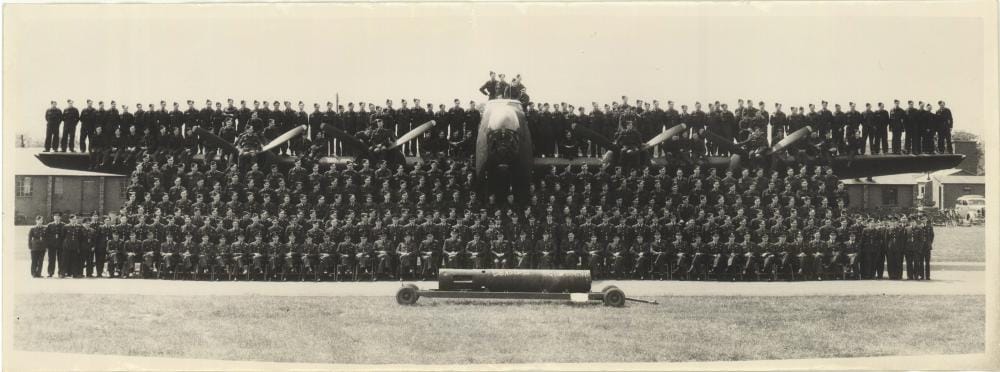
In early 1944, he was training on heavy bombers and transferred to 432 Leaside Squadron, the unit with which he would fly the bombing raid.
“The future is so uncertain in my present occupation that one doesn’t make too many plans,” he wrote in a Jan. 4 letter.
“One thing I do know is fur ranching will be my work when I get back.”
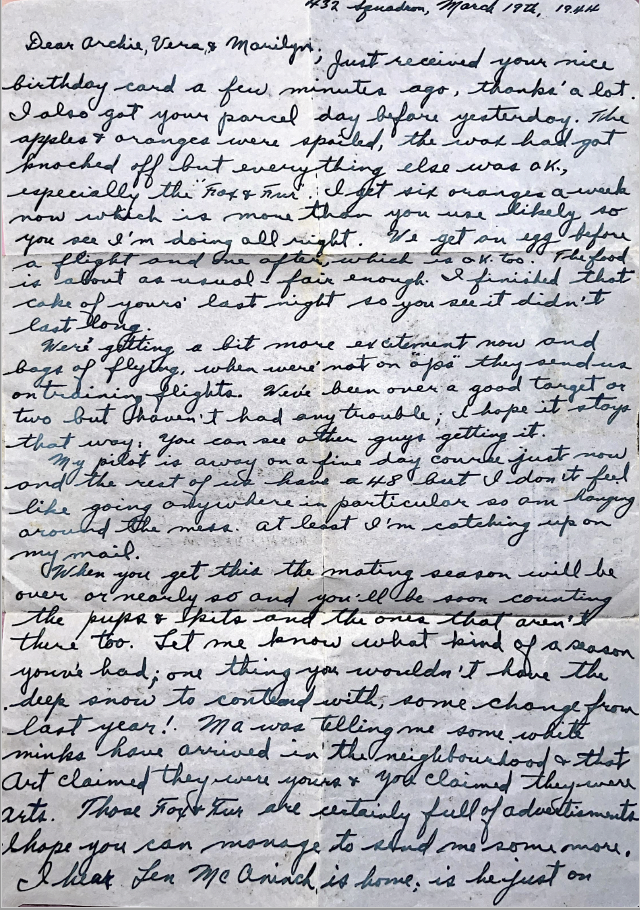
The action was picking up by mid-March, Parkinson wrote to his brother Archie, sister-in-law Vera and niece Marilyn.
“We’ve been over a good target or two but haven’t had any trouble; I hope it stays that way, you can see other guys getting it,” he wrote in a March 19 letter, adding he would be “lucky to be home in two years’ time.”
Nine days before the bombing raid, in a letter dated April 30, Parkinson wrote to Archie, saying the crew’s “luck has been very good so far … plenty scared sometimes. I’m touching wood.”
“Old Jerry is taking quite a beating, but he can still put up a good show,” he added.
“Write again soon.”
‘You are always home’
The Halifax’s hulking mass was in a nose-dive toward the Belgian countryside as gunners Hand and Banks bailed out and yanked on parachute cords.
The plane crashed seconds later, at roughly 3:32am, about 14km southwest of the rail yards around Grand-Reng, on the border with France.
The gunners escaped into France on foot overnight. Raetzen, the navigator, and O’Leary, the bomb aimer, were captured by the Germans and taken prisoner.
Word quickly arrived from Ottawa that Parkinson was presumed dead, but it would be nearly seven years before Parkinson’s mother would learn what happened to her son’s body.
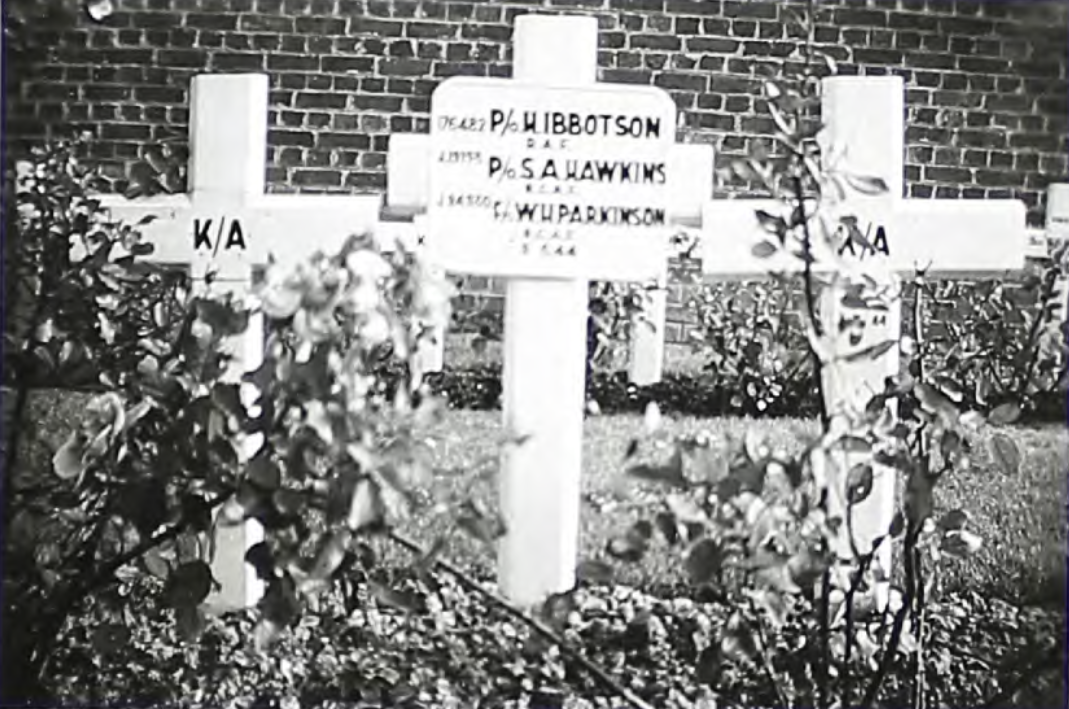
“Investigating officers of this service, on visiting the parish cemetery at Gosselies, located the graves of your son and the other two members of his crew who lost their lives. They had been buried in a communal grave,” stated a Jan. 19, 1951 letter from the RCAF and addressed to his mother Elizabeth.
Parkinson, pilot Hawkins, and flight engineer Ibbotson had all been killed in the crash and buried near Charleroi, Belgium.
Their plane was one of nine bombers destroyed in the raid. In all, 37 airmen died.
Raetzen and O’Leary were freed from German captivity by July 1945. Hand and Banks escaped to England in August 1944 thanks to the French Resistance, secret British military intelligence group MI9 and American troops.
Eighty-two years after Parkinson’s death, Lynn Parkinson pores over her great-uncle’s letters at her Rockwood home. They’re written on blue and grey air force letterhead that fold into envelopes.
“Vera was a saver,” Lynn said of her grandmother, who kept letters, photos and other records.
A tribute signed by Archie, Vera and Marilyn reads:
“For freedom, justice and all you held most dear/Your home and loved ones, and peace for all mankind/You gave your life without a fear/No greater love could e’er we find.”
The second verse puts Bill back in the woods he loved to roam, among flowers and birds he knew by name.
“In memory, Bill, you are always home,” the family wrote.
“I read these letters every November 11th,” Lynn said.
“That’s my Remembrance Day tribute.”