Teens organize mental health symposiums
Grade 11 students at WCDSB high schools working to prevent burnout

GUELPH – Stopping burnout and supporting mental health are priorities for local student leaders, who are working to share information and resources with their peers at Wellington Catholic District School Board (WCDSB) high schools.
From April 29 to May 7, Grade 11 students at St. James, Bishop Macdonell, Our Lady of Lourdes and St. John Bosco Catholic high schools are hearing from guest speakers from the Grove Youth Wellness Hub and Homewood Health Centre's Community Addictions Services (CADS).
The symposiums are an annual student senate project, with student senators coming up with the ideas and organizing and leading the events.
The theme of this year's symposium is "breaking the cycles of burnout."
Between each speaker at St. James on April 30, students took breaks to participate in relay races and a game of musical chairs.

Burnout
Grove representative Megan Brady outlined signs of burnout and how to avoid and address it.
Burnout symptoms include persistent exhaustion, feeling overwhelmed, difficulty focusing, sleep troubles, appetite change, irritability, anger and feelings of uselessness, she said.
It's different from healthy stress, Brady noted, which feels manageable, can help with motivation and focus, and goes away after a stressful situation passes.
She recommends deep breathing, physical movement and naming feelings to increase regulation
Brady led the students in a grounding exercise that involves identifying five things you can see, four you can feel, three you can hear, two you can smell, and one you can taste.
To break the cycle of burnout, she suggests setting boundaries by saying no instead of taking on too much, as well as taking breaks and prioritizing sleep.
For students experiencing burnout, she recommends they find one thing they can stop doing, such as scrolling social media in the evenings; one thing they can start doing that will help fill their cup; and one person they can tell about their struggle.
Time management
CADS occupational therapist Jacqueline Maw talked to the students about time management and explained brain processes that lead to procrastination.
The prefrontal cortex supports logic and planning, whereas the limbic system is focused on pleasure and survival.
Procrastination causes conflict between these two sections of the brain, which can leave people with conflicting feelings of relief and guilt while they procrastinate, she said.
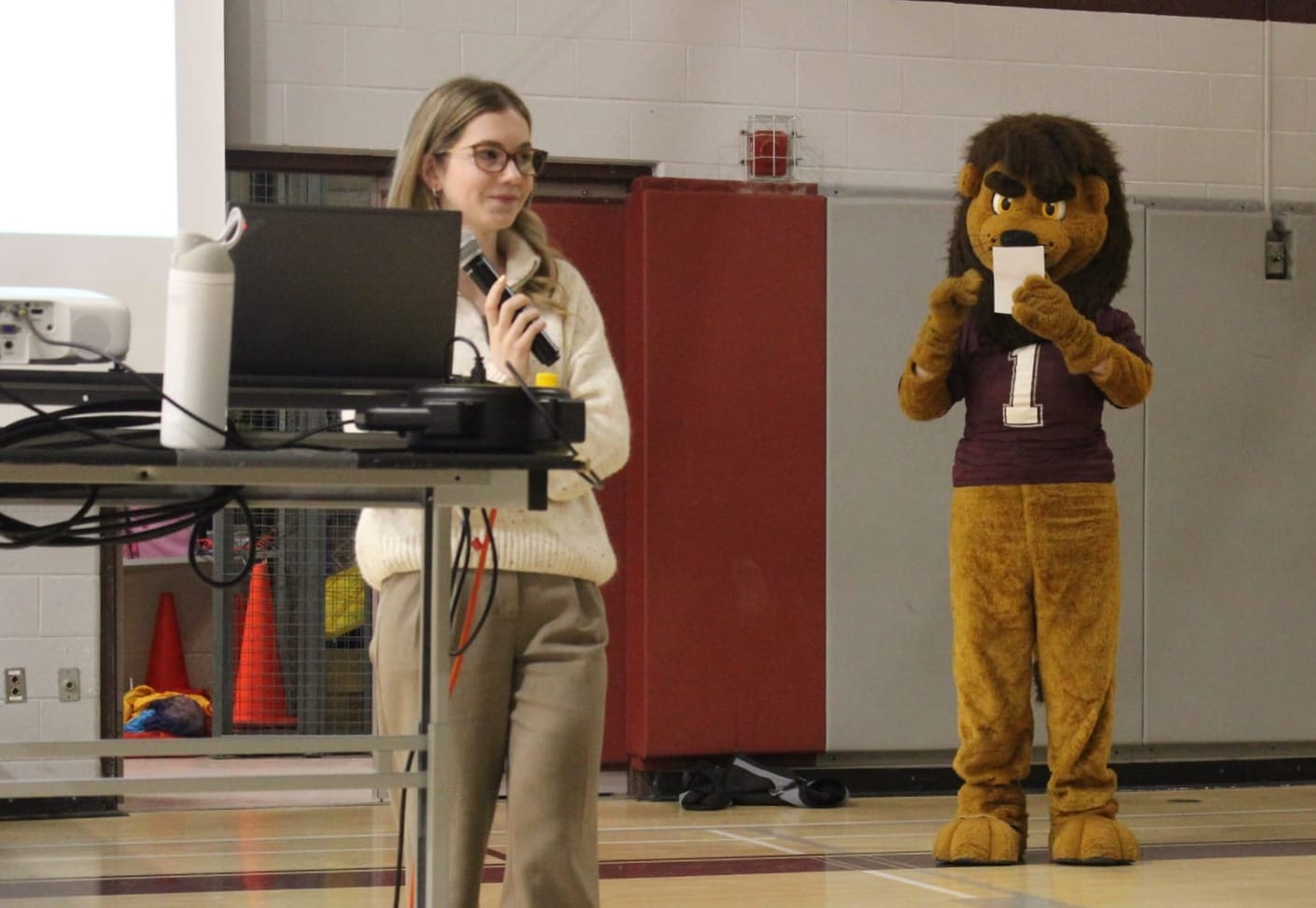
Maw walked the students through a "brain dump" journaling technique to create to-do lists, prioritize tasks and improve time management.
It can help to start small, she said, by beginning with a simple task, breaking a big task into steps, or committing to just five minutes, and sharing goals with others and planning healthy rewards for completing tasks.
Electronic dependence, AI companions
CADS mental health and addictions therapist Justin Griffith talked to the teens about electronic dependence and AI companions.
He said for teens, it's harder to control cravings, impulses and a need for instant gratification because brains are not fully developed until 25 to 26 years old.
Using electronics often releases neurotransmitters such as dopamine, serotonin, glutamate, gamma-aminobutyric acid and norepinephrine – which often feels good, and can lead to dependencies, Griffith said.
It can also cause people to become desensitized to those neurotransmitters, which he said can reduce motivation or joy in other activities, decrease empathy, cause physical issues and impact relationships, sleep, social skill development, self concepts and mental health.
Warning signs of electronic dependence include difficulty stopping, anxiety, depression and reduced appetite, Griffith said.
To reduce electronic dependency, he recommends decreasing the amount of time spent on screens, taking breaks, increasing connectedness while using electronics by interacting with friends, reducing exposure to unhealthy content such as violent materials or undertaking a social media cleanse.

Griffith said people turn to artificial intelligence companions, or AI therapists because they are often free, easily accessible, available 24/7 and designed to please users, but he warned about the risks.
AI companions are under-studied, he said, and the impacts are relatively unknown. They sometimes give misinformed advice, can increase electronic dependency, don't include safeguards such as a code of ethics or duty to report, and may not recognize delusion, psychosis or suicide ideation, Griffith said.
Griffith recommends prioritizing in-person communication, and if students are using AI companions, telling others about it and discussing the feedback.
He also suggests leaning on available supports such as school social workers, teachers, coaches and Kids Help Phone.
After the presentations and activities, students had opportunities to connect with community booths during lunch, with representatives from Guelph-Wellington Public Health, the Wellington Catholic District School Board, the YMCA, Homewood Health Centre, the Grove Youth Wellness Hubs, the Guelph Public Library and Guelph Police Services.