


New Erin library gets finishing touches as opening nears
Opening of former grist mill behind schedule following massive overhaul

ERIN – Saws are still buzzing inside the former McMillan Grist Mill as the creation of a modern library within its 177-year-old walls nears completion.
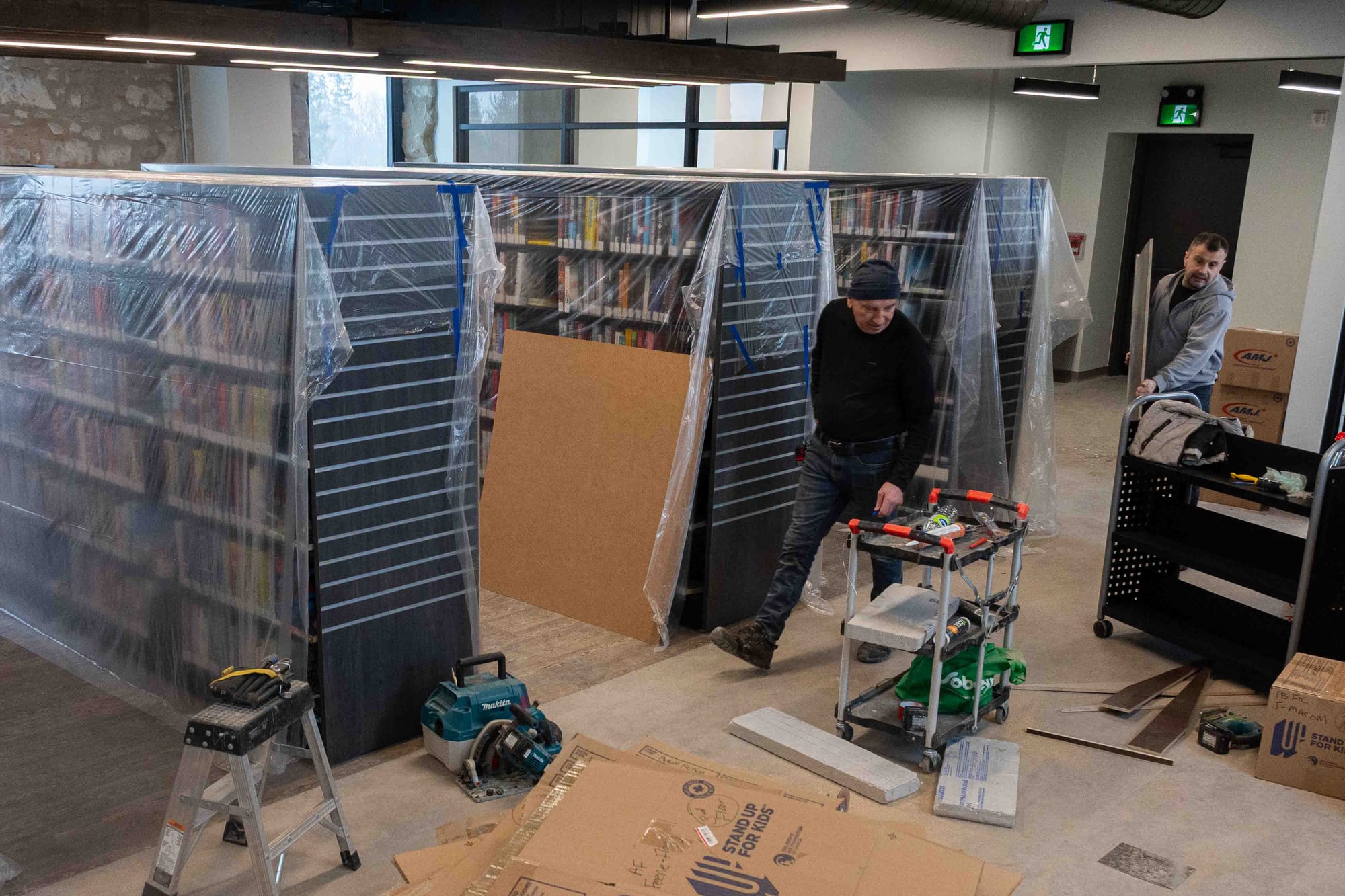
Come Feb. 18, draped plastic keeping sawdust at bay will be gone, 20,000 books will be stocked, the fireplace lit, and the four levels of Wellington County’s newest library branch opened.
“The end is in sight,” said head librarian Rebecca Hine during a Jan. 21 tour of the building. “It’s going to be an absolutely spectacular space.”
The former flour mill was completely gutted – just the original four walls remain.

A rentable meeting space with a big-screen TV occupies the basement.
Visitors will be greeted by a bookstore-like feel, with featured new arrivals and magazines on the main level where the circulation desk sits.
Childrens’ books and programming are on the second floor. Adult books, study rooms and a fireplace are found on the third.
And finally, on the top floor, is a common reading space with an outdoor patio overlooking a forest and the Credit River to the east.
Across the floor, Erin’s highest vantage point can be enjoyed as visitors look west through floor-to-ceiling windows.
Five “Carnegie” library branches in the county— named after philanthropist Andrew Carnegie, who funded library builds across Canada in the 1900s — have been modernized over the years, and compare in historical significance.
But none, including the three-level Fergus branch, compare to the scale of the five-storey mill overhaul.
“It’s been a long slog,” Hine said.
The branch’s opening is well behind schedule; doors were supposed to be opened last summer. Reconstruction began in September 2023.
Supply chain delays and contractor scheduling issues are being blamed by the county for the missed deadline.
Final costs for the project, first budgeted at $8 million and more recently at nearly $13 million, won't be known for some time.
“We have to remember we started with four walls, no floors, no roof,” Hine said.
The Erin branch was the last of 14 operated by the county without a dedicated, county-owned space.
It opened around 25 years ago, in Centre 2000, sharing space with Erin District High School.
Hine said students were constantly in and out of the shared library, and with limited space and scheduling, programming there fell short compared to other branches.
“We were very limited in what we could offer,” Hine said.
With the county now in control, Hine said programming, such as adult crafting, will be increased in Erin, aligning the branch with others.
A new library page and two part-time assistant branch supervisors have been added to the Erin staff.
“It also provides a community space, which the old library didn’t have,” Hine said of the new build.
Libraries are no longer focused solely on books, Hine said, and are evolving as the times do, offering programming with social connection, and a common space with shared resources available to all.
“The question I get all the time is: ‘Do people still read, do people still use a library?’” Hine said.
“What we can’t emphasize enough is that we are a community gathering space.”
Hine said “third places” – a place other than home or work where people go to spend time – are becoming rarer.
“Libraries are one of the last free public buildings,” she said. "You can come, sit all day, and we’re not asking you to buy something."
It was an intentional decision to locate the Erin branch at the village centre, in the former mill.
“This is a very historic, important building to the community; it was one of the founding members of Erin that built the grist mill here,” Hine said.
Erin proprietor Daniel McMillan constructed the mill in 1849, and though it’s undoubtedly transformed from the dilapidated building the county purchased in 2022, it’s not unrecognizable either.
VG Architects, a Toronto-based firm specializing in adapting old buildings for modern-day use, included salvaged elements from the mill in its design.
Red pine beams forming the mill's structure were removed, cut down, and repurposed for interior finishes.
The pine now forms slatted, dropped wood ceilings on the first, second and third levels. It’s also used for lintels above the windows, and for fireplace mantels.
Peering through glass on the main floor to the basement below, the mill’s penstock pipe sits in its original location, where water once flowed into the mill from a flume outside – a tribute to the building’s origin story.
Old grain elevator components and industrial machinery pieces have also been kept for display inside.
Out front, the original mill stone now forms part of the landscaping.
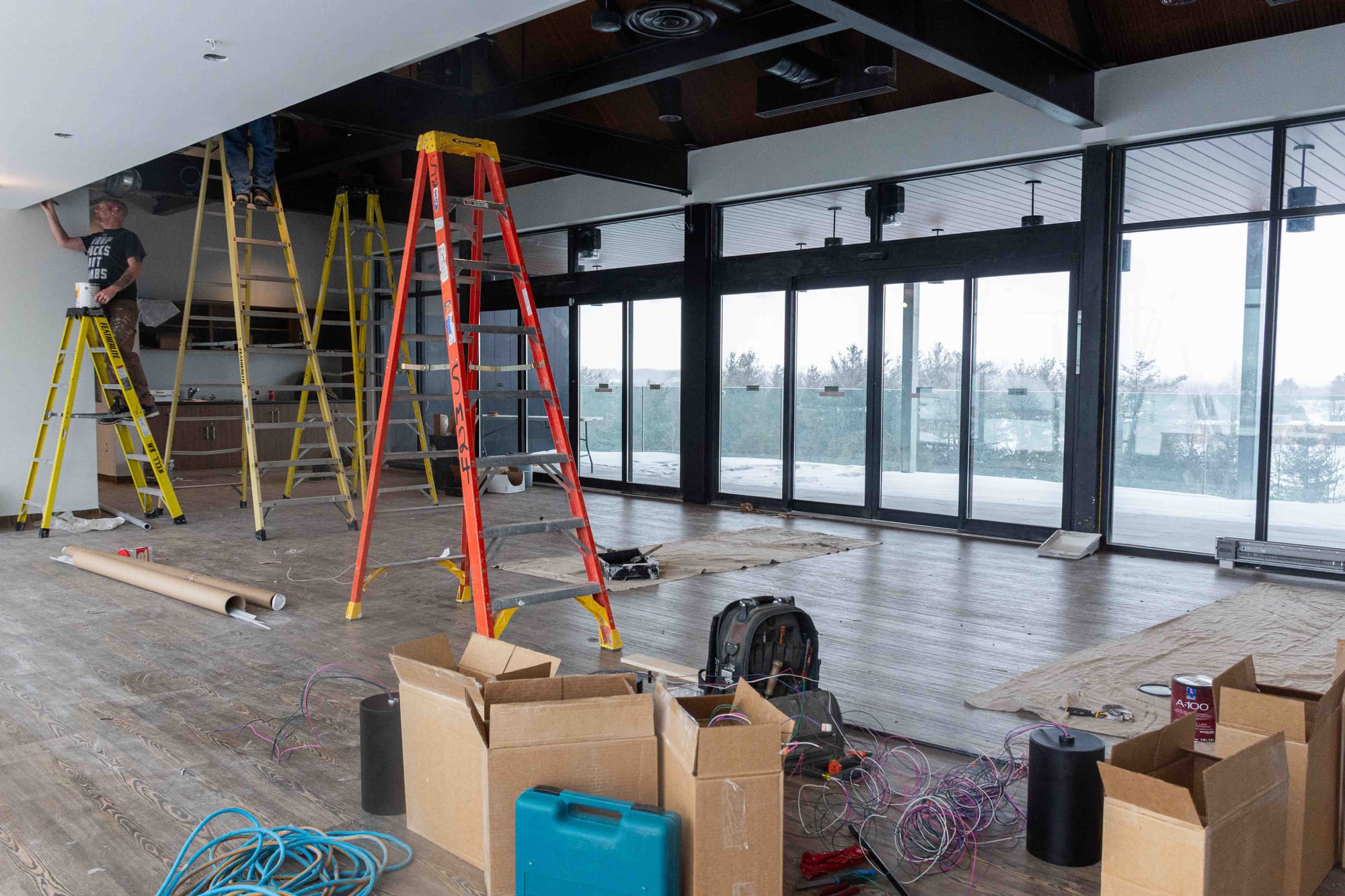
Last week, hand rails had yet to be mounted on glass panels of a ground-level deck and the fourth-level patio at the rear of the building.
Inside, workers were installing flooring on the main level, cutting window sills, and adding finishing touches. Furniture had yet to arrive and some shelving remained unassembled.
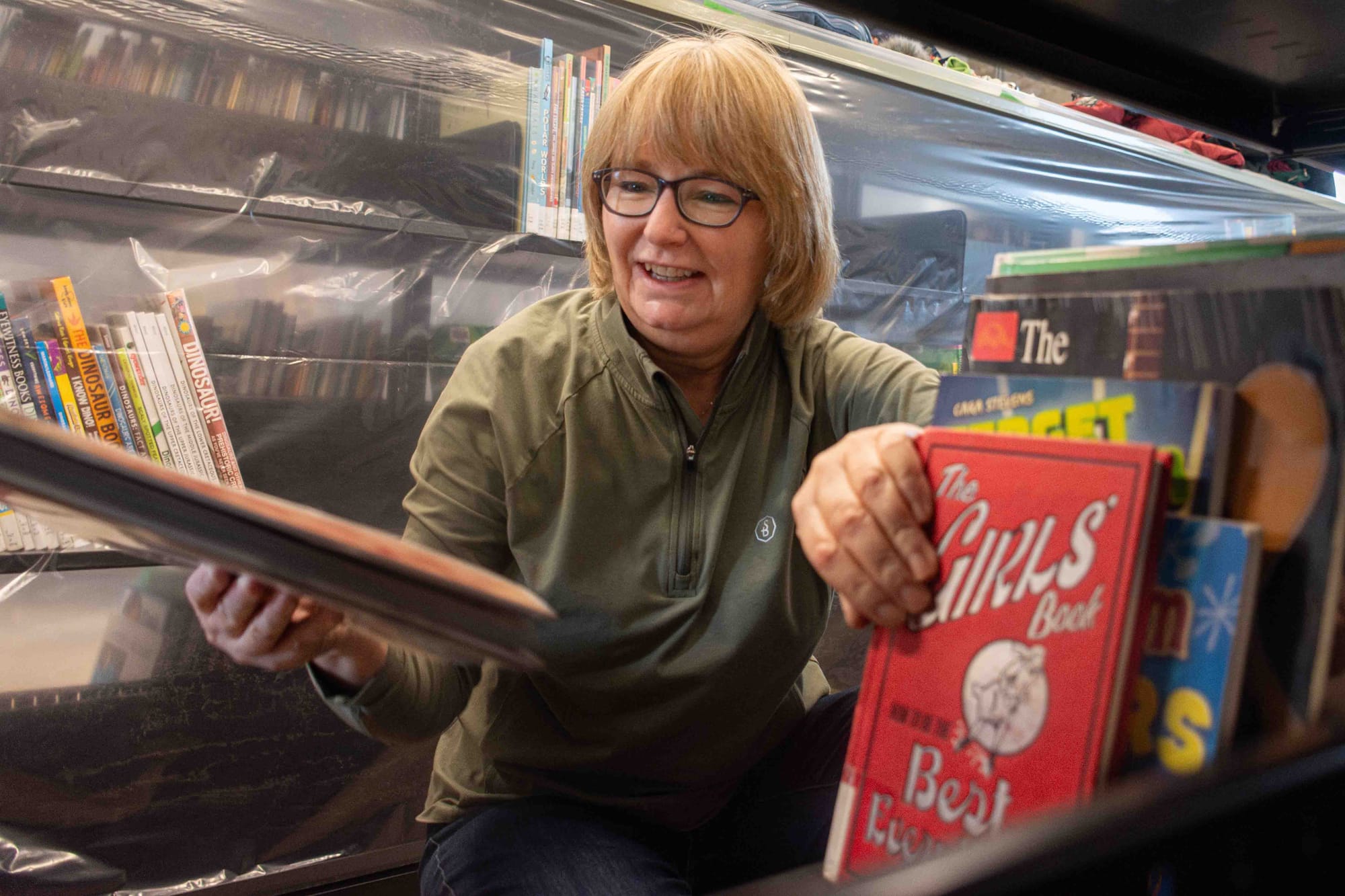
Library staff unpacked boxes of children's books stored since the old branch closed in August.
The building is expected to be ready in the coming weeks, with an official opening scheduled for Feb. 18.
“I’m going to be very curious to see how this building gets used, and then we will play to that and grow with that once the public lets us know how they want to use the space,” Hine said.


