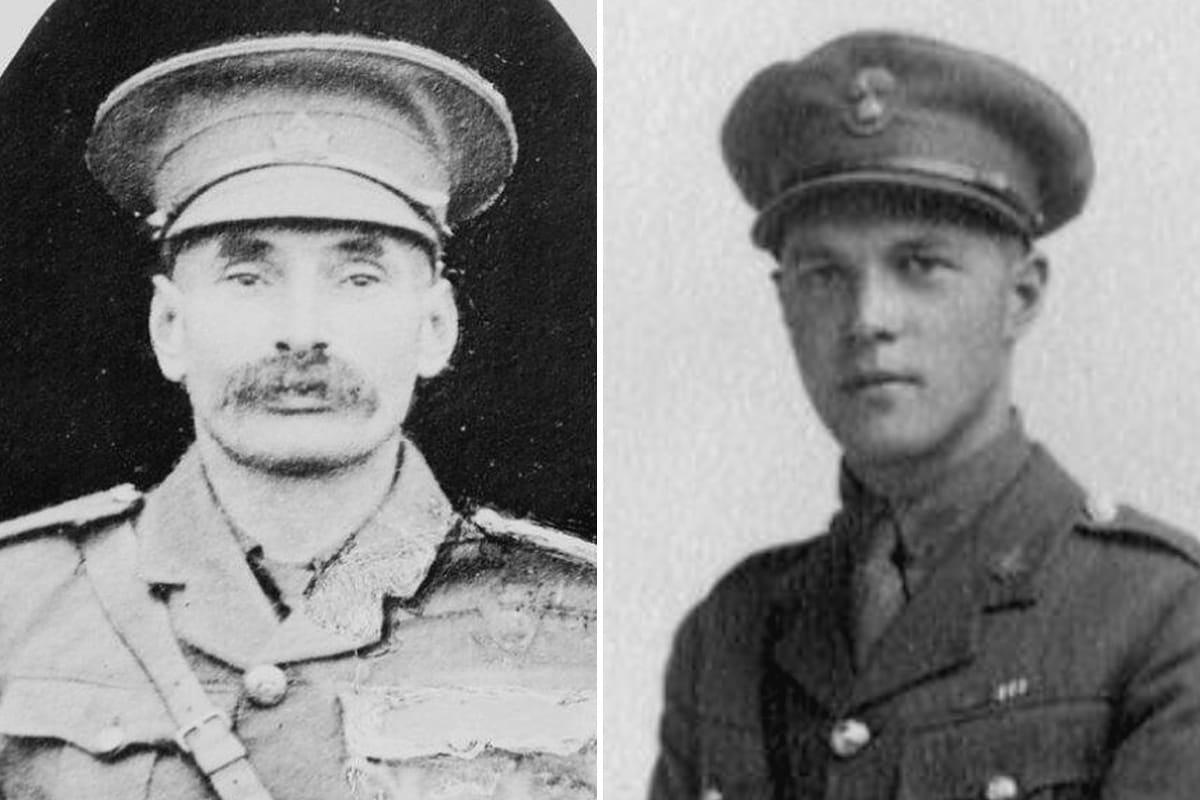
Great War heroes honoured at Wellington Place
Memorial unveiled for Victoria Cross recipients Frederick Campbell, Samuel Honey

ABOYNE – Two heroic Great War veterans are now permanently memorialized at Wellington Place.
One was a Boer War veteran from Mount Forest, who returned to the front lines in his 40s; the other a Conn-born schoolteacher who enlisted at 20.
Both died of wounds suffered in France, and were posthumously awarded the Victoria Cross for bravery. It's the highest military honour – fewer than 100 Canadians have received the medal.
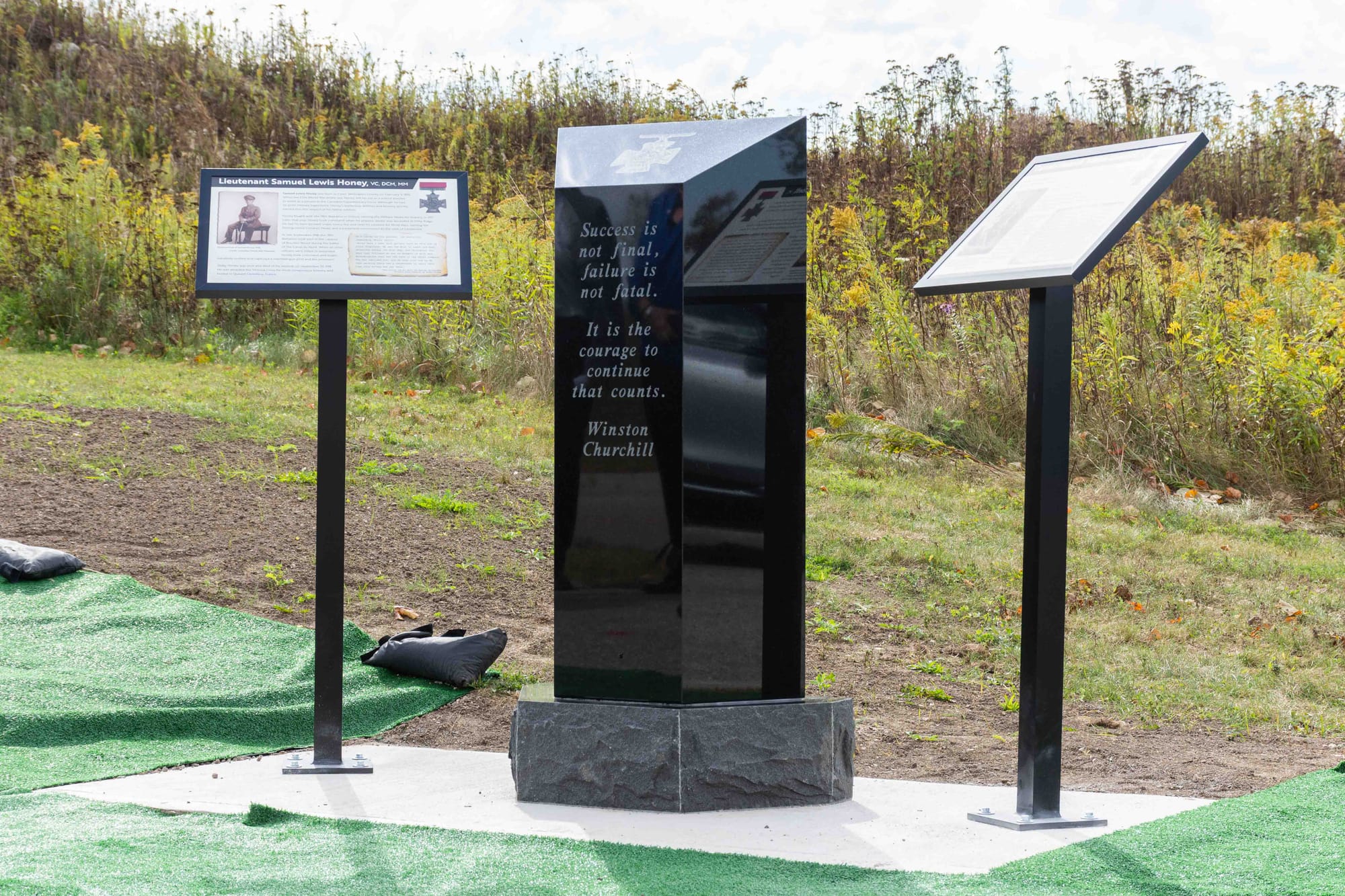
On Oct. 7, the county unveiled a black granite monument with panels on each side honouring Capt. Frederick William Campbell and Lt. Samuel Lewis Honey on Frederick Campbell Street, across from Groves Memorial Community Hospital.
County council endorsed the street name, along with Samuel Honey Drive, in 2019. The panels explain a lot about the men behind the street names.
Councillor and military history buff Jeff Duncan was credited at the ceremony with spearheading the project.
Campbell, too old for enlistment when the First World War began, falsified his age to join, Duncan told a gathering of county politicians, staff and Legion members.
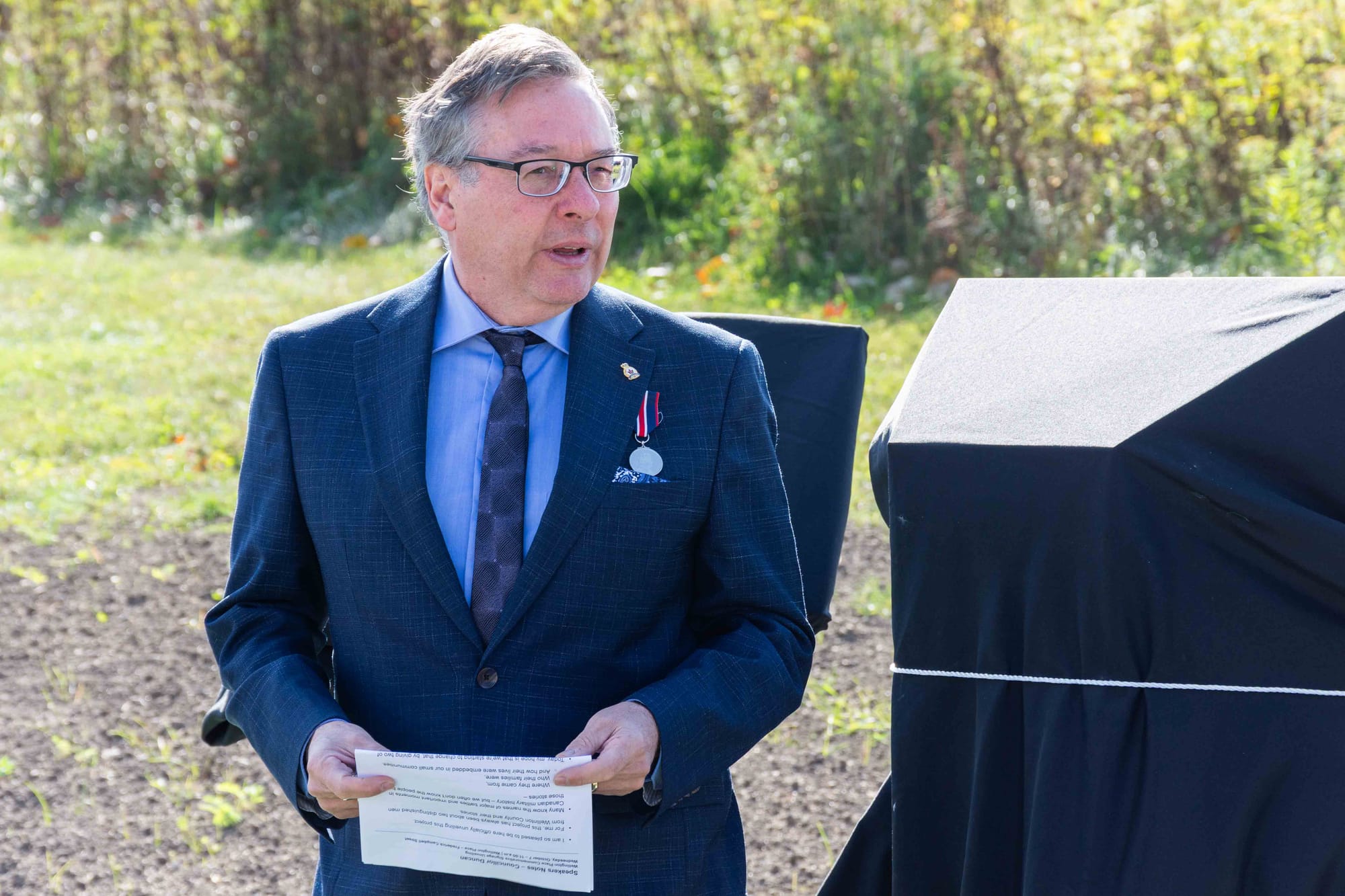
He had already survived the Second Boer War in South Africa (1899-1902) and returned to battle in France in 1915, surviving the Second Battle of Ypres in Belgium in the spring 1915, according to accounts of his service.
It was June 15, 1915 – Campbell's 48th birthday – when his battalion attacked German lines near Givenchy, France.
Campbell grabbed a machine gun and ran to attack a German trench.
He and Pte. Howard Vincent were the last standing in their crew as Campbell steadied the weapon on Vincent's back and fired on the German line. As the Canadians ran out of bombs, Campbell advanced and managed to fire roughly 1,000 rounds, holding off a heavy German counterattack.
Campbell was shot, but managed to crawl back from the line with a shattered right thigh bone.
He was operated on at a hospital in Boulogne, but died of an infection on June 19.
His Victoria Cross was given to his widow in Mount Forest.
Vincent survived after being badly burned saving the machine gun Campbell had fired. He later attended the dedication of the Mount Forest cenotaph as a guest of honour in 1928.
‘It’s important that this history be carried on’
Honey was born in Conn and attended school in Drayton before his family moved to Oxford County in 1908.
He was a teacher in York County in January 1915 when he enlisted.
Honey went to France in 1916 as a sergeant and joined the 78th Battalion. In 1917, he was awarded the Military Medal for a raid on German trenches, and for covering two squads under heavy grenade fire.
At Vimy Ridge the same year, he took over his platoon after the commander was wounded. They held a position for three days, earning him the Distinguished Conduct Medal.
He was commissioned as a lieutenant later that year.
On Sept. 27, 1918, at Bourlon Wood, France, Honey took command of his company after officers were killed. He single-handedly rushed a machine-gun nest, capturing the gun and taking 10 prisoners.
Honey went on to repel four counterattacks before going out in the dark and locating a German post. He led the unit that captured it, and more guns.
He led his company against another position on Sept. 29. The next morning, in an attack near Sailly, a shell exploded nearby, breaking both of this legs.
Honey died of his wounds the same day, on Sept. 30, at just 24 years old.
His family donated Honey's medals to the Canadian War Museum in 1975.
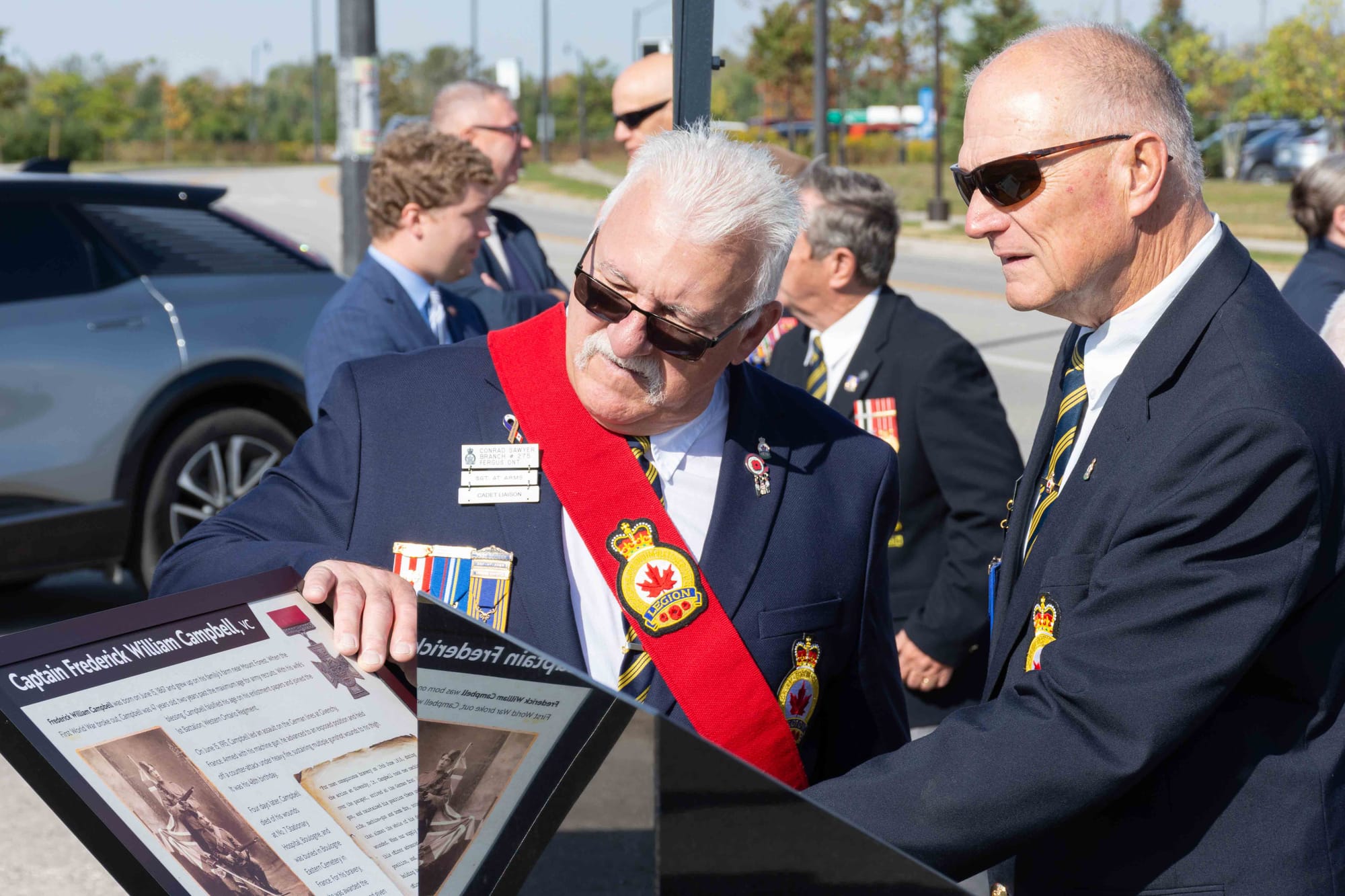
"The stories that we're able to tell here are of our own people," Duncan said.
Councillor Doug Breen said the monument is dedicated to "two men who certainly punched above their weight."
County Warden Chris White said, "it's hard to describe how much we owe these folks."
"It's important that this history be carried on, and people remember what they did, what they sacrificed," White added.
Wellington-Halton Hills MPP Joseph Racinsky lauded the project as a way to begin a period of remembrance as November approaches.
The Wellington County Museum and Archives is set to host a Remembrance ceremony on Nov. 9 at 10:30am, with a candle vigil to follow on Nov. 10 at 5:30pm.