


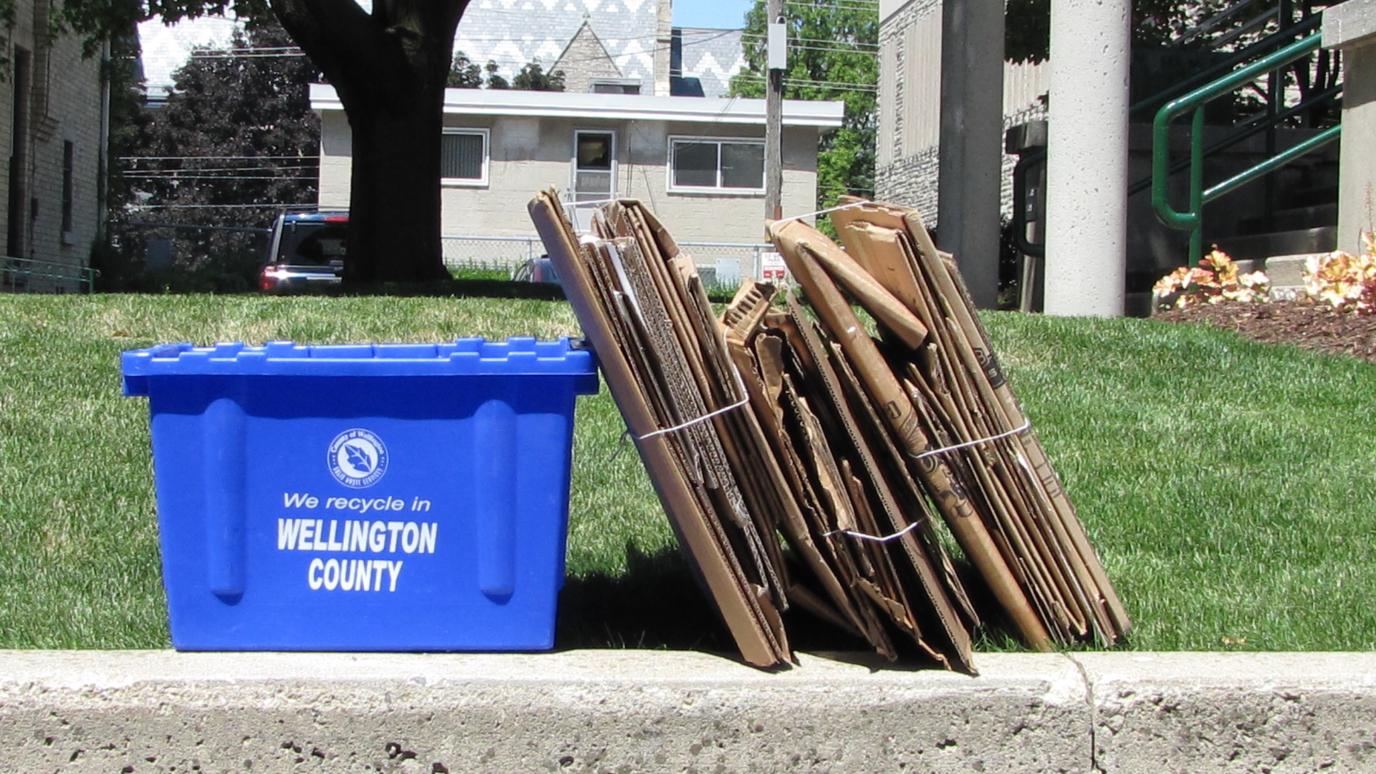
WELLINGTON COUNTY – The recycling system across the province has now changed and the list of accepted blue box items has expanded.
As of Jan. 1, Wellington County’s residential collection program is fully managed by Circular Materials Ontario, along with Waste Management and Recycling Services.
Since 2023, municipalities across Ontario have been transitioning to a full-producer responsibility system.
This means producers/businesses that supply packaging and paper are financially responsible and accountable for those materials over their full life cycle.
The county began its transition to the new framework on July 1.
“It’s been a pretty smooth transition,” county solid waste services manager Das Soligo told the Advertiser.
The program runs on an extended producer responsibility model and is recognized as “one of the most effective mechanisms for improving recycling rates,” Circular Materials officials stated.
Soligo noted county staff have a “strange role” as the “middleman” between residents and service providers, as they are no longer responsible for residential recycling.
“But residents still reach out to us to make inquiries or to report their blue box was missed,” he explained.
“We’re trying to encourage residents to go directly to the contractors themselves … for these types of issues.”
The transition will save the county about $2 million each year.
“[The] overall recycling system was costing [the county] approximately $4 million a year,” Soligo said.
Under the previous system, producers were paying half of the total cost, leaving the additional $2 million being raised through taxes.
A portion of the county savings – $250,000 to $280,000 annually – will pay for the continuation of recycling services for county businesses.
The service is currently available in 14 downtown areas and is to expand to all businesses in the 14 urban areas in April.
The transition to full-producer responsibility did not result in any job losses at the county, as it “didn’t have any positions dedicated solely to recycling,” Sligo said.
The change “allows our staff to focus on our organics program,” he added.
Over the next year, residents can expect to see the county promoting its green bin program to divert waste from landfills.
Additional materials accepted
Another big change under the new provincial model is an expanded list of recyclable items.
According to a Dec. 17 Circular Materials press release, the list has been applied in every community and “will eliminate confusion,” making it “easier for residents to recycle.”
“Previously every municipality had a slightly different set of acceptable materials that could go in the blue box,” Soligo said.
Now, it’s standardized across Ontario. The expanded list include:
- hot and cold beverage cups;
- flexible film plastic;
- foam packaging;
- glass, plastic and paper laminate containers;
- plastic food containers;
- cartons;
- aluminum (foils and trays);
- metal;
- tubes (toothpaste, deodorant, hand creams); and
- aerosol containers.
Some of the items must be empty with the lids and/or caps still on, while others must be rinsed and dried before recycling.
For more information on the new model, visit circularmaterials.ca.
County businesses with recycling questions can contact the solid waste services department at 519-837-2601 or email wasteinfo@wellington.ca.
Residents with recycling or collection concerns can contact Waste Management at 1-800-561-1655 or email canresidential@wm.com.
