

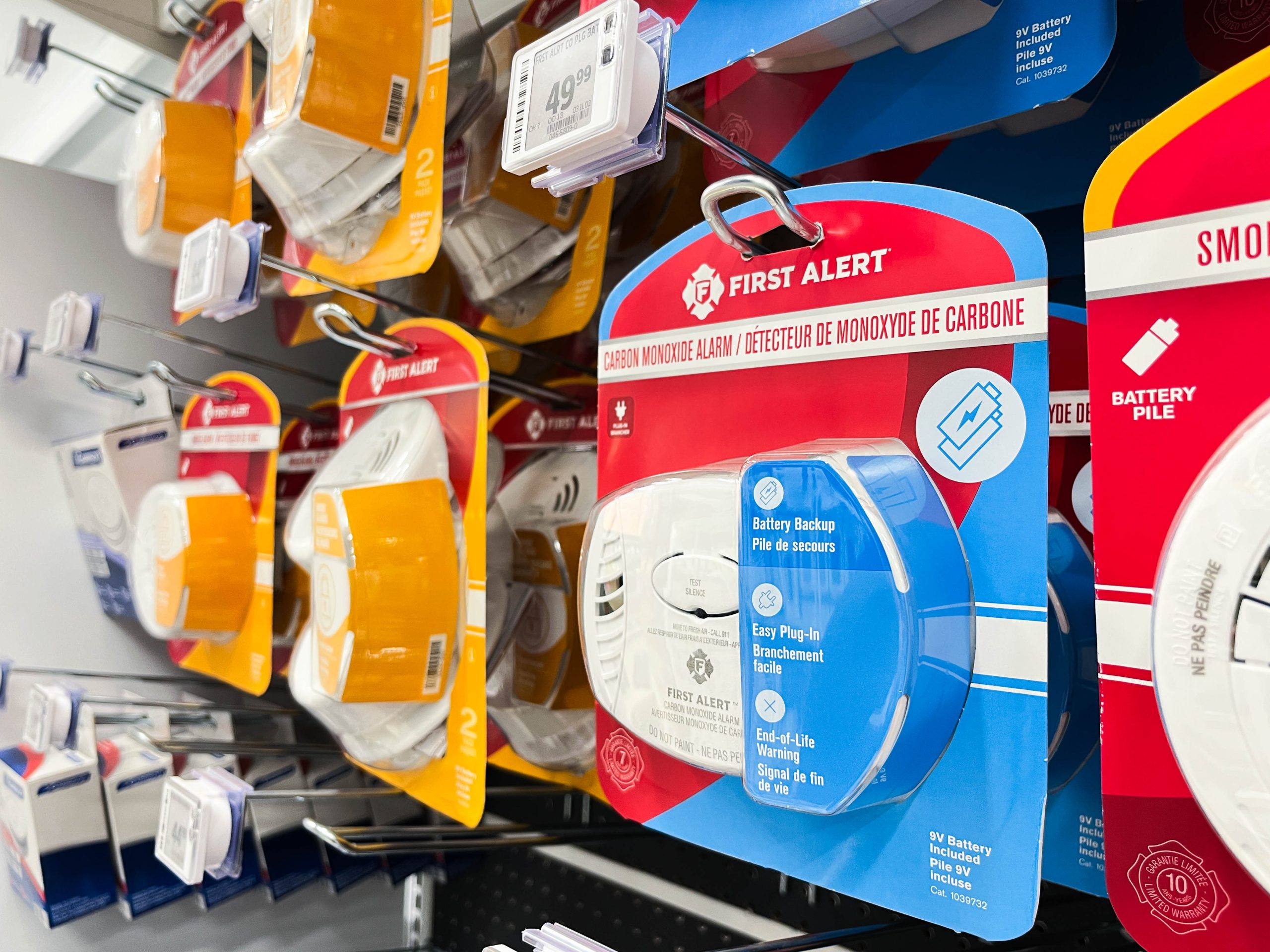
CENTRE WELLINGTON – A carbon monoxide alarm may not make it on anyone’s Christmas wish list, but come the new year, they’re required on every floor in many homes.
As of Jan. 1, carbon monoxide (CO) alarms need to be on each floor in homes with appliances fuelled by wood, gas and propane.
That’s a change from the current rules requiring an alarm only on floors where someone sleeps.
Homes with an attached garage, regardless of whether they have a fuel-burning appliance, are also included in the new requirement.
That’s because carbon monoxide can be sucked into a home when a door leading to a garage is opened – and because many homes have forced-air furnaces, the gas can be easily circulated.
The alarms also need to be in homes heated by air from outdoor fuel-burning appliances, because carbon monoxide can be pumped indoors through such a system.
“You can’t see it, smell it or taste it; there’s no way of detecting it without a working carbon monoxide alarm and it can be deadly in high concentrations,” said Christopher Paluch at Centre Wellington Fire and Rescue.
Paluch is the department’s fire prevention captain and said many don’t know of the new requirements, the most significant of many updates to Ontario Fire Code legislation.
The change aligns rules around CO alarms with long-standing rules for smoke alarms, Paluch added.
“If the alarm goes off, get outside; in the winter stay warm in your car, keep everything the way it [is] and we’ll come with the sophisticated equipment and the fire trucks and check it out,” Paluch said.
Firefighters will enter with protective gear and isolate the leak.
According to the department, there were 30 calls related to carbon monoxide this year. The gas was detected at six of the calls.
“That’s why we always urge people to err on the side of caution, get out of the house and call 911,” Paluch said.
Signs of carbon monoxide poisoning can include symptoms similar to food poisoning – headache, shortness of breath, fatigue, dizziness, nausea, vomiting – and become increasingly severe to the point of a loss of consciousness and death.
Firefighters tend to see furnaces going bad, according to Paluch, who encourages homeowners to get them checked annually.
Not complying with the new requirement could fetch a fine around $300, but Paluch said the Centre Wellington department won’t start writing tickets right away.
“Right now it’s more of an educational piece, just because the rules are so new,” he said.
However, should someone get hurt because an alarm isn’t installed, charges could be laid, Paluch added.
At rental units, landlords are responsible for installing, testing, replacing batteries and maintaining CO alarms, along with providing operating instructions to tenants, according to a Centre Wellington news release about the changes.
Tenants are responsible for notifying a landlord of issues with CO alarms in their unit, and cannot legally remove a battery or tamper with an alarm.
Firefighters plan to visit local residences in warmer weather, when neighbourhoods are more active, to continue spreading the word about the new requirements.
Some neighbourhoods with homes between 10 and 20 years old were recently visited, Paluch said, with firefighters targeting those at the 10-year mark when smoke and CO alarms need replacing.
If it’s time to replace a smoke alarm, new units are available that combine both smoke and CO alarm functions.
For those with smoke alarms that don’t yet need replacing, Paluch recommends purchasing traditional, plug-in style alarms.
Alarms of both kinds can be purchased at common hardware and home improvement stores, or in the home sections of big box stores.
Keep an eye out for industry standard testing logos, such as those of the Canadian Standards Association, Underwriters Laboratories of Canada and Electrical Testing Laboratories.
Anyone uncertain of what to buy can call their local fire department (519-843-1950 in Fergus).