

WELLINGTON COUNTY – Beneath tattered flags and echoes of gunfire, among the wounded and the dead, Black Canadian soldiers marched the battlefield with unwavering courage.
And when the cannons fell silent they returned home, not to parades or fanfare, but to an eerie silence that many people say has since stolen their recognition.
“There’s a hidden military history that is largely overlooked,” Centre Wellington Black Committee founder and chair Millicent Gordon told the Advertiser.
She studied history and noted none of her professors mentioned Black military service in Canada.
Exact numbers are not known, but about 1,300 to 1,500 Black Canadians served during the First World War and several thousand more served in the Second World War.
But from textbooks to media coverage, the stories and sacrifices of Black soldiers in Canada are often left unheard and unrecognized.
“The Canadian military is completely integrated now and everyone can enlist and get promotions to different posts,” said Gordon.
But it wasn’t until the 1950s, the Canadian military was largely segregated.
During the First World War, the military did not actively seek to recruit Black soldiers and the Black soldiers that applied were either turned away or assigned to a segregated unit.
Canada’s main segregated First World War unit was the No. 2 Construction Battalion, also known as the “Black Battalion,” the country’s only all-Black military unit.
This unit was tasked with the construction of roads and railways as the Canadian military refused to send them into combat.
The Canadian government issued a formal apology for segregating the No. 2 Construction Battalion in 2022, Gordon noted.
During the Second World War, Black Canadians were initially turned away, but after protests they were allowed to serve and see combat. There were no segregated units during WWII but Black soldiers still faced extreme racism and prejudice.
Black soldiers also helped in the construction of roads and railways in the Second World War.
Gordon said the erasure of Black soldiers from history can most likely be accredited to systematic racism.
Canadian history books educate Canadians on names such as Sam Hughes, John McCrae and Billy Bishop but rarely include names such as Jeremiah Jones, James Grant and Lancelot Bertrand.
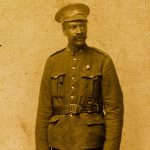
JEREMIAH JONES
Jeremiah Jones
Jeremiah Alvin Jones was a Black Canadian soldier who served in the First World War.
Jones was recommended for a Distinguished Conduct Medal but there is no record of him having received it.
Jones was born in Nova Scotia and died at 92 years old in 1950. He enlisted when he was 58.
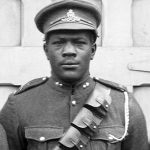
JAMES GRANT
James Grant
Grant was born in 1897 in St. Catharines, Ontario. He enlisted in 1916 and arrived in France in March 1917.
First a gunner, Grant later became a driver and most experts believe he served at Vimy with the Canadian Field Artillery’s 23rd Howitzer Battery.
Grant received the Military Medal for bravery at the Battle of Passchendaele in 1917. He was the first Black man to receive the award.
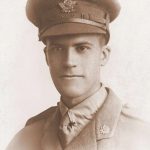
LANCELOT BERTRAND
Lancelot Bertrand
Born Nov. 18, 1892 in St. Georges, Grenada, Bertrand served in the Canadian Infantry, British Columbia Regiment.
Bertrand has been credited as the first Black officer in the Canadian Expeditionary Force.
Bertrand went to France with the 7th Battalion, where he was badly wounded in the right shoulder in 1915. After recovering he was promoted to a lieutenant and returned to France in 1916 to rejoin the 7th Battalion.
His first major battle was the Battle of Vimy Ridge.
Bertrand was awarded the Military Cross for his extraordinary courage leading his soldiers into battle after all other officers had been killed or injured.
Henry Braithwaite
Diana Braithwaite is a descendant of Wellington County’s first Black settlers and her father, Henry, served in the Second World War.
“In 1942 the war beckoned my father and many of his generation,” she told the Advertiser.
“My dad clearly remembered the terrifying drone of V2 bombs zooming overhead while serving across England, France, Belgium and Holland,” she added.
“Dad also recalled the confrontations and challenges he experienced during his service as a soldier fighting in the war, when he and other Black soldiers that had enlisted, repeatedly encountered discrimination.”
She added the men “found themselves the recipient of racial slurs on various occasions, from within their own regiment, during their time in the Canadian Army.”
Diana said this was “a painful reality shared by many African-Canadian veterans who had enlisted to fight for freedom abroad.”
Gordon says it is important to remember the sacrifices of Black soldiers.
“These were the people that broke down these barriers, these racial barriers,” said Gordon.
“From the War of 1812 to World War II, they fought for a country that didn’t always fight for them.
“On Remembrance Day, we remember not just their sacrifice, but their insistence on dignity, belonging, and justice.”