

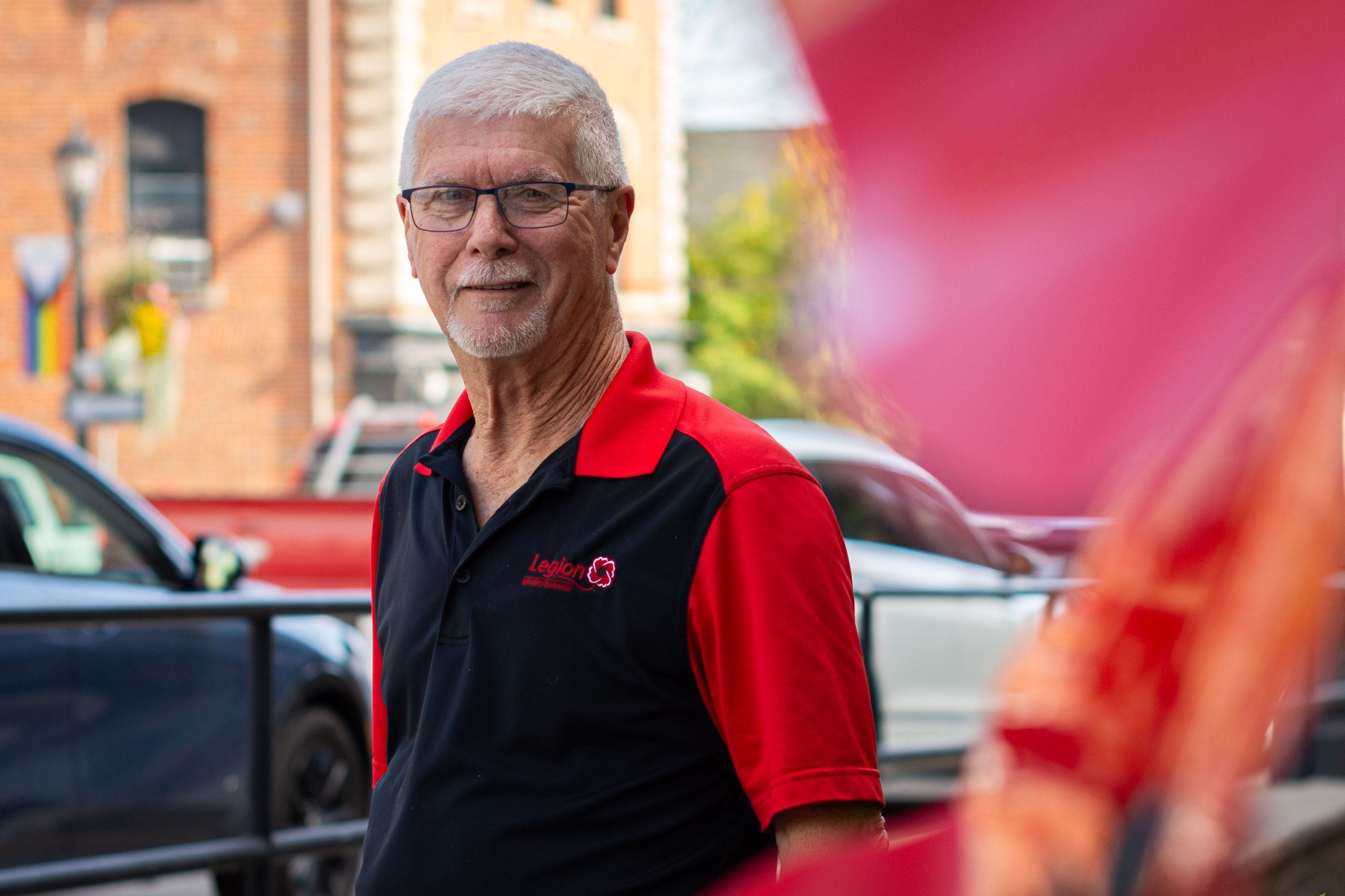
ELORA – Longtime Elora Legion member Lynn McClellan has reached the top, just as he predicted he would three years ago.
McClellan, who previously served as the Ontario Provincial Command’s first vice president, replaced former president Derek Moore in May.
McClellan anticipated his election to the top spot when speaking to the Advertiser in 2022 about his role as vice president.
“I was able to sell myself over the years,” he said last week. “It’s based on your presentation and how you’ve acted over the years, and hard work.”
It’s been a busy start to his two-year presidential term, visiting branches across the province, attending events and responding to ever-present demands.
“It’s day-to-day business; it’s about problem solving,” McClellan said. “There’s always something.”
McClellan has easily settled into the role, having shadowed Moore for the past three years, but the post is not without challenges. And not just for McClelland, but the Royal Canadian Legion as a whole.
For the first time in more than a decade, Legion executives were able to get a vote through at a May convention to raise membership dues – the branch-level fees members pay to cover operations across the country and province. The increase takes effect next year.
Local branches keep few of the dollars, McClellan said.
‘One of the biggest issues’
At the May convention, held in London, where McClellan was voted in to the president’s role, he promised to “cut back expenses and save money.”
“That’s been one of the biggest issues over the last few years,” he said.
Getting branch-level voters on board was challenging, McClellan said.
While a local branch has a bar to generate revenue, the provincial and national levels, aside from financial investments, require member dues to pay for programs, services, the Legion Magazine and staff wages.
“We’re trying; we need more money to run our operation,” McClellan said.
That in turn meant promising cuts elsewhere to soothe the controversy sparked by the increase in membership dues.
“I promised we would make sure that we cut every corner we could to try and save money as well,” McClellan said.
He suggested travel and event-related costs could be reduced or even eliminated altogether by not attending certain functions.
A convention planned in Ottawa was originally set for three days in 2027 but has since been reduced to a two-day event.
“I’m watching carefully about who’s going where,” McClellan said, certain he’s going to irk some people along the way.
“We’re trying to help them; I’m trying to make sure that they stay viable,” McClellan said.
Veteran membership lacking
Meanwhile, McClellan said membership is increasing, though not among more recent Afghanistan veterans.
“Right across the province, if you look at a lot of them … the majority of our membership are seniors,” he said.
There are now 100,000 members in the province as of 2025, according to McClellan, making Ontario the province with the largest concentration of members in the country.
“By being a member of the Legion, it’s helping increase our numbers so that when we go to the government to advocate for better pensions or better benefits for veterans, we’re a voice,” McClellan said.
The Legion wants veterans to work with the organization, McClellan said, but it doesn’t appeal and relate to younger veterans.
There are other grievances among younger veterans, including civilian leadership running the Legion and non-serving members wearing frumpy uniforms with Legion-issued medals having nothing to do with military service.
“We wish they would come help us and get involved, gosh that would be wonderful,” McClellan said of veterans.
McClellan is not a veteran but joined the legion in 1972, inspired by his father’s Second World War service from 1939-45 with the London-based 1st Hussars.
When his father, Frank, returned from overseas, he went to the Legion to trade war stories, McClellan said.
“But it’s gone completely away from all that now.”
The modern Legion has roots dating back to 1917, when the Great War Veterans’ Association was formed. In 1925-26, the modern Legion took form, responsible for helping veterans, advising government and distributing poppies.
Now, Legion branches largely support community organizations with donations from fundraisers, and they offer cheaper booze, live music and game nights for an older crowd – at times removed by a generation or more from military service.
But McClellan maintains veterans remain the priority.
“I think so highly of the veterans, I mean that’s what keeps me going … there are so many veterans out there that we help,” he said.
McClellan gave some examples of the money donated by the Legion helping Wounded Warriors Canada provide service dogs, service officers who connect vets with government services, veterans’ transition programs, or those in need with cash through the Soldiers’ Aid Commission.
He said local branches, like Elora Branch 229, support the community through grants, such as support for the Groves Hospital Foundation, and help to educate children about recent history through local essay and public speaking contests.
Now 77, with 53 years of volunteering with the Legion, including a decade of emceeing Remembrance Day services at the Wellington County Museum and Archives, McClellan said he’s honoured to be voted to the top Legion post in the province.
“It’s a pretty big deal to me,” he said, calling it an honour to “do what we do and be able to be involved in so many of these programs.”