

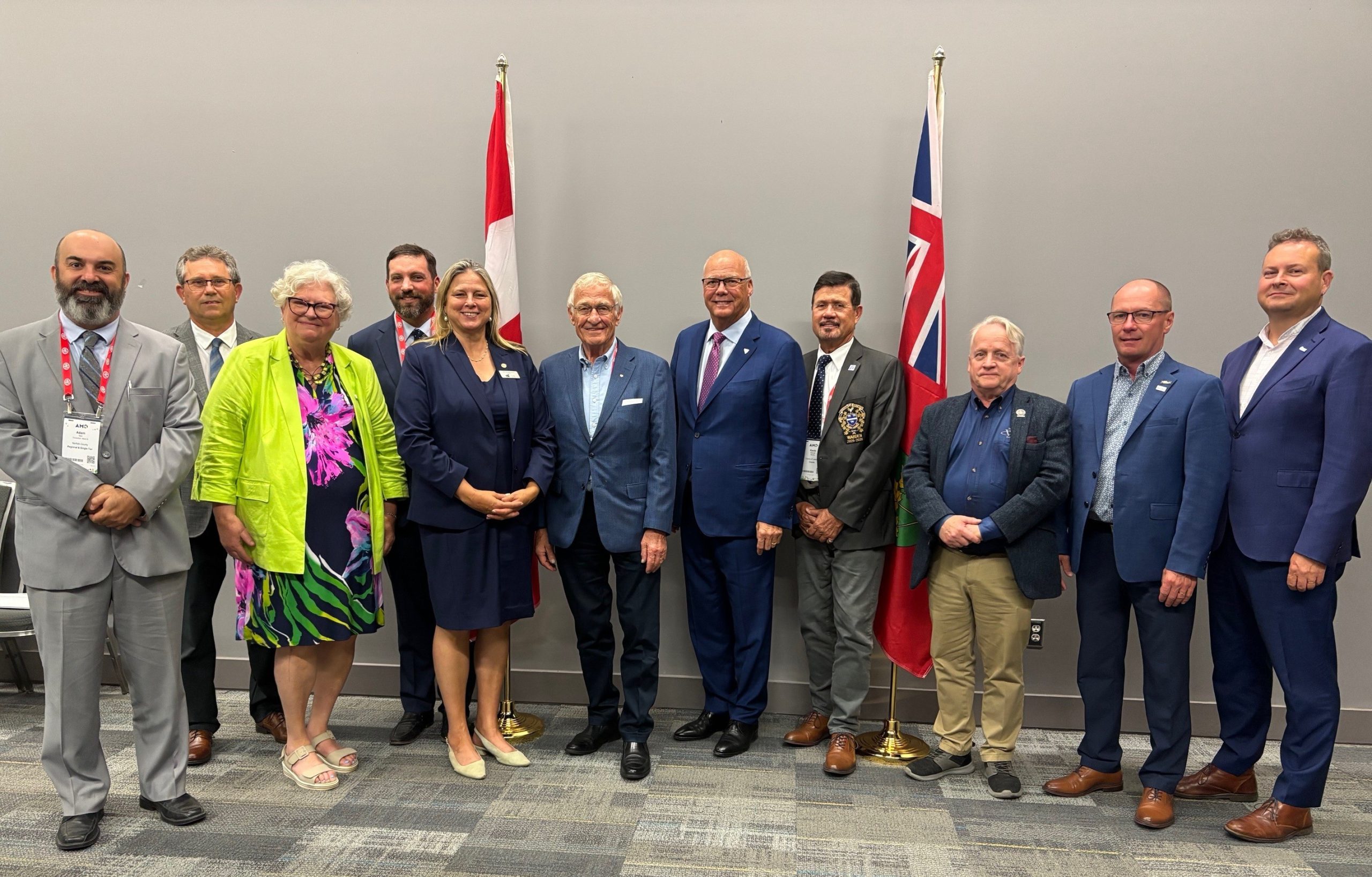
OTTAWA – Municipal representatives met in Ottawa last month to talk about issues including housing, infrastructure, mental health and addictions.
The 2025 Association of Municipalities of Ontario (AMO) Conference took place from Aug. 17 to 20.
The Western Ontario Wardens’ Caucus (WOWC) met with Minister of Labour, Immigration, Training and Skills Development David Piccini, Minister of Municipal Affairs and Housing Rob Flack and parliamentary assistants Steve Pinsoneault and Bob Bailey from the Ministry of Rural Affairs.
The caucus also engaged with the Ontario New Democratic Party, Ontario Liberal Party, and Ontario Green Party to reinforce the importance of cross-party collaboration on rural priorities, officials stated in a press release.
The conference began with a joint meeting between the WOWC and the Eastern Ontario Wardens’ Caucus (EOWC), which covered some opportunities and challenges facing the two caucus’s collective 220 rural and small urban municipalities across Ontario.
Ontario Minister of Rural Affairs Lisa Thompson, parliamentary secretary to the secretary of state for rural development Pauline Rochefort and Rural Ontario Municipal Association chair Christa Lowry offered remarks during the meeting.
Officials say one of the meeting’s key outcomes was a unified commitment to the Elect Respect campaign, a province-wide initiative advocating for a safe, respectful and inclusive democratic environment for candidates, elected officials and public servants.
“The joint pledge marks a strong stance against harassment and abuse in politics, and a call for higher standards of civility and inclusion in public life,” the release stated.
The caucuses encouraged all elected officials, organizations and members of the public to sign the pledge at electrespect.ca.
“Our meetings this week were a valuable opportunity to highlight how Western Ontario is powering Ontario’s economic engine,” said WOWC vice chair Kevin Marriott.
“From 2016 to 2021, our region grew by over 121,000 people and led the province in housing growth,” he continued.
“With $40 billion in investment and 30,000 jobs on the way, our communities are not only growing, but they are also driving Ontario’s prosperity. That growth must be matched with the right infrastructure, housing, workforce supports and mental health services.”
WOWC’s 2025–2027 strategic priorities, outlined in its advocacy plan Powering Ontario’s Economic Engine, call for:
– infrastructure development and funding including sustained investment in rural roads, bridges, water/wastewater and transit;
– connecting infrastructure capacity to housing supply and stabilizing housing availability and affordability;
– improving workforce development and preservation by expanding skills training and workforce housing to meet industry needs; and
– increasing mental health services and support by ensuring dedicated rural resources without overburdening municipal budgets.
Marriott said “Our discussions with provincial leaders reaffirmed the need to work together to turn challenges into opportunities.
“By collaborating across all levels of government, we can ensure that western Ontario has the tools to support growth, create jobs and build healthy, vibrant communities for the future,” he added.
“The WOWC looks forward to continuing these conversations and working with provincial partners to implement solutions that benefit communities across our region,” Marriott said.