


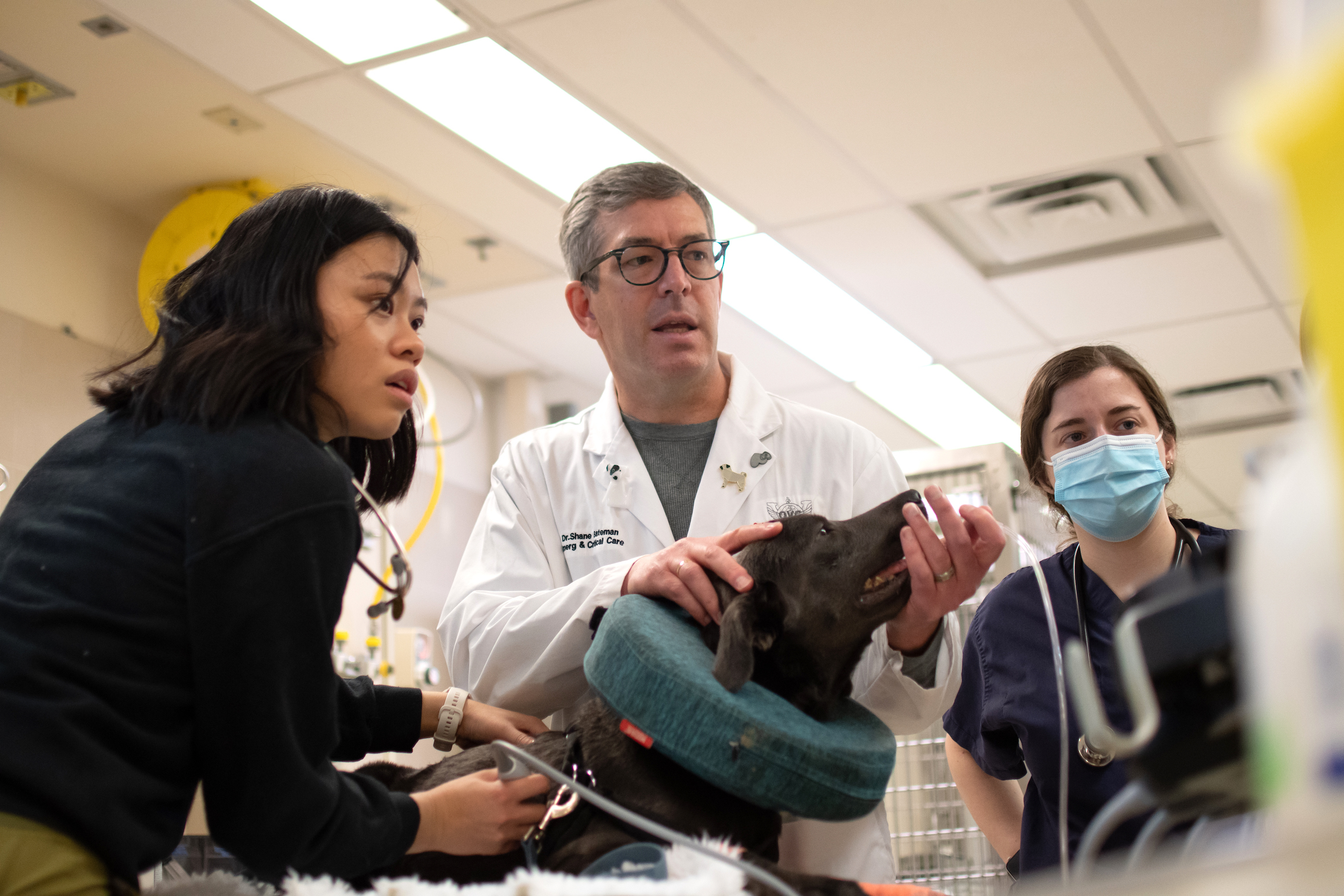
GUELPH – Ontario Veterinary College professor and forensic veterinarian Dr. Shane Bateman decided to take a stand against animal abuse/neglect and now empowers the next generation to be the voice for the voiceless.
In 2018 Bateman attended a conference for Humane Canada, an animal welfare advocacy organization.
“[It] focused on bringing together interdisciplinary professionals to discuss how cruelty against animals is part of a cycle of family violence that affects children, intimate partners and elders in the home,” Bateman told the Advertiser, noting the cycle is often called “the violence link.”
During the conference, veterinarian Dr. Melinda Merck spoke about victims of animal abuse and how they rarely see justice in the current system.
“She was the inspiring force” behind Bateman’s actions today, he said.
Bateman and colleague Emily Brouwer now teach final-year students ways to identify and report animal abuse with confidence.
“When asked, almost 90 per cent, and sometimes higher, of veterinarians will say ‘yes I believe that I have … seen a patient that has been intentionally harmed,” he said.
But according to Bateman only 30 to 40% report these cases.
“I think it comes down to education. This hasn’t been something that has been taught in the curriculum,” he said.
That’s where the educational rotation comes in.
The veterinary forensic science elective rotation is offered to students in final last year, when they deal with real world situations and experiential learning.
“[We] try to create as close to real life as we can go, so that students aren’t afraid of the judicial system,” Bateman said.
“It’s all part of ensuring the story of what happened to this animal falls on ears and (it’s a) personal call to action for every person, every professional that’s involved.”
One of the exercises is a mock crime scene that prepares students to present an animal case to volunteer lawyers who act as defence attorneys and prosecutors.
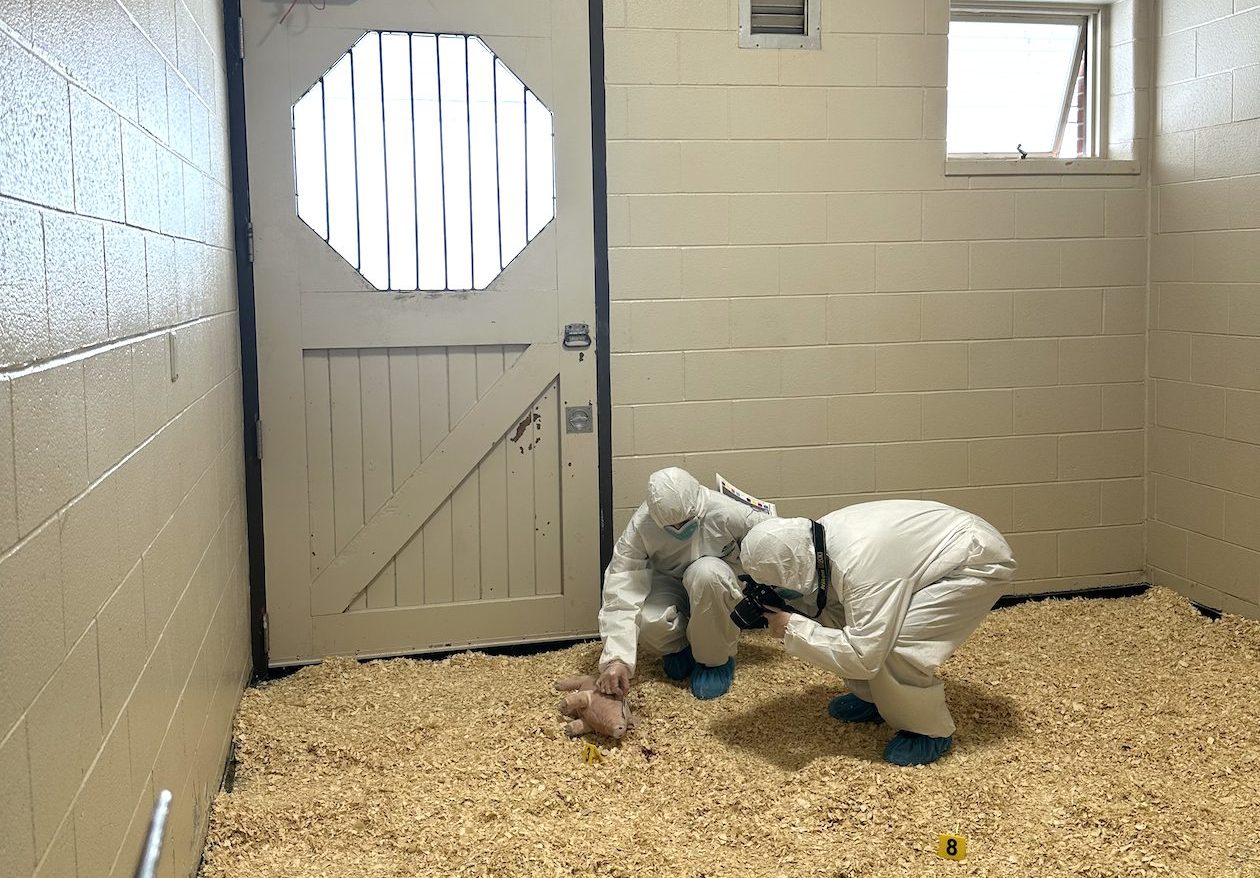
Two students participating in a mock crime scene involving animal abuse. Submitted photo
“Students need to understand they’re a really important part of the overall process,” Bateman said.
He listed key issues in the justice system regarding animal abuse cases.
“The first is the way that animal welfare and the legal view of animals has developed, has really come from a very strong colonial lens,” he explained.
“Animals were always believed to be dumb creatures that couldn’t feel, that couldn’t think … and that humans were supposed to care for them.”
With that attitude, animals found a place within the law as property.
“When we look at the fines, punishments and jail sentences that arise from crimes against animals, they are sort of in the same line as major property crime,” Bateman said.
As much as he wishes for change in the legislature, it doesn’t come without controversy.
“These kinds of positive and progressive changes are often met with fear and backlash, especially from animal producer organizations … that utilize animals,” he said.
According to Bateman, most of the Criminal Code that applies to animals was written in 1892, with barely any updates since, leading to an increase in crimes against animals.
“As a result, every province also has its own animal welfare act that deals with anything the Criminal Code isn’t,” he said.
The investigation process tends to “land on the shoulders of charitable organizations” that are then responsible for funding.
Expensive investigations can also be a deterrent in animal cases.
“There’s not good data to understand. We can’t compare from province to province, and we certainly don’t have any national data,” Bateman said.
According to Statistics Canada, no data is collected on animal cruelty or animal testing. Bateman explained domestic violence and family violence were “out of control” during the COVID-19 pandemic.
“There was a dramatic increase in the number of people who were harmed,” Bateman said.
“And what we know about the violence link is that violence didn’t just happen to intimate partners.
“We can’t lose sight of the fact that animals are in the crossfire too.”
Someone may be a pillar of the community or on the outside have a beautiful farm/house, but “these things happen in the dark” and that’s something he aims to teach his students.
“The human mind is cruel and awful sometimes,” he said.
Bateman asks police officers to be aware and get involved in investigations related to animal crime.
“[Police] have all the authority an animal welfare investigator has in Ontario,” he said.
“They don’t necessarily see that as being in their job description sometimes, but it’s really important.”
He urges officers with questions to contact a local veterinarian who can provide support and resources.
Bateman is also developing an educational training course for equine veterinarians across Canada.
The series will comprise of a webinar on Sept. 18 and a full-day workshop on Oct. 1.
“Horses are such an important part of our life,” he said.
“The laws in Canada tend to be very focused on dogs, cats or farm animals.”
Horses tend to bridge the gap between the home and farm.
The workshop is for graduated veterinarians who want to learn about identification factors of abuse in horses and who to report to gain justice in the barn.
