


Regional transit study calls for increased bus service along Highway 6
Study heading for county council vote in December

WELLINGTON COUNTY – A four-county transit study is recommending riders on the current Guelph to Owen Sound Transit (GOST) bus get twice as many trips per day, but lose Sunday service along with a stop in Elora.
The recommendation is included in a 360-page study by Dillon Consulting looking at what a regional transit network would look like across Bruce, Dufferin, Grey and Wellington counties.
Though Wellington council won’t get a formal look at the study until December, Grey County received the document with Dillon’s recommendations last month.
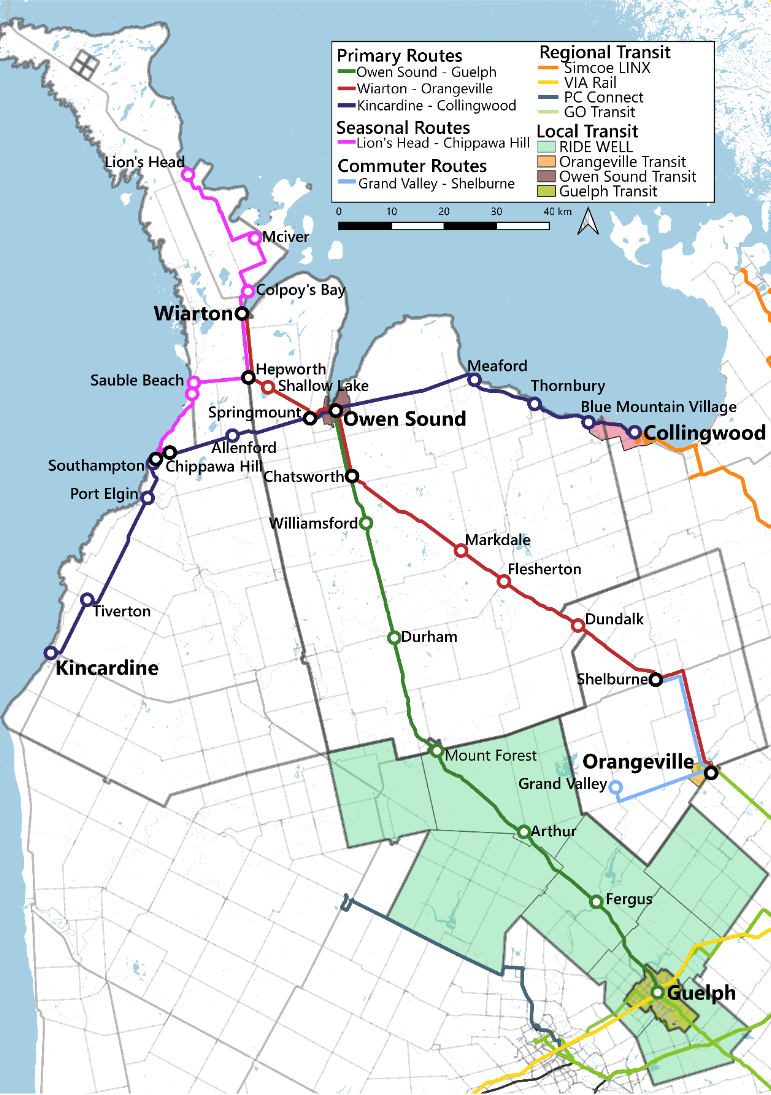
Dillon recommends folding GOST into a new four-county transit network – run by a board appointed by the counties – but keeping Owen Sound-Guelph bus service along the Highway 6 corridor.
Service would be modified from two round-trips per day, seven days per week, to four round-trips per day Monday through Saturday from 7am to 7pm.
Should Dillon’s recommendations be accepted, stops would continue in Mount Forest, Arthur and Fergus, but Elora would be dropped to keep the route direct.
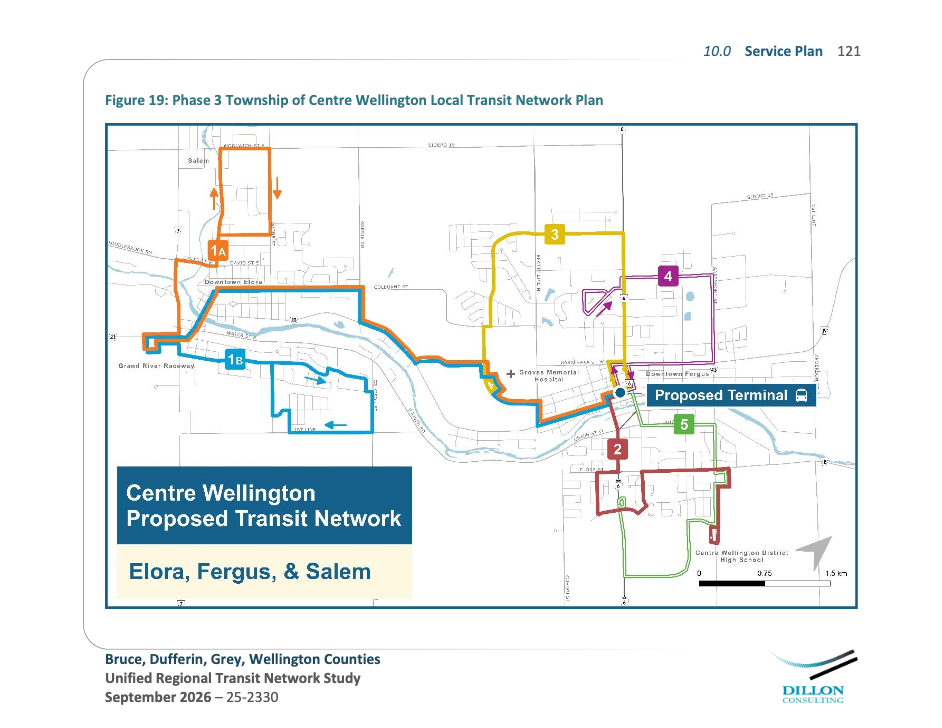
The study notes a bus terminal is proposed for downtown Fergus, with buses connecting Fergus and Elora.
The study also suggests a new fare structure, increasing from a $5 base fare, plus $5 for each zone crossed, to a $10 base fare, plus $5 for each additional municipal boundary crossed, to a maximum of $25. In some cases, current fares would double or triple.
For example, a trip from Fergus to Guelph currently costs $5, but would increase to $10. A trip from Arthur to Guelph would increase from $5 to $15. However, a longer trip from Guelph to Owen Sound would only increase from $20 to $25, due to the cap.
Dillon says in the report the higher fares reflect “the long-distance nature of trips and high cost of service,” while options for bulk ticket purchase discounts and discounts for low-income riders “will help ensure the service is affordable.”
Dillon projects 17,723 passenger trips yearly, compared with nearly 13,000 recorded on the GOST system in 2025.
GOST is currently run by Owen Sound and operated by private transportation company Voyago, with funding from Grey and Wellington counties and the province. The county is spending $80,000 on GOST this year.
Ride Well ridership record set
The county also has its own answer to rural transit through the Ride Well on-demand ride share service.
But Dillon says the service is “constrained by its own success,” leaving residents without rides during peak times because of high demand and a limited fleet.
Last year, Wellington residents took 11,326 Ride Well trips – up 16 per cent from 9,757 rides in 2024.
This June was the busiest month on record since the service started seven years ago, with 1,107 recorded rides among 207 individual riders that month, according to an economic development committee report.
With more demand than the service can handle, Dillon recommends freeing up vehicles by connecting long-distance travellers to the Highway 6 bus, with $5 off the bus fare.
New council, big decision
A revamped system could launch as early as July 2027, pending council approvals. Dillon is set to present its study to a new Wellington County council on Dec. 3.
Economic development staff is also expected to present a report recommending councillors make a decision on next steps, possibly including whether to direct county staff to budget for participating in the regional transit network.
 Jordan Snobelen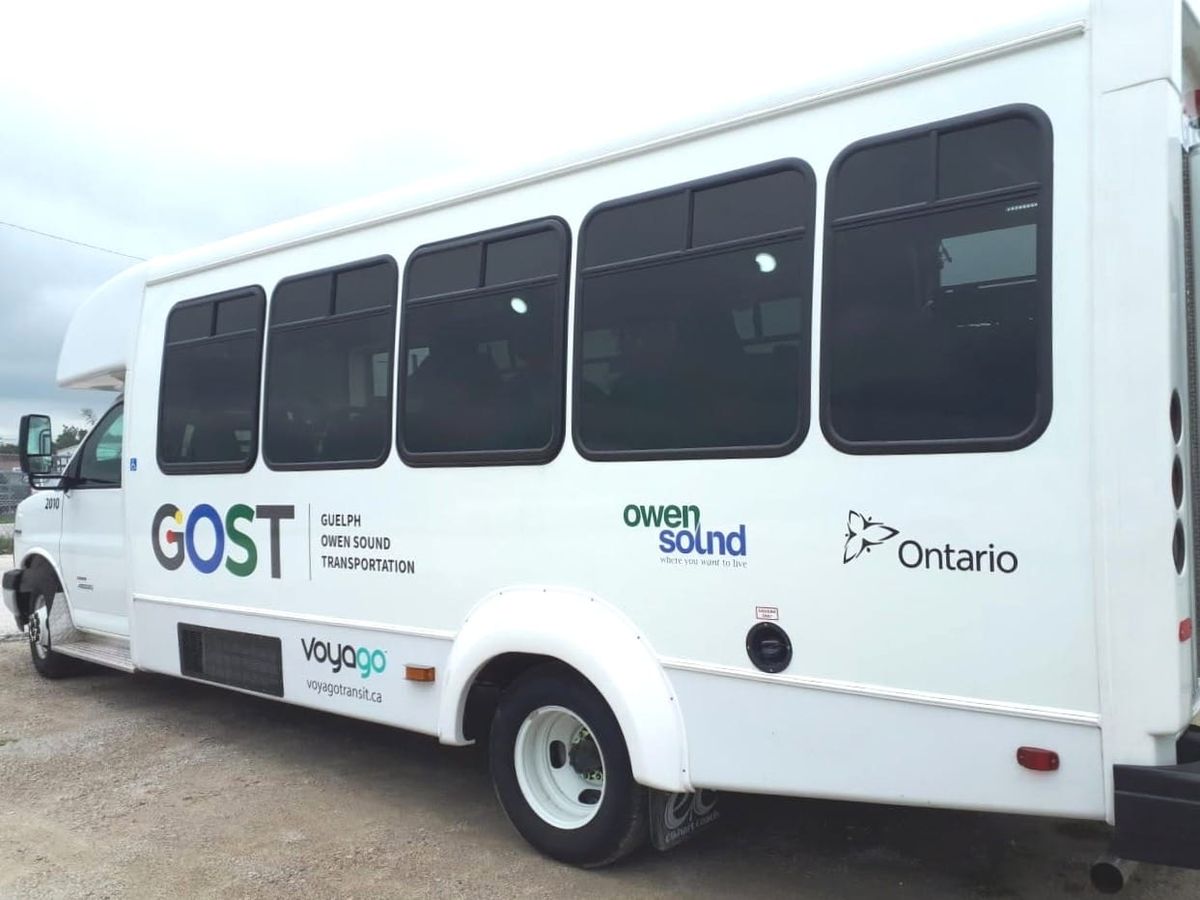
Wellington can also add extra services beyond Dillon’s baseline recommendations, including: extra Fergus-Guelph bus trips, a Fergus-Elmira route, a Durham-Listowel route through north Wellington, a Guelph-Acton-Orangeville route, and local buses in Centre Wellington. Each of the options brings extra costs.
It will be one of the first major decisions the new council takes on following the Oct. 26 municipal election. Under the new model, operating costs for the Highway 6 route would be split evenly between Wellington and Grey counties.
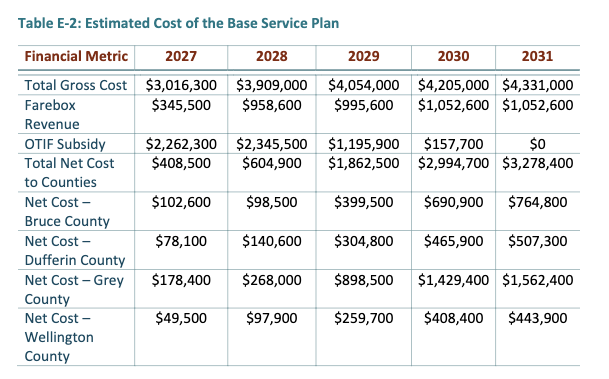
It’s loosely estimated Wellington’s cost next year would be $49,500 after a provincial grant and fares are included. That estimate assumes the province would chip in 75% of the cost in 2027 through an Ontario Transit Investment Fund grant, with the share shrinking each year until 2031.
County taxpayers would then bear the full cost of everything not covered by fares, estimated by Dillon to be $443,900.
Councillor Jeff Duncan, chair of the county’s economic development committee, told council on Sept. 24 Wellington may be the last to receive the report between September and the end of the year.
Councils in Grey and Bruce counties have received the report as information only, meaning no action will be taken until it’s dealt with by a new council.
The presentation date here has slipped twice this year, from mid-2026 to fall, and now to December.
County economic development manager Christina Mann said preparatory work took longer than originally thought, and the county decided to hold off and put the study before a new council following the election.
The county has contributed $25,000 toward the $175,000 study.
“The goal of the study is to design a transit system that’s less fragmented, and ultimately increase ease of use for residents,” Mann previously told the Advertiser.


