


Province provides $26-million in wastewater funding to 'unlock' housing in north Wellington
Provincial funding to help pay for Arthur wastewater treatment plant capacity upgrade, relocation of flood-prone Drayton pumping station

KENILWORTH – The mayors of two north Wellington townships say provincial wastewater infrastructure funding announced Wednesday will unlock development in their communities.
Premier Doug Ford visited Wellington County on March 18, announcing $29 million for water and wastewater projects in Wellington and Perth counties at a press conference held inside the Kenilworth public works garage.
Perth-Wellington MPP Matthew Rae, acting infrastructure minister Todd McCarthy and local politicians were also present.
Wellington North is receiving around $14 million for a long-needed upgrade to the Arthur Wastewater Treatment Plant, and Mapleton is receiving around $12 million to replace its sewage pumping station in Drayton.
'We've been making our share of the contributions'
Sewage allocations, required to accommodate provincially-directed growth in Arthur, were paused in 2023 after the village’s wastewater treatment plant hit capacity.
Provincial taxpayer dollars will cover 70 to 78 per cent of the Arthur treatment plant upgrade, which is expected to cost $18 to $20 million and accommodate 1,061 additional housing units in the village.
The remainder of the cost is likely to be covered by the township’s development charge reserves, as well as debt and water and wastewater user fees.
A report on a financing plan is expected to come to council on March 23.
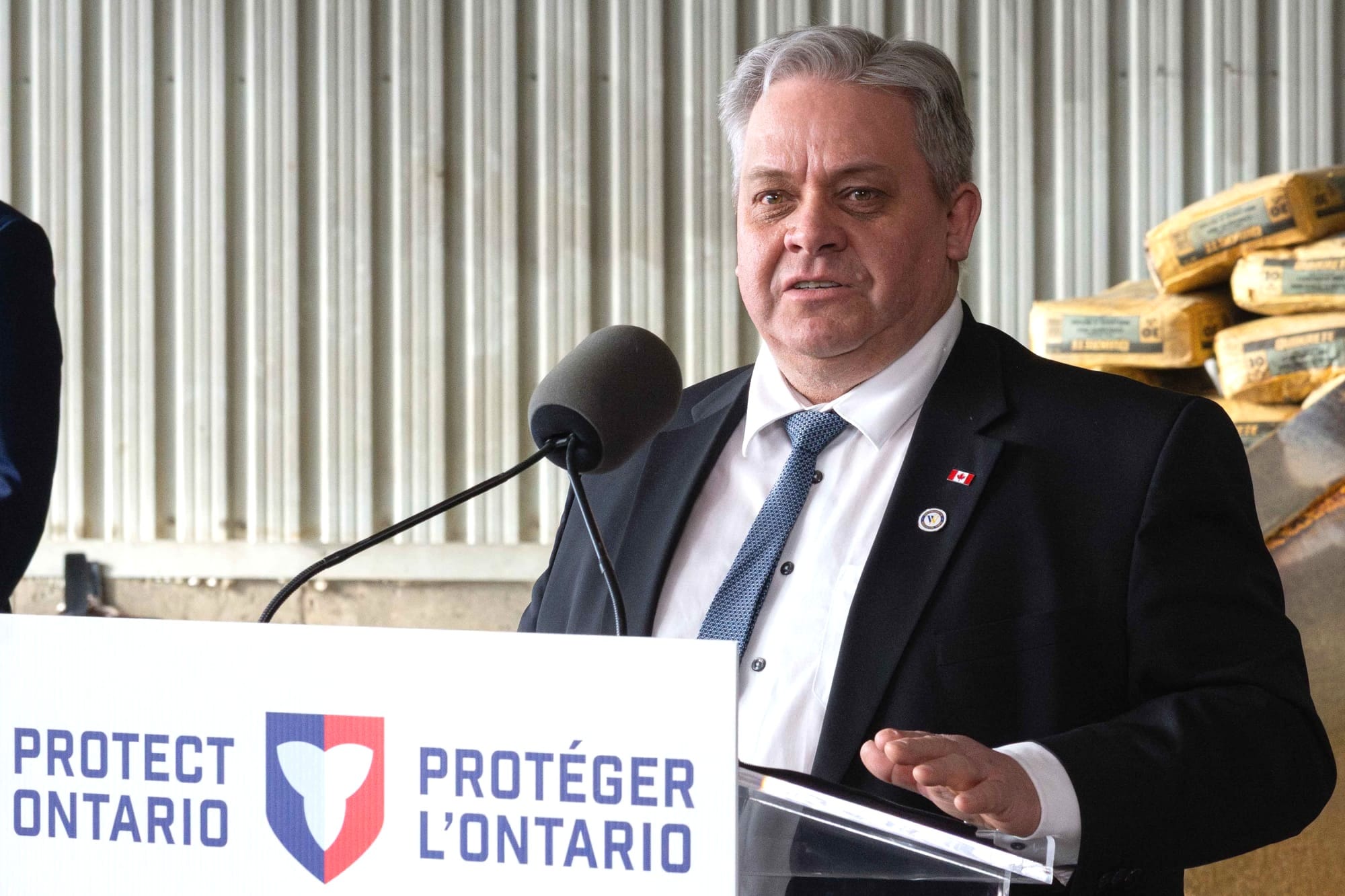
“Municipalities carry much of the responsibility for community infrastructure, even when the benefits and growth are shared more broadly,” Lennox said during the announcement.
“That's why partnerships like this really matter, and why we sincerely appreciate the province's contribution."
The township twice unsuccessfully applied for provincial funding in recent years before submitting a joint application with Mapleton in 2025 to the province’s $875-million water health and safety fund through the Municipal Housing Infrastructure Program.
The upgrade will turn a holding tank into an aeration bay and settling tank, pipes will be upsized and a new headworks building, which removes solids from sewage before it enters treatment, would also be installed.
Speaking to the Advertiser following the announcement, Lennox said the project price tag is “immense” for a small municipality and necessitates help from taxpayers outside the township.
“The benefits of this go outside the borders of our municipality too, so it makes sense that the broader society should contribute to it as well,” Lennox said, noting the township supports the area’s workforce and economy.
“If you look at us in the context of the whole province, we've been making our share of the contributions to the housing growth that the province wants, and then some."
Arthur’s total population is projected to grow to 20,500 by 2051, from 12,700 in 2021, according to Wellington County’s official plan.
The number of households is projected to grow to 7,660 from 4,860 in the same timeframe.
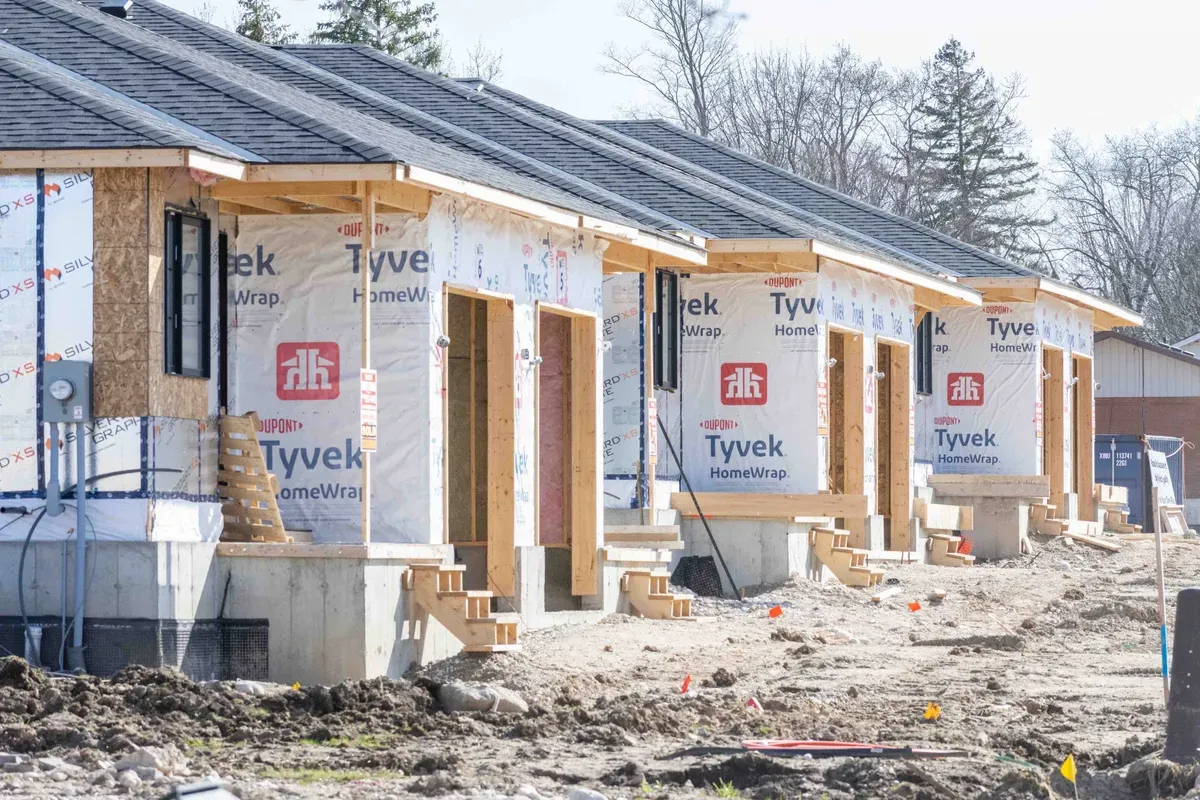
The treatment plant was previously upgraded in 2020, but rapid development quickly consumed capacity at the plant, which empties into the Conestogo River.
Lennox said much of the additional capacity facilitated by the funding announced on March 18 is already spoken for by ongoing developments.
“We’ve already informally allocated where that capacity will go,” Lennox said, referring to a study last year exploring expected development in Arthur.
He added there are incoming development applications that will exceed the capacity of the new upgrade.
'We'll be able to double the size of Drayton and Moorefield'
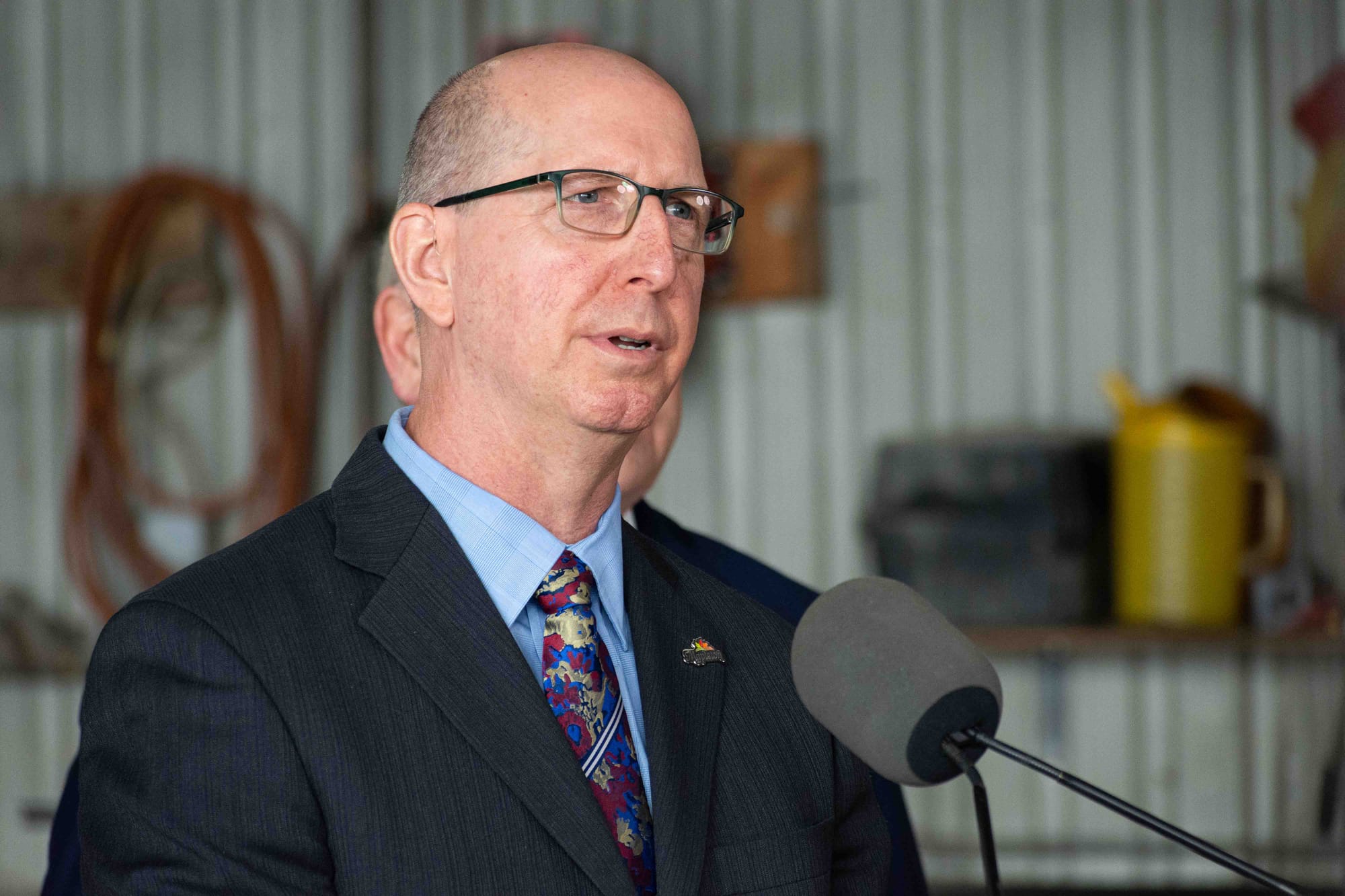
“Right now we do not have enough wastewater capacity to build more homes,” Mayor Gregg Davidson told the Advertiser.
The township is currently undergoing a $42-million water and wastewater upgrade in Drayton and Moorefield to open development potential.
Davidson said developers are waiting on the township to complete the project to “unlock that housing.”
Part of the overall work includes relocating a Drayton pumping station from one side of the Conestogo River, where it floods with high river levels, to higher ground on the other side, at an estimated cost of $16 million.
A 700-unit development is ready to be built in Drayton’s south end, off Wellington Street South. And a 100-acre plot nearby to the east could be developed to accommodate 400 homes.
There’s also land available to be developed within Moorefield’s urban boundary.
“We expect that we’ll be able to double the size of Drayton and Moorefield,” Davidson said. “That’s going to be a slow growth period.”
Mapleton’s total population is projected to grow to 15,100 by 2051, from 11,200 in 2021, according to the county’s official plan.
The number of households is projected to grow to 4,820 from 3,260 in the same timeframe.
The province provided just under $9.8 million last year for the township’s projects.
“We now have covered $22 million through the Province of Ontario,” Davison said, noting the cash means the township won’t have to jack up water and wastewater user fees for residents.
Davidson noted Mapleton and Wellington North discharge treated wastewater into the same river and need to ensure the Conestogo is “maintained or even better from what we’re putting into it.”
“The province likes the idea of joint applications, and this one was a joint application with an environmental aspect,” Davidson said.
Perth West is receiving $2 million to replace its Herbert Street sewage pumping station, and Perth East is receiving $675,250 to restore its Milverton water well.
The premier said the “historic” funding is part of $150 million spent on infrastructure in Perth and Wellington counties since 2024.


