

Middlebrook Bridge added to active mobility, transportation plan


CENTRE WELLINGTON – The Middlebrook Bridge might be saved after all – and that has members of the Save Middlebrook Bridge group whooping it up.
“Oh my gosh, I’m feeling so relieved,” organizer Stephanie Lines-Toohill said in a phone interview on July 18.
“We had to sit and wait for the right time. It seems we needed the active transportation and mobility plan (ATMP) to be seeking public engagement for council to understand how important this bridge is to the community.
“It’s taken a lot of luck, waiting and persistence.”
Lines-Toohill encouraged members to write letters to councillors and to become involved in public engagement opportunities during the ATMP study process.
[related]
“Your letters worked! Long or short; showing support matters!” Lines-Toohill wrote on the Save Middlebrook Bridge Facebook page on July 15.
“Council voted yesterday to support recommendations by CW staff … to include replacing Middlebrook Bridge as an active transportation connector route as part of 2026 budget deliberations.
“There are still many hurdles to jump but now we feel that CW staff are able to act and create change on our behalf. Thanks so much again for not giving up on us!”
The bridge was identified in the recently completed ATMP as a “safe connector route” and is marked with a “desire line” as part of the proposed network.
With council’s endorsement on July 14, it is now part of the plan, to be considered with other active transportation improvements.
There is still considerable cost to replace the crumbling bridge as a pedestrian and cycling bridge.
The bridge, a shared asset with Woolwich Township, is still slated for demolition in 2028 and has been closed since spring of 2021.
Demolishing the bridge is estimated to cost $600,000. The cost to replace it was estimated at $2 million in 2023.
Replacing the bridge will be considered in 2026 budget deliberations.
Middlebrook Bridge wasn’t the only recommendation in the ATMP.
Many months in the making, the plan sought to identify gaps in the existing network and create a network for walking, cycling and rolling that is safe, connected, accessible, clearly marked, maintained year-round and includes amenities like washrooms, bike racks, seating and garbage.
Some work can be done at little cost along with other infrastructure projects, such as paving the shoulders of roads and installing wider sidewalks.
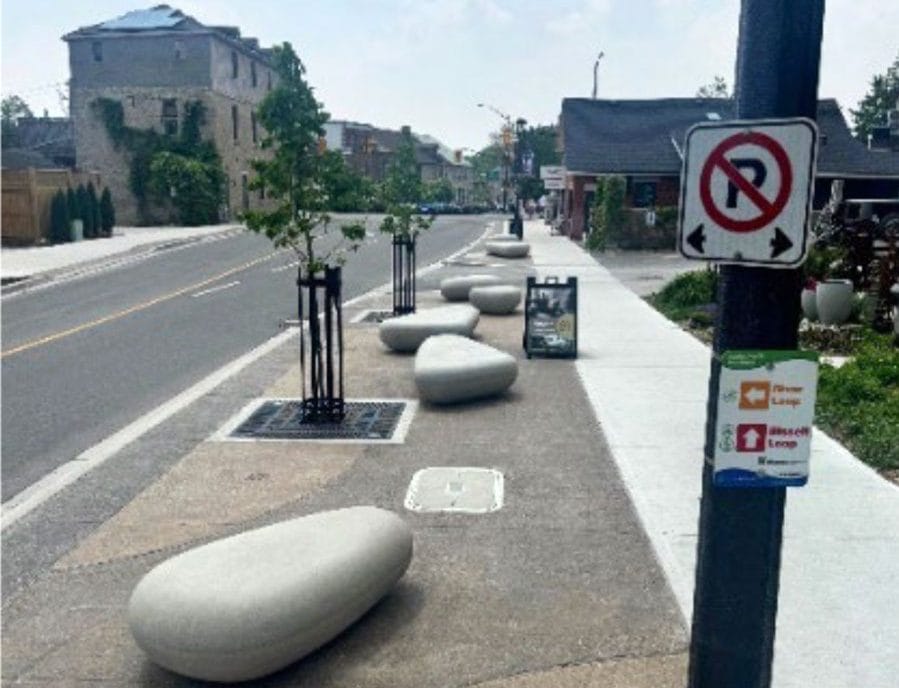
Other projects, like the Middlebrook Bridge, have steep price tags.
Priority projects detailed in the July 14 council report include:
- Trestle Bridge Trail improvements;
- crossing improvements in Fergus and Elora along school routes;
- adding bike storage, amenities and wayfinding signage;
- re-alignment of the Elora Cataract Trail through Fergus;
- extending active transportation facilities on St. David/Bridge streets (north towards commercial area on St. David St. N, and south towards Tower St. on Bridge St.);
- implementation of “neighbourhood bikeways” and “calm streets” to build local networks; and
- enhancing connections to downtown Fergus and Elora.
High-level costing pegs the plan at $55.5 million, broken down as follows:
- short term (0 to 10 years): $19,500,000;
- medium term (10 to 20 years): $21,700,000; and
- long term (20-plus years): $14,300,000.
The full ATMP with maps and more detail can be found at ConnectCW.ca.


