


Erin candidates debate town growth, transparency, environment
Sept. 22 event was hosted by Erin Chamber of Commerce

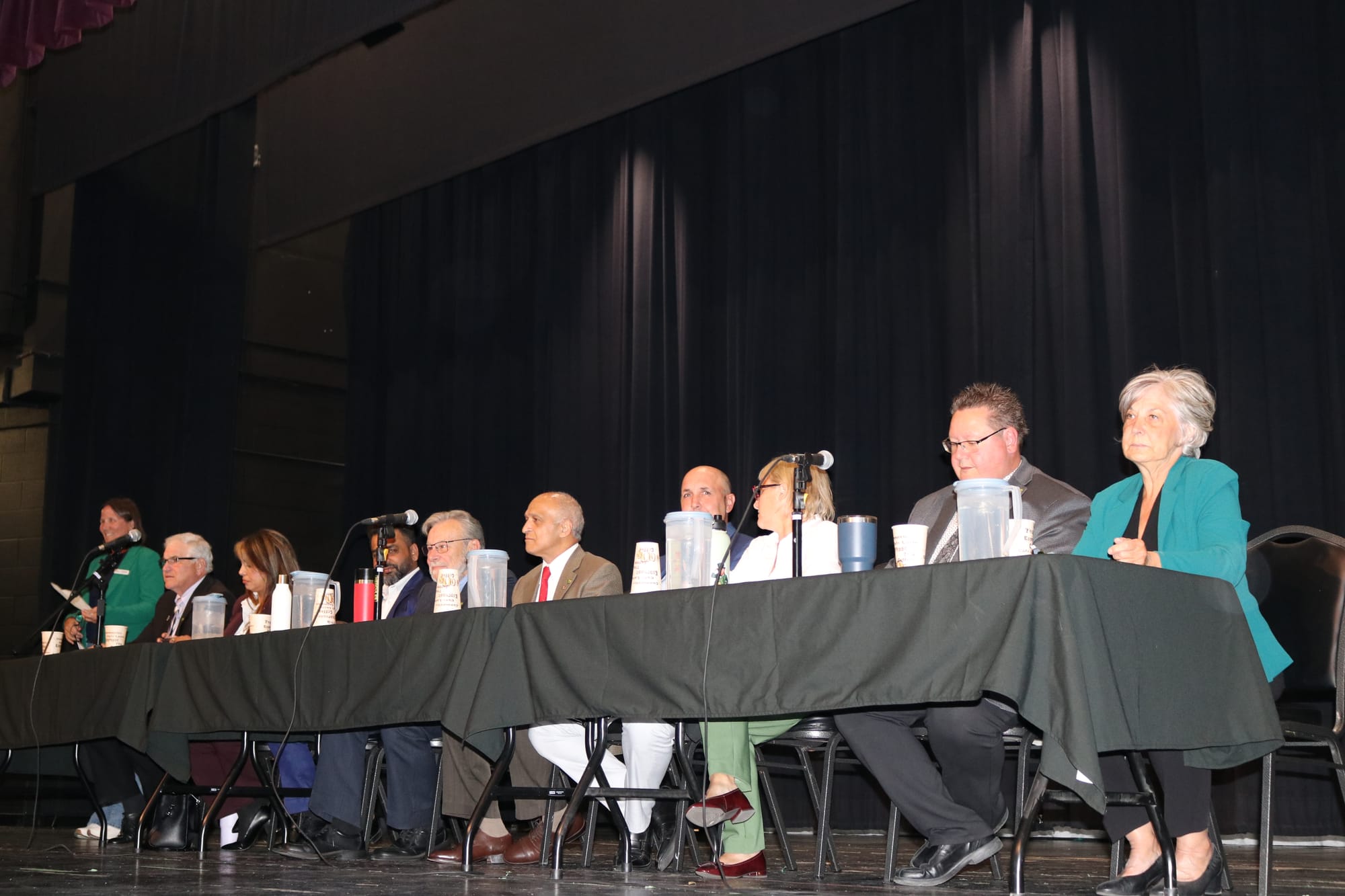
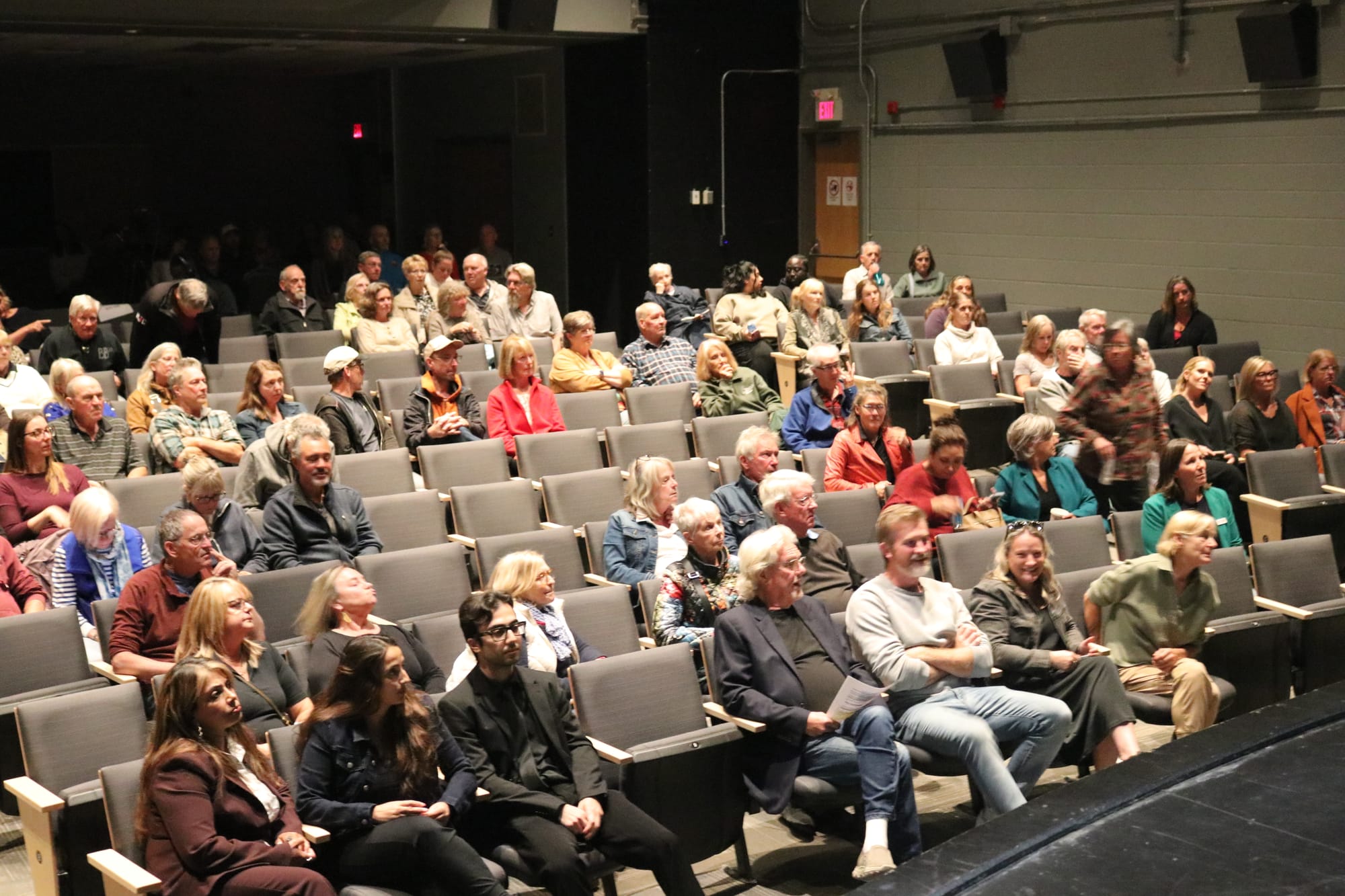
ERIN – Nine councillor candidates and three mayoral hopefuls took to the stage at the Centre 2000 theatre on Sept. 22 for a debate regarding town growth, environmental pressures and government transparency.
The event was hosted by the Erin Chamber of Commerce with moderator Bruno Marsala asking questions submitted by audience members prior to the debate.
“We received about 100 questions from the community … they were all considered, grouped by theme and consolidated,” Marsala told the audience.
“Every single one of those questions is going back to these candidates for their consideration.”
Councillors
Present were Cathy Aylard, Sunjay Bedi, John Brennan, Jamie Cheyne, Sukhchain Gill, Benita Raponi, Sid Spear, Tracey Wallace and Alex Zaichuk.
The first question addressed environmental concerns including fireworks, local water systems, illegal dumping and commercial fill operations.
“One of my priorities is clean and green,” Aylard said. “It means protecting our natural beauty, our resources and our rural roots.”
Aylard plans to put a “green lens” on all council reports by revising the reporting template to include an environmental section.
“This small change means that environmental issues will be discussed at every single council meeting,” she added.
Bedi expressed his concern regarding fireworks going off “all over town in our rual areas where we’ve got dogs, horses and other big animals.” The use of fireworks “frightens them” and is a “big problem,” he said.
Bedi stated the town needs to protect its groundwater, forests, wetlands and rural conservation areas as it’s “the lifeblood of our land.”
Both Wallace and past Erin councillor Brennan stated the need for additional by-law enforcement.
“Another bylaw officer might be a good idea,” Wallace said.
As for illegal dumping, Spear believes an educational approach may help “find out the root as to why people are dumping.”
Growth and infrastructure
Next, Erin’s future growth, with infrastructure, and whether it is proceeding responsibly came into question.
“We need to step back and look at what infrastructure wasn't put in place prior to the growth that is already happening,” Wallace said.
For additional growth to be sustainable, “it needs to be better planned,” she added.
Wallace also promised to keep the town accountable by making planning details public.
Brenna spoke on the pros of infrastructure improvements occurring after the growth.
One reason to hold off on improvements is “that the costs of the improvements are levied on a larger tax base,” Brennan said. "If you put all the infrastructure in place beforehand, who pays for it?”
“I’m not against borrowing because it isn’t fair to have you today pay for what people … 20 years from now will enjoy,” he noted. “We need to spread those costs out and borrowing is a way to do that.”
Spear said, “We need the development in order to cover the infrastructure costs. But that needs to be monitored closely.”
Zaichuk’s idea to keep sustainability a top priority, includes “further discussions, more dialog and understanding all these new challenges coming to town.”
“It seems like a no-brainer to send an email, make a phone call and see how other municipalities handle some of these challenges,” he added. “I think that would help guide us in a better direction.”
Local business/agriculture concerns
Candidates were asked how they will support local businesses, commercial development and entrepreneurship while protecting Erin’s agricultural land base and rural character.
Raponi’s approach is to buy local, go to farmers’ markets and to protect farmers' land, including no property cut-offs or selling.
“We need to listen to local businesses and farmers … they are the experts,” Bedi said.
He added he believes in reliable infrastructure bylaws that support “responsible growth, jobs and businesses,” while providing a stable tax base.
Brennan pointed out the town’s tax ratios, with residential coming in at 82 per cent, commercial at 2.73% and industrial at 1.18%.
“That puts the heaviest loads on your shoulders, homeowners,” he said.
Attracting industrial and commercial businesses can help address that, Brennan added.
Understanding the budget
One question suggested the town’s budget, fiscal responsibilities and other major municipal decisions must be easier for residents to understand and provide input on.
Gill suggested an infrastructure app be created with a budget tab and surveys open to the public.
Erin has a “beautiful” website and “all we need to do is connect it [to the app] and every person will have all the details in their pocket,” Gill noted.
Spear took a different approach, stating public meetings must be held, especially for larger issues.
“Those meetings should be held when … residents are available,” he said.
Changing the time of council meetings “would certainly keep the public informed of what decisions are being made,” Spear noted.
Aylard would like to see a plan and budget made with community consultation and a clear layout of successes and milestones.
“Assign a budget for every single line item and then report it out,” she said.
Wallace, Brennan and Cheyne all stated the importance of using social media and different platforms so all residents stay informed.
“I just want to say there is no excuse for not responding to queries,” Brennan said. “Even if we don’t have the perfect answer right off the bat, we need to get back to you promptly.”
Mayoral candidates
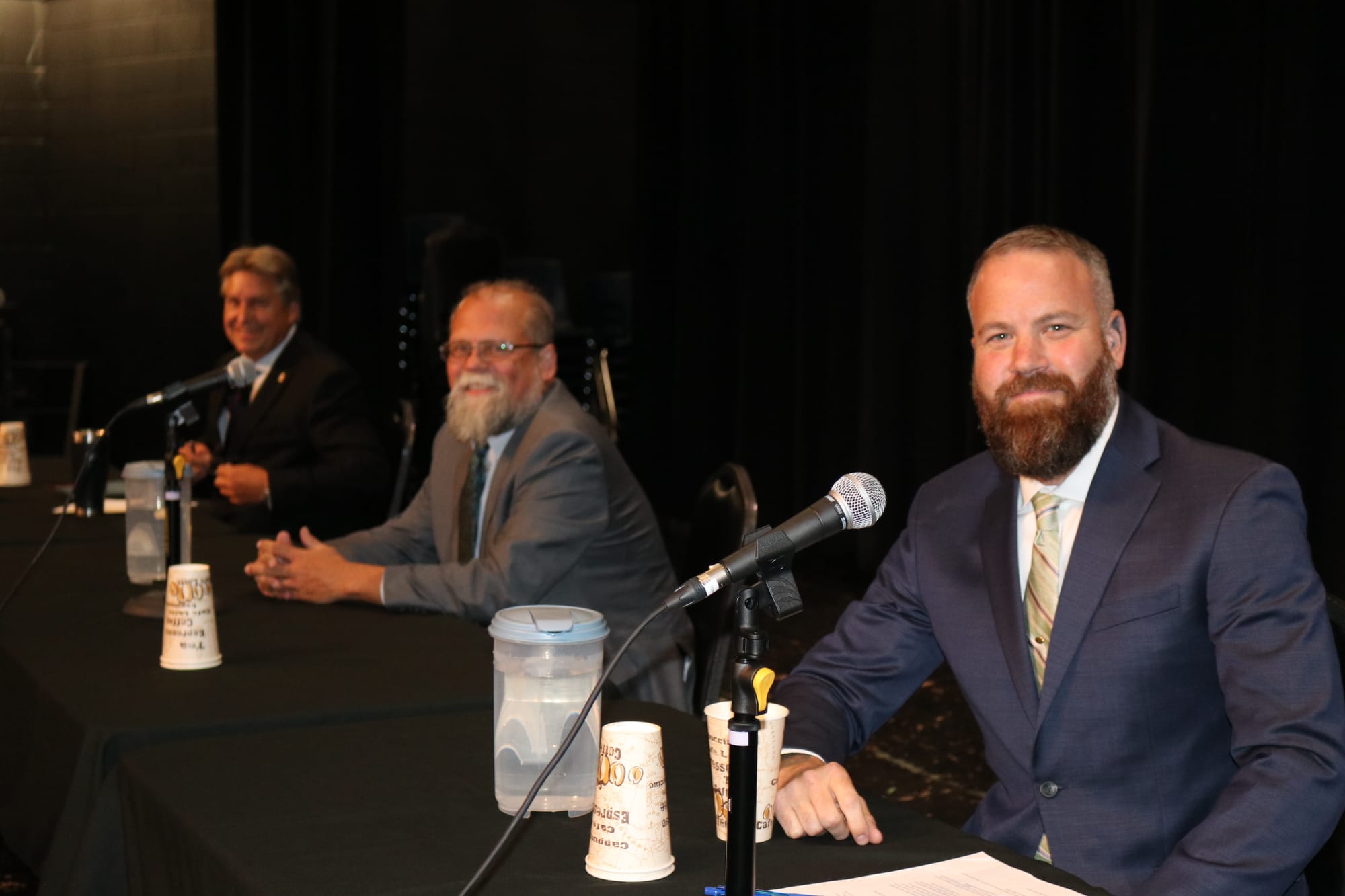
In attendance and vying for the role of Erin mayor were Michael Dehn, Dusty Scott and Rob Smith.
On the topic of growth, Marsala asked what pace and scale of growth the candidates believe is appropriate for the community.
“I'm not all for new subdivisions and mass developments coming in, but I do recognize that our next generations need places to live,” Scott said.
He believes council must look at land severance requests “case by case,” so farmers and their families have the ability to live in Erin.
Smith shared he is “somewhat happy” housing has slowed down as it allows council to assess the community's concerns. He also noted the importance of “keeping on top of developers to have infrastructure that paces with our growth.”
Dehn, the incumbent mayor, explained new subdivisions in Hillsburgh “are coming at us like a freight train and we can’t really slow down.” If the process were to slow “the user fees are going to go up on water and wastewater for the first people connected,” he added.
‘Can’t hide in the shadows’
Mayoral candidates were asked what commitments they will make on communication, leadership and public engagement.
“I truly believe we need a mayor and council that is out in public at all events,” Scott said.
"People ask questions. Sometimes you don’t like the questions. Sometimes they’re tough. Sometimes they’re confrontational but you have to answer … we can’t hide in the shadows.”
Smith also believes being active in the community is important, which he’s been doing so for the last 20 years, he said.
“It’s imperative that the town is more present,” Smith said. “A lot of people don’t have social media.”
Dehn stated part of the solution will be upgrading the “antiquated data system” town hall currently has, as it “takes a long time for data to get to council.”
Climate-related emergencies
How to improve environmental protections and prepare for climate-related emergencies was another topic for mayoral candidates.
“In Erin and Hillsburgh we have floodplains right in both downtown cores and the Credit Valley Conservation has just updated the floodplain mapping,” Dehn said, adding the map should be integrated into Erin’s next official plan.
“We’re certain not to develop any more land on those floodplains,” he noted, as development has occurred in the past.
He added, "There may be potential to take out some old dams … to reduce some of the flooding issues."
Smith stated his willingness to “see what other communities are doing for their climate change issues.”
“It’s critical that we use our resources of the people that are in the know where we live, and second of all the resources from our neighbouring municipalities,” he said.
Scott believes adding “another line item in the budget” to support the town’s environmental sustainability plan would help encourage changes.
“I would use my emergency services background to help with the planning of emergency preparedness for said incidents and potential incidents with climate change,” he said.
Voting information
The municipal election takes place on Oct. 26 and the town is set to use a vote-by-mail method.
Eligible voters will receive a voting kit in the mail and are to return the completed kit by mail or by dropping it off at the municipal office (5684 Trafalgar Road in Hillsburgh).


