

Equine Guelph offers safety tips for handling horses


GUELPH – According to the latest Canadian Agricultural Injury Reporting data, of the 32 animal-related farming deaths that occurred between 2011 and 2020, the majority (53 per cent) involved a horse.
“Horses, if handled well, are not typically aggressive animals, but they are very large,” states Equine Guelph communications and education program officer Susan Raymond.
“And even people with plenty of experience with horses can easily be injured by them, which is why safety and situational awareness must always be a priority.”
A key message Equine Guelph emphasizes in its online training courses is that understanding horse behaviour is key to keeping safe.
“All animals use behavioural cues, so it’s our job if we’re going to be working with horses to know how to read those cues and then also be aware what kind of effect our own energy, emotions and behaviour will have on the horse we’re handling,” Raymond states.
That includes knowing how a horse will respond to change. Though domestic horses tend to become creatures of habit with a regular routine, Raymond explains that, as prey and herd animals, they are highly sensitive to change, which can easily make them feel threatened.
Something as seemingly inconsequential as a person going by on a bicycle or a balloon in the air can cause a horse to instinctively react as though a predator were nearby.
“Even if a horse is very well trained, they are highly sensitive to their environment and their behaviour can change suddenly,” states Raymond.
“If a horse perceives that they are in a risky situation, they will have a flight or fight response. Usually with horses it’s more flight than fight, and they will run right over you if you’re in the way, but they’ll defend themselves if they think they need to.”
Complacency is often cited as a safety risk on farms, and it extends to handling horses and other livestock. Raymond says even those who regularly work with the same horse for years cannot lose sight of the need to remain vigilant.
“Becoming complacent is a big problem when working with horses; just because something hasn’t happened doesn’t mean it never will,” explains Raymond. “We often hear stories about people being seriously injured or even killed in a situation they’ve done time and time again but one time there was some change and they weren’t paying close attention.”
Raymond also stresses the importance of emergency preparedness, including evacuation plans for barn fires.
“It’s important to try to prevent barn fires from occurring in the first place, but it’s necessary to have a plan in place of where the horses will go that is secured and safe in the event of an emergency,” explains Raymond, adding that loose horses could also impede emergency responders from reaching a barn fire quickly.
She said horses let loose from burning barns often end up running down roads, which is “irresponsible because that’s putting other people’s lives at risk.” Loose horses will also run back into burning barns, Raymond said, which “only leads to more devastating outcomes.”
Equine Guelph offers an online course on emergency preparedness as well as a rescue training program for first responders that details how first responders can use the equipment they have to achieve the best possible outcomes for both animals and people involved.
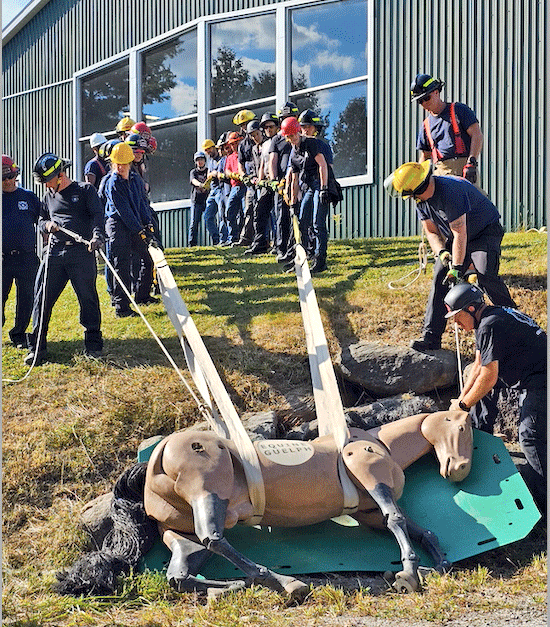
“We find that a lot of responders don’t get this type of training in terms of dealing with animal emergencies,” explains Raymond.
“With fire departments, for example, they may be called to a barn fire or other emergency but it’s possible that there are some firefighters who have never handled a horse or a cow before.
“So, we want to bridge that gap and give them basic training on what to do in those emergency situations.”
Whether someone is an avid rider, a novice just starting with horse handling or a first responder wanting to be prepared for a potential emergency involving large animals, it’s never too early or too late to learn something new about safety around horses, Raymond states.
“We always stress that it’s important to be prepared ahead of time as much as possible, and training can help with that,” says Raymond. “You’re never too young or too old to learn about safety.”
For more information visit equineguelph.ca.

