

The sugar maple has a rich Canadian history


By Ron Stevenson, Fergus Horticultural Society
FERGUS – Finally, the first indications of spring reveals that winter’s last days aren’t that far off. Warm breezes, robins and maple syrup are long awaited signs that this lingering winter may soon be coming to an end.
Once a year, in late winter, the tradition of collecting sap from sugar maples (Acer saccharum) begins the process of making maple syrup.
Also known as rock maple, the sugar maple turns a glorious orangey-red in autumn. It’s the most abundant of the seven types of maples found in Canada.
Historically, it was selected for making utensils, juice presses, grinders, cooking tools and rolling pins.
In today’s marketplace, it’s chosen for furniture, flooring and construction.
Because of its density, sugar maple firewood is a choice fuel during the home heating season.
A red sugar maple leaf on our flag is further evidence of its importance.
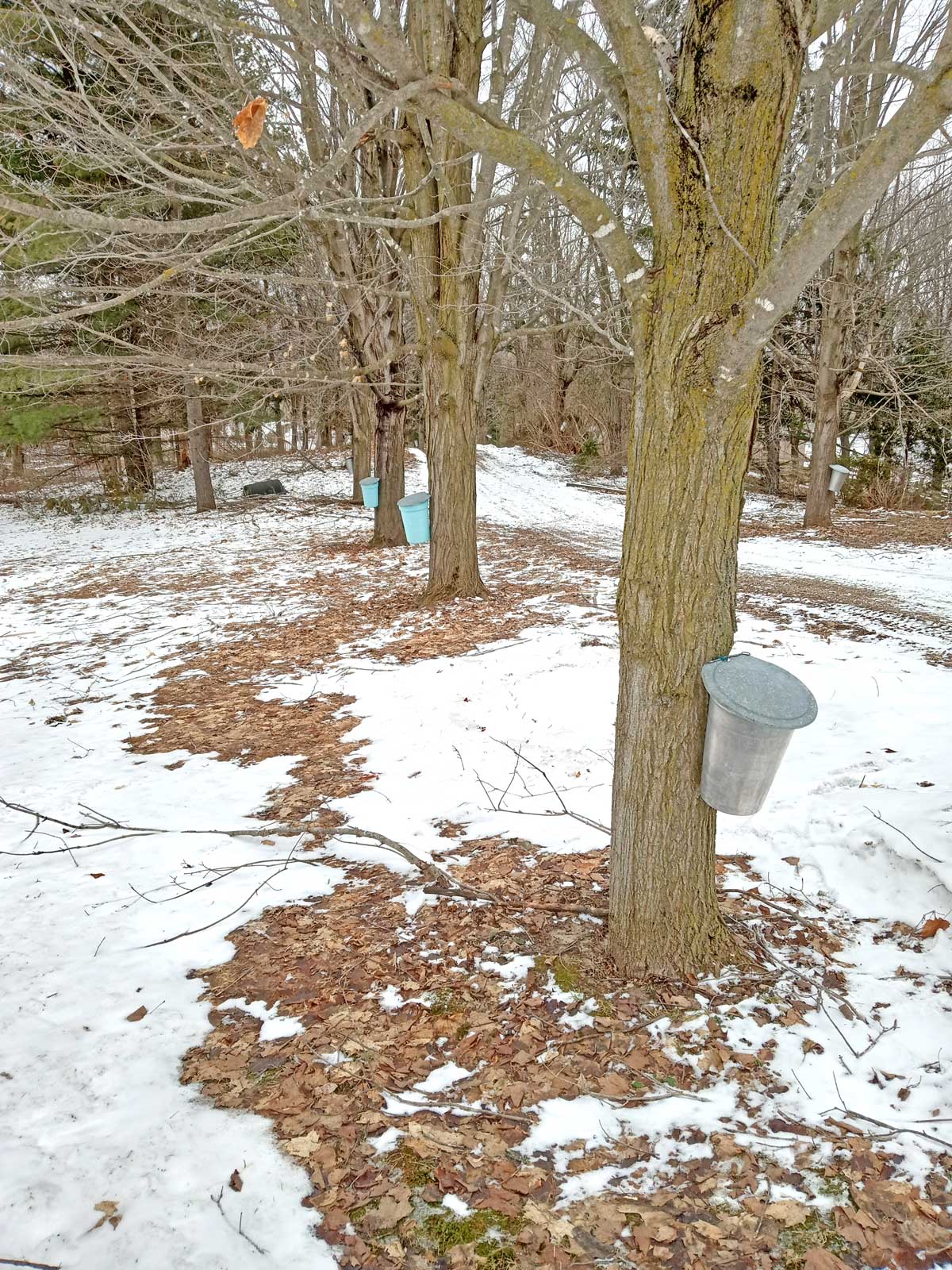
European settlers watched First Nations women chop into maple tree trunks, then collect and boil down the sugar water. Over time, the settlers adapted these methods by drilling holes into the trunks and inserted spiles.
Over the years, the settlers hung buckets below the spouts to catch the dripping sap. They also used iron pots over open fires to evaporate the sugar water.
It should be noted that birch trees can also be tapped, but birch syrup is not as sweet as its maple counterpart.
It takes 40L of maple sap to make 1L syrup, whereas it takes 85L of birch sap to make 1L of syrup.
Present-day large maple syrup producers use a labour saving tube system for collecting sap.
Maple syrup operations in Canada (Québec, Ontario, Maritimes) produce 85% of the world’s commercial crop. United States (Vermont) produces the balance.
Sugar maples are a renewable resource and have been known to last for 70 to 100 years.
On average, sap contains two to three per cent sugar. This “sweet water” has the ingredients the tree needs to continue growing (salts, peptides, amino acids, amylase).
The running of the sap depends on air temperatures during the day versus the night. The freeze/thaw process is essential else the sap will stop running.
There are two stages in the sap run. The absorption phase occurs during freezing nights -0°C (32°F) and an exudation phase when the day temperatures are above freezing.
Because of the daily toggling between temperatures, it is theorized that the sap is pushed up and deposited in branches of the tree.
Once air temperatures rises above 5ºC (41°F), the frozen sap thaws in the branches and begins to flow down towards the base of the tree or to the point where the tree has been tapped.
Logically, a tree freezes from the outside in and the smallest branches would freeze first. Sap would still be sucked up the sapwood that has not begun to freeze.
During the next day, if air temperature rises above freezing, any frozen sap will melt and fall down the tree (because of gravity) and will exit the tree through freshly tapped holes.
For this reason, sap flows best when air temperatures are below zero during the nights and above freezing during the day.
Only when these day and night temperatures fluctuate will the trees release a steady flow of sap.
Weather dictates the timeframe of the season. In Ontario and Québec the season lasts about six weeks, mid-March to mid-April.
Sap flow will slow if temperatures are continuously below freezing during the night and day.
Once night temperatures are continuously warmer (above freezing), the slower flow signifies the end of the season. The colour and flavour of the syrup will change throughout the season.
The best quality of sap flows in early spring. Once the leaf buds expand and start to develop, syrup will take on a stronger flavour. This type of syrup is generally reserved for commercial use.
Syrup is graded by colour. The lighter the syrup, the higher the grade, and the more subtle flavour it will have.
There are five grades of syrup:
– Canada # 1 (Grade AA) Extra Light – Candy making;
– Canada # 1 (Grade A) Light – Delicate flavour;
– Canada # 1 (Grade B) Medium – Table use;
– Canada # 2 (Grade C) Amber – Baking; and
– Canada # 3 (Grade D) Dark – Commercial flavouring.
If making your own maple syrup is an attractive idea, now is the time to think about planting sugar maples on your property.
They can tolerate shade but have difficulty tolerating road salt.


