

Performers, volunteers, festival goers fill Guelph Lake Island for Hillside


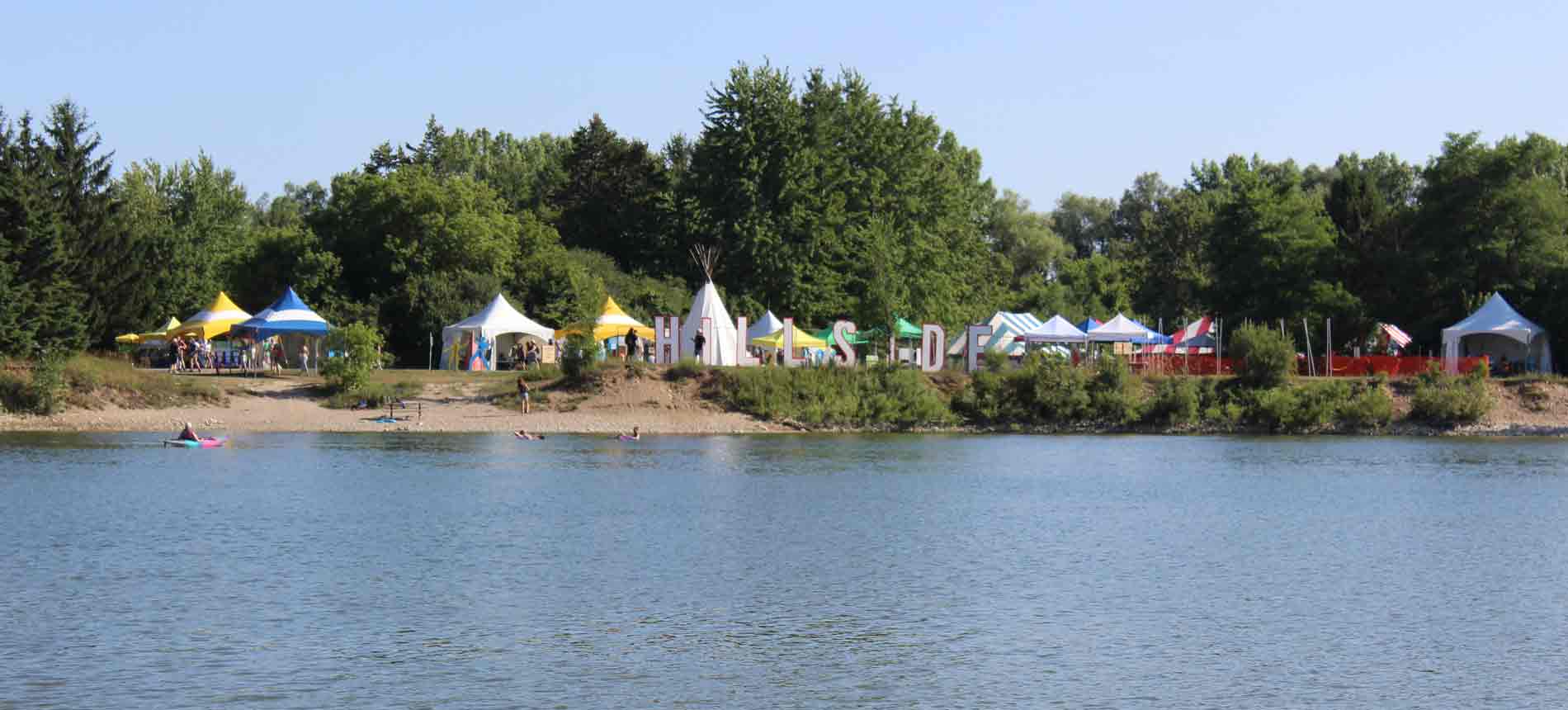
GUELPH/ERAMOSA – In the week leading up to the 42nd Hillside Music Festival, volunteers transformed Guelph Lake Island into colourful festival grounds.
Stages were constructed, tents erected, fencing assembled, signage installed and large pieces of art displayed throughout the Guelph Lake Conservation Area.
The festival includes five stages, an Indigenous circle, a drum and dance tent, a children's area, a makerspace tent and six different spots where workshops are offered, ranging from medicinal plant walks to building a skateboard from scratch.
There are also a range of artisan and food vendors, as well as tables set up with people sharing information about community organizations including Women in Crisis, Out on the Shelf, the Guelph Outdoor School and Guelph for Palestine.
[related]
On the morning of the festival’s first day, July 18, the anticipation was clear as volunteers added final touches and set up camp in “Volly Village,” a section of the festival reserved for volunteers, performers and media.
By 5pm, crowds of people were flooding the island, arriving on bikes and in busses and cars.
Then the music began, and continued until long after the festival ended at 11pm on Sunday, with volunteers dancing around campsites and fires in Volly Village until the early hours of Monday morning.
According to Hillside officials, about 10% of attendees travel to Hillside by bike, and free buses go back and forth from downtown Guelph and the conservation area in Guelph/Eramosa all weekend.
Festival officials pride themselves on green initiatives including a living roof on main stage, reusable dishes at all food and drink vendors washed by volunteers and a four-stream waste management system.
Festival director Kate Johnston told the Advertiser more than 6,000 people attended the festival each day, with over 1,400 Hillside volunteers and 60 bands from 14 different countries.

Johnston said this year’s festival was “a huge success,” and listed these highlights:
- the Indigenous Circle, closer to the water this year with programming from the festival’s first guest curator, Classic Roots;
- performances from West African artists including Femi Kuti and the Positive Force and Vieux Farka;
- Punjabi music from producer and composer Ikky; and
- “homegrown talent from JamSchool, U of G music department and Guelph’s own instrument inventory Fron Reilly.”


