

Minto residents supporting Jamaican workers, families in hurricane’s aftermath


HARRISTON – Peter-Gay Daily travels windingly from Jamaica’s Woodland district with rolling, forested hills underfoot until she finds a working cell tower in Springfield.
Daily, her boyfriend Leondale Kelly told the Advertiser, walks the 32-kilometre roundtrip twice per week across scarred terrain to send photos, videos and news about the damage wrought by Hurricane Melissa upon the southwestern Jamaican community.
The category-five storm made landfall on Oct. 28 on the Caribbean island’s southwest coast, near New Hope, in the St. Elizabeth Parish.
Later the same day, Melissa departed north for Cuba, leaving behind a path of devastation from 300km/h winds and torrential rains.
Kelly anxiously watched social media updates on the storm’s progress from Harriston, along with Lennox Murphy and Nickar Jones, in the days leading up to Melissa’s landfall roughly three weeks ago.
Kelly, Murphy and Jones are three of around 70 Jamaican workers employed by Moonfleet Poultry to catch chickens destined for processing from farms in Wellington and Brant counties.
Warnings from the men in Harriston pinged across the North American continent to family members on the Caribbean island, urging them to seek shelter.
Many Jamaicans, they said, have relied on neighbours with newer, more sturdy homes to provide refuge.
“We took a big hit,” Murphy said of his homeland. “It’s broken.”
Murphy came to Canada in 2019 as a temporary foreign worker and is now a permanent resident, living here with his wife Flavia and an 18-year-old son.
Flavia recently started a GoFundMe campaign to raise money for rebuilding materials.
“We were watching closely and we were just keeping fingers crossed and just praying,” Murphy said.
He still has a house in St. Catharine Parish, where his step father lives. Though the southeastern parish was largely spared Melissa’s fury, winds still tore roofs from houses, toppled trees and left residents without running water and electricity, according to local news media.
Murphy said his aunt and grandmother in St. Elizabeth, in the country’s southwest, are left homeless after the area bore the storm’s full force.
His aunt, Cherry Smith, lost her Tatewood home – where Cherry’s mother Marry Smith was also living – and a corner shop.
“They lost the house and the shop is completely gone,” Murphy said. “Now they’re homeless.”
Residents have been left without electricity, low-lying communities are submerged, critical infrastructure is destroyed, and roadways are impassable.
Around 1.5 million people in the country of 2.8 million have been affected, according to the United Nations. Jamaican officials have reported 45 deaths related to the storm as of Nov. 11.
The men said the Jamaican government is trying to respond, but the under-resourced country can’t help everyone in need.
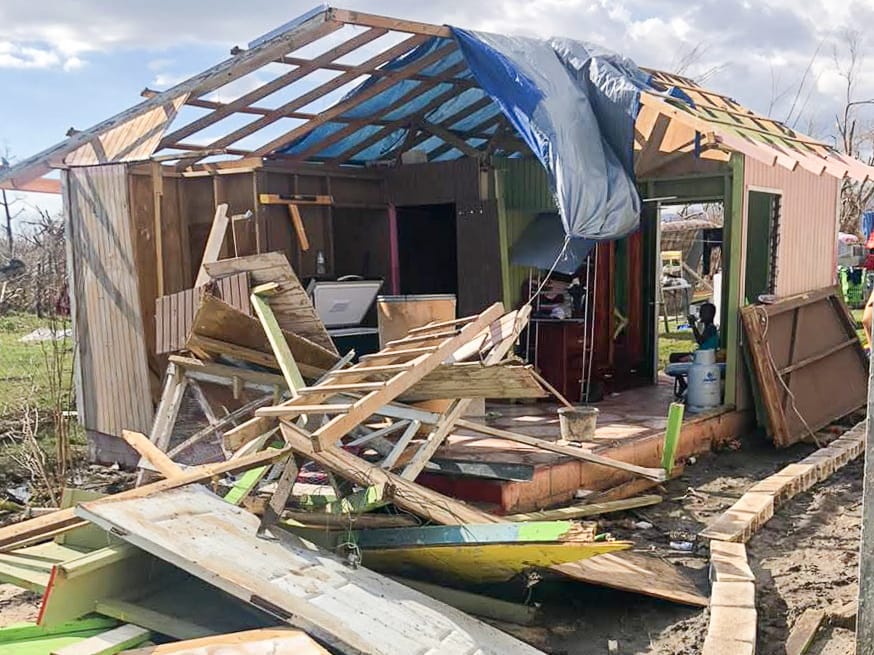
“It’s a very overwhelming feeling just to know that this happened and you’re so far away, but at the end of the day [our] families will know that we are here and we are trying our best,” Murphy said.
Kelly said he lost goats, a chicken flock and a car, though his home remains intact in St. Elizabeth. His nine-year-old son and 12-year-old daughter keep asking when they will see their dad again.
“It’s really rough … you can help financially, but not physically; it’s very hard,” Kelly said.
“But we have life, and no life has been lost, so we have to accept that and be very glad and patient,” he added, speaking about his family.
Because his concrete flat-top home remains, Kelly said seven others are currently living there. Life for them, he said, “is very hard.”
Jones lost his Woodland district house, and a home in south St. Elizabeth, where his 14-year-old son and his grandmother live, was also destroyed.
Despite their shared burdens, the men said it’s better to be here where they can work and send much-needed money and supplies back home.
Once a year, the men dispatch crates with everyday necessities back home. But in the immediacy of the disaster, there’s an urgent need for supplies and relief.
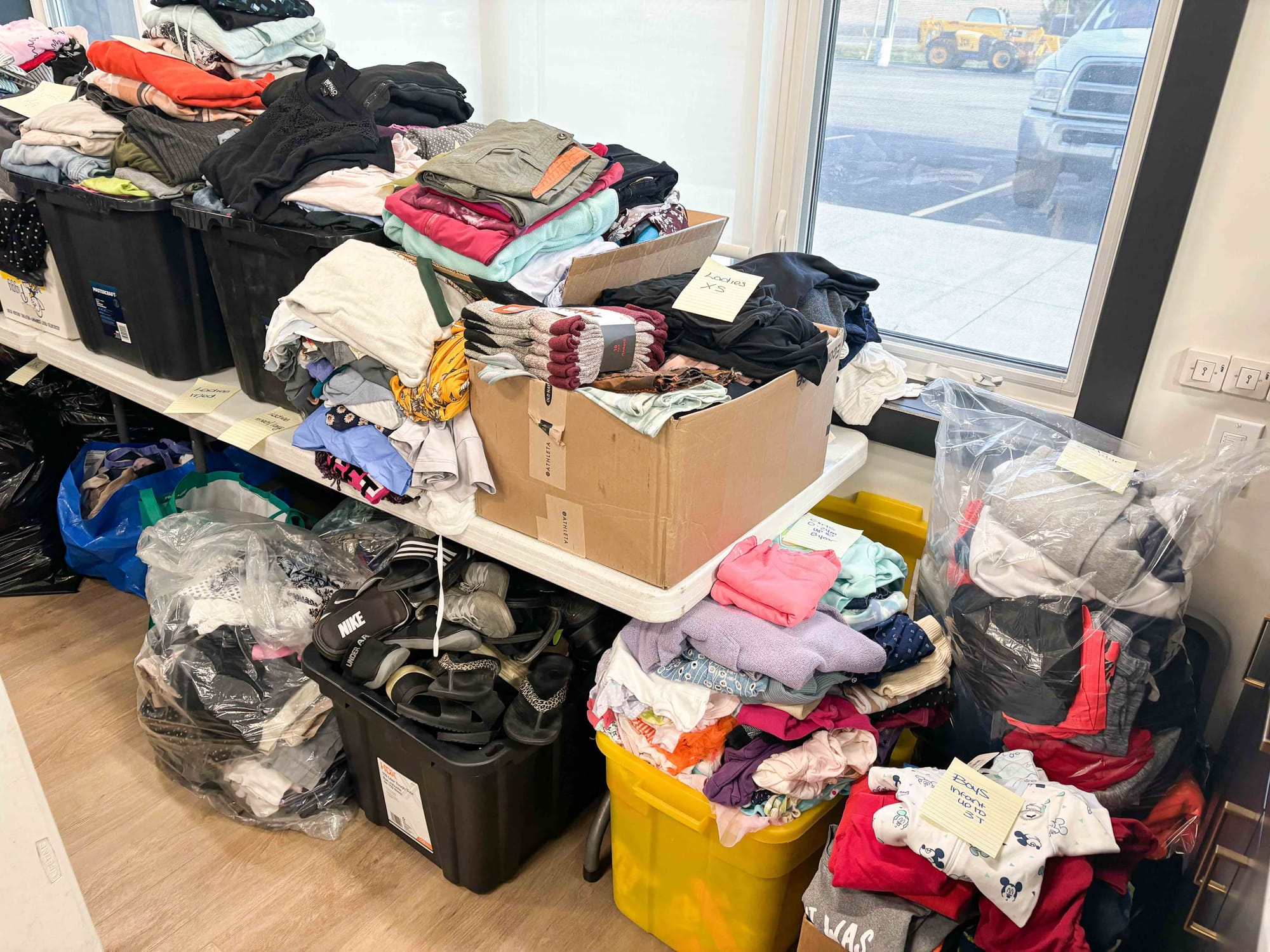
Donations of mostly clothing have been dropped off at Moonfleet’s Harriston office since the men approached human resources staffer Krista Blenkhorn for help.
Office manager Renae Dancey reached out to the Town of Minto, and following a town posting on social media, area farmers, church congregations, service groups and Minto residents responded.
“It’s literally enough to open a thrift shop; our office is filled,” Blenkhorn said.
“This is what a community does when people have a need – they rally together.”
Food items – such as canned meat, rice, flour, sugar, seasoning, cooking oils – and hygiene items continue to be accepted at Moonfleet’s Harriston office (6133 Wellington Road 109) until Nov. 27, from 7am to 6pm, Monday to Thursday.
Harriston resident Carol Schaus posted letters around town asking for donations for the workers be dropped off at her Thomas Street home.
“Most people in the area have lost everything, and I do mean everything,” the letter read, the last “everything” in bold, capitalized red font.
“I’m going to be 70 and never once in my life have I had to go without,” Schaus told the Advertiser.
She joined with Linda Carter at Changing Hands, a downtown Harriston thrift shop, to donate hundreds of dollars worth of clothing to the workers, along with clothing dropped at her home.
Carter, who keeps her store stocked with low-cost hygiene products for the workers, is also collecting cash donations to purchase food the workers can send south.
“I truly know this means a lot to them,” Carter said.
Kelly, Murphy and Jones are stuffing clothing, shelf-stable food and hygiene products into large, blue storage barrels destined for the Port of Toronto on Nov. 22.
Canned beef and fish lines the bottom, clothing and diapers are sandwiched in the middle, and carefully wrapped liquids like cooking oil are on top.
Some of the goods are donated, others the men have purchased. Each barrel costs between $230 and $250 to send down the Atlantic. The barrels are expected to reach Jamaica by mid-January, travelling from Kingston in the southeast to St. Elizabeth in the southwest where they’ll be collected.
The men plan to visit their families in March, and expect to find a changed country.
“It’s going to be a lot rougher,” Jones said.
“The cost of living is going to change,” Murphy said.
Kelly said hydro prices are expected to increase.
Prices for most things have already doubled post-storm, the men noted.
Murphy said they don’t see the country “going back on a high like it was before” for several years.
“We just have to keep pulling ... because all of us can’t be on the downside, some of us have to be strong,” Murphy said.
“We are a nation, we are strong,” he added. “Together we know that we will be flying that flag high again.”


