

Local retailers predict holiday spending decline amid economic ‘uncertainty’


WELLINGTON COUNTY – Local retailers anticipate cautious spending habits this holiday season amid quieting buy-local sentiment and economic uncertainty.
Some small business owners across Wellington County – including independent retailers of books, clothing, toys, pet items, bicycles and equestrian goods – predict a slight decline in spending as consumers opt to hold onto more cash.
“Definitely people’s wallets are feeling tight … but there’s still a willingness to spend local,” said Nate Lessnick, who owns Flow State Bike Co.
Lessnick’s customers seek out high-end bicycles they can’t get elsewhere, face-to-face customer service, and a cafe at his Arkell location.
“Those who do spend money here, and come see us quite often, are obviously willing and wanting to spend money locally and support local businesses,” Lessnick said.
Surveys conducted ahead of the shopping season suggest consumers are making a concerted effort this year to keep some dollars in local economies.
Business Development Bank of Canada survey data from November suggests $943 per household will be spent on holiday purchases before year’s end.
Of that, 59 per cent, or $553, will go toward Canadian products and services.
The BDC survey suggests few will increase holiday spending, however the proportion spent on Canadian will increase, with 46% of respondents intending to put more of their dollars into Canadian products and services.

Deloitte’s Holiday Retail Outlook report, with data from August to September, found 73% of its respondents would favour local or Canadian-owned businesses.
But it warned consumers will prioritize value, branding and convenience ahead of supporting goods and services at home.
For small businesses which can’t compete with retail behemoths like Amazon, and reliant on a constant stream of local support, that could present a huge problem.
Bookseller Fiore Guido, who owns Magic Pebble Books in Elora with his partner Robin Gow, said the business wouldn’t be entering its sixth Christmas season if not for local support.
“We are community focused and I think that’s what keeps us in business,” he added, noting Magic Pebble’s school fundraisers, book giveaways and literacy fund.
Sales in November and December account for 40 per cent of a year’s business at the book store.
They can’t compete on price like bulk buyers receiving publisher discounts. Instead, customers are drawn by staff expertise and community-minded ownership, Guido said.
“We plan a huge number of orders this time of year, and then we pray they come in time,” Fiore said with a laugh.
Spending habits changing
“People are going to buy, but I think they’re going to buy less and they’re going to buy more frugally,” said Barb Spears of Guelph-based Farm to Paw Boutique and Market, with a location in Erin.
Spears placed fewer winter wear and holiday-themed orders at the pet store this year.
“I feel there is going to be some decrease in spending,” said Britt Blakely of Arthur equestrian store Britt’s Corner Tack.
Though Blakely is concerned about how this month will go, she said “there are still people who are focused on spending in smaller shops, than they would be on Amazon.”
Small businesses like hers, Blakely noted, also reinvest into the community.
“Where does Amazon sponsor? They’re not sponsoring the local horse show or the fall fair,” she said, adding, “local businesses are.”
Angie Christensen reduced the share of her consignment children’s store dedicated to new product.
“I have cut down on that because people’s spending habits have changed,” Christensen explained.
In past years new product around Christmastime accounted for 35 per cent of the space at Christensen’s Teenie Tiny Tots Children’s Shop Palmerston location — now it’s down to 20 per cent.
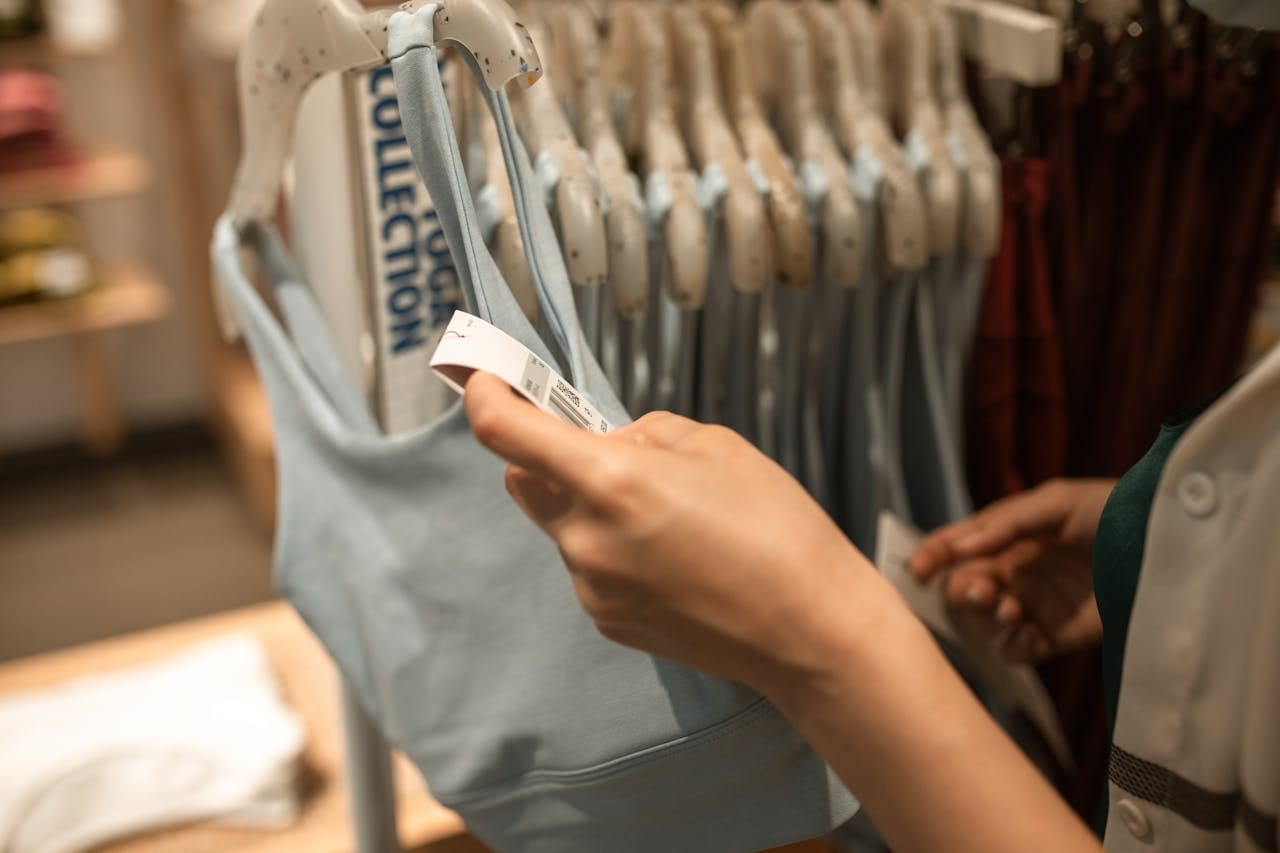
“This year in general has been about a 30 per cent decline in business,” said Tammy Paetkau, who co-owns Fergus womens’ clothier Studio Boutique, with Charlene Stakes.
Paetkau said an economic downturn has strongly affected the business as customers question whether they really need another sweater.
“We are definitely banking on less spending,” Paetkau said.
In response, Paetkau and Stakes have sourced more affordable clothing lines from France and Spain to add to their Canadian designer lines.
Paetkau said the boutique has a loyal following that has kept it going into its fifth Christmas season.
“We know their style, we know their families, we know their story,” she said.
But even those with money to spend are more aware and cautious, according to Paetkau.
“Some ladies who never looked at the price tag are starting to now look at price tags,” she said.
“We’re just crossing our fingers hoping we can get through this year and next year.”
Local spending stays local
There’s one word defining the year for small retailers, said Canadian Federation of Independent Business (CFIB) legislative affairs VP Ryan Mallough.
“Uncertainty.”
The much ballyhooed buy-local sentiment heard earlier in the year has since quieted in the shadow of an affordability crisis, unemployment and inflationary pressure, those who spoke with the Advertiser said.
Business survey data collected by Statistics Canada between October and November suggests the vast majority of businesses (68%) did not see an increase in the sale of Canadian-made products six months prior. Slightly more than 13% did, and 18% were uncertain.
“It’s been a tough year, spending might be a bit down, so there’s some worry around that,” Mallough said.
Small businesses have “been through the ringers” in recent years, Mallough said, adding one-in-five CFIB members expect to end the year below than normal revenue, and half expect it to remain flat.
Mallough said many small businesses need a strong finish to the year and encouraged shoppers to direct their dollars into local economies.
For every dollar spent locally, 66 cents remains in the community, according to CFIB polling data, whereas just 11 cents stays local when buying with a multinational like Amazon.
“When you’re supporting that local, independent business, you are supporting Canadian, even if some of those products aren’t coming from Canada, this is still the local business selling them; that’s local jobs, that’s money that’s going back into the local economy,” Mallough said.


