

Legacy of Terry Fox lives on with brother’s school visits


GUELPH – He’s known as Canada’s hero, but to Fred Fox, Terry was just an annoying little brother – “a pain in the rear end.”
That’s what Fred told the Advertiser, with a chuckle, when asked what Terry was like as a sibling.
But it was clear during his presentation in a crowded Guelph elementary school gymnasium on Sept. 15 that Fred thought the world of his brother.
Fred said Terry never wanted to be famous or seen as a hero – he just wanted to make a difference by raising funds for cancer research.
And he said it was Terry’s hard work and determination that led to the Terry Fox Foundation raising over $900 million in the 45 years since Terry first embarked on his run against cancer.
For almost 20 years, Fred has visited schools to thank them for supporting the Marathon of Hope and to share Terry’s story, with the hope of inspiring students to continue Terry’s legacy.
[related]
Fred visits about 130 schools every year. He went to two other Guelph schools before arriving at Holy Rosary Catholic Elementary School on Sept. 5, and he was presenting in Thunder Bay earlier that week.
Rosary principal Vicki Sheehan put Fred’s presentation into context by asking students to raise their hands if they, or someone they loved, had faced cancer.
A few dozen hands remained high in the air when she asked if someone very close to them had experienced cancer, and almost a dozen remained when she asked if that person was a parent or sibling.
Hands stayed in the air too, mostly from teachers, when Sheehan asked if anyone had faced a cancer diagnosis themselves.
Fred said of all the schools he visited, “this is the most difficult beginning.”
Fred is 14 months older than Terry and growing up, he said they did everything together. And while people often idolize Terry as some real-life superhero, Fred assures he was “just an average guy – a typical brother,” and that’s how Terry wanted to be seen.
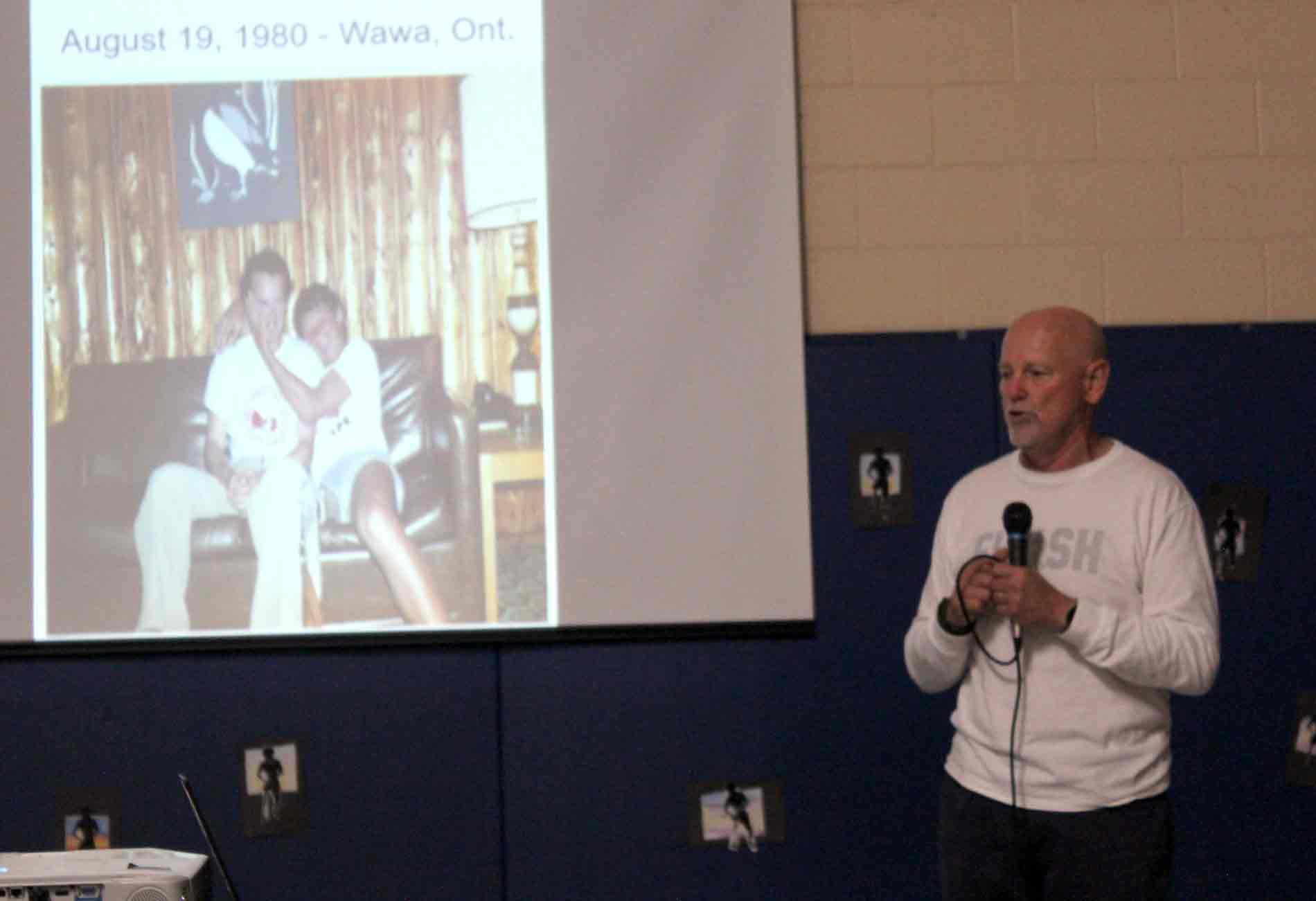
Before Fred presented, teacher Donna McGarr gave an emotional and enthusiastic introduction.
The students were attentive, shouting Terry’s name and calling out questions about why he had a prosthetic leg and how he died.
McGarr choked back tears as she talked about Terry’s death less than 10 months after he ended his run early in 1980. “Everybody in Canada was very sad,” she said.
Terry’s story had a big impact on McGarr – she has a tattoo in his honour, a daughter whose middle name is Terry, about 20 Terry Fox T-shirts, and has visited many of the historic stops along his Marathon of Hope.
“Terry Fox wasn’t able to finish his Marathon of Hope because he got sick and died,” McGarr said, so now it’s up to people across the country to finish it in his honour.
“How?” a young child’s voice rang out.
McGarr explained that by participating in Terry Fox runs, raising money and giving it to doctors trying to fight cancer, students can be just like Terry.
Fred said the last day of Terry’s run was “the beginning of a 45-year legacy that Terry gave us to continue what he started.”
Terry and Fred’s mom spent almost 30 years travelling Canada to tell Terry’s story, Fred said, and she often shared a childhood story of Terry building with blocks. The tower kept tumbling, but “Terry never thought about quitting,” Fred remembered his mom saying – an early indication of the determination for which he is now so well known.
“Mom would say to us all the time, ‘finish what you start,’” Fred said.
Now, there are people in 30 countries working to finish what Terry couldn’t, Fred said, as the Marathon of Hope has become an international movement.
Fred said as a high school athlete Terry was determined to make it onto the basketball team despite his small size.
When the coach told him he wasn’t quite where he needed to be, Terry dedicated his free time to practicing, showing “if you want something bad enough … a little bit of hard work goes a very long way.”
When he started university, Fred said Terry’s friends thought he wouldn’t make that basketball team, and Terry responded, “I won’t know unless I try.”
He did make it, but within a few months was hospitalized because what started as a sore knee became so painful he couldn’t walk.
That’s when he was diagnosed with bone cancer, and his leg was amputated a few inches above his knee.
Fred remembers saying to Terry “why do you have to have cancer?” just when his dreams were coming true – he was on track to become a teacher and achieving success in various sports.
Terry responded “‘Why not me?’” Fred said. “‘All my life I’ve been told I’m not big enough, not good enough.
"This is just another challenge to overcome.’”
When Terry started chemotherapy, Fred said he was more concerned about others suffering alongside him than he was his own pain.
That’s what eventually led Terry to plan his Marathon of Hope, Fred said, because he wanted to do what he could to make a difference for others with cancer.
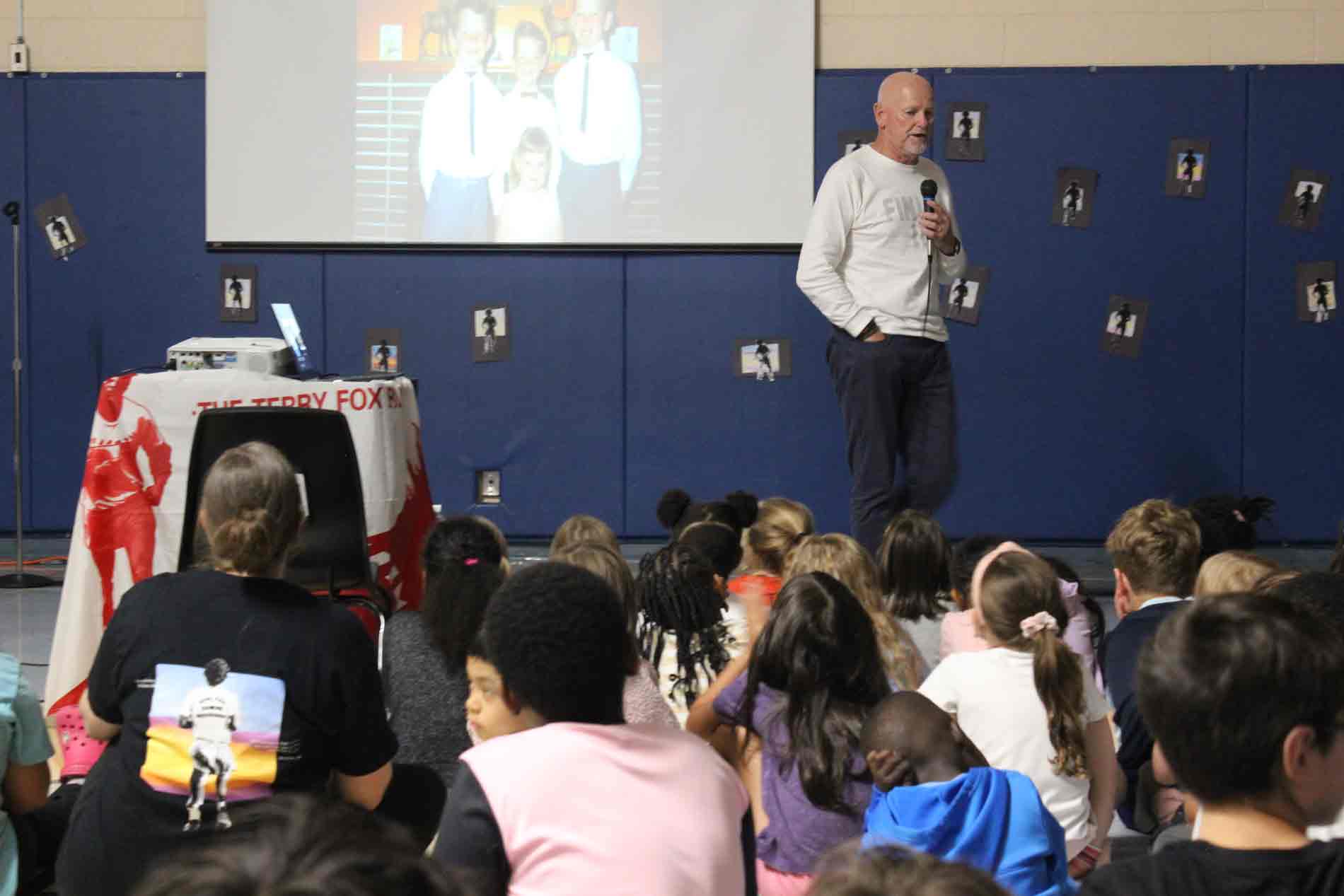
When Terry decided to learn to run with his prosthetic leg – which was designed only for walking – Fred said he’d practice in the dark in front of their parents’ house, so that no one would see him fall.
He kept practicing until he was able to complete a full marathon in 1979. He didn’t care that he came in last place, only that he achieved his goal of finishing the run.
After completing that marathon Terry told his mom his big plan: to run across Canada to raise money for cancer research.
She was initially hesitant, suggesting he run across British Columbia instead of all of Canada, Fred said.
But Terry told her “‘not just people in B.C. get cancer – people across Canada get cancer’ and she couldn’t argue that,” he said.
After the first day of Terry’s run, which Fred said had very limited media attention, Terry began a journal entry with the following words: “Today is the day it all begins.”
Fred said Terry continued writing in that journal, documenting his journey after running 42 kilometres each day.
When Terry ran through Port-Aux-Basques, Newfoundland, he raised $10,000, in the town that then had a population of 10,000, Fred said.
This inspired his brother to aim to increase his fundraising goal to $1 for every Canadian. Today, Canada’s population is about 41 million, meaning he has surpassed his goal by more than twentyfold.
By the time Terry reached Toronto, where Fred ran with him for three days, the run was receiving significant media attention and 10,000 people gathered in Nathan Phillips Square to hear Terry talk, Fred said.
It was through the media that Fred, as well as their parents, found out Terry had been hospitalized during his run.
It was before the days of cell phones, and they were driving across the country at the time, so Terry hadn’t been able to reach them.
They heard the news on the radio, and few details were offered. The Foxes didn’t know why Terry was hospitalized, thinking he could have rolled his ankle.
But when they got home there were lots of messages on their machine, with Terry telling them the cancer had returned to his lungs, and he needed to come home to get better.
Terry died nine and a half months later, but before his death he was appointed to the Order of Canada.
Addressing the students at the Guelph elementary school, Fred encouraged them to follow in Terry’s footsteps by setting goals, working hard and never giving up on their dreams.


