

Hospitals’ fundraising goals threatened by postal disruptions


WELLINGTON COUNTY – Local hospital foundations are caught in the middle of an ongoing labour dispute between Canada Post and the Canadian Union of Postal Workers.
Between now and the new year, residents across Wellington County will be filling in cheques and stamping envelopes to support the Groves, Louise Marshall and Palmerston hospital foundations.
But following a nation-wide strike lasting just over two weeks, and now rotational strikes across the country, mailed donations are caught in limbo and annual fundraising goals for hospital equipment are threatened.
[related]
Groves Hospital Foundation director Lori Arsenault said a $2.7-million fundraising goal for 2025-26 is at risk because of the strikes, which bring mail processing and delivery to a standstill.
Around 70 per cent of donations arrive between October and the new year, Arsenault said.
This year’s big ticket ask is for a $500,000 call bell system upgrade.
“We do still depend on the mail quite a bit … people send donations back to us through the mail,” Arsenault said.
Roughly 53,000 unionized Canada Post workers walked off the job on Sept. 25 in response to the federal government’s changes to the crown corporation’s mandate – the most significant being an end to daily home delivery and potential rural post office closures.
The changes come amid an almost two-year impasse between the union and employer in negotiating contracts for letter carriers.
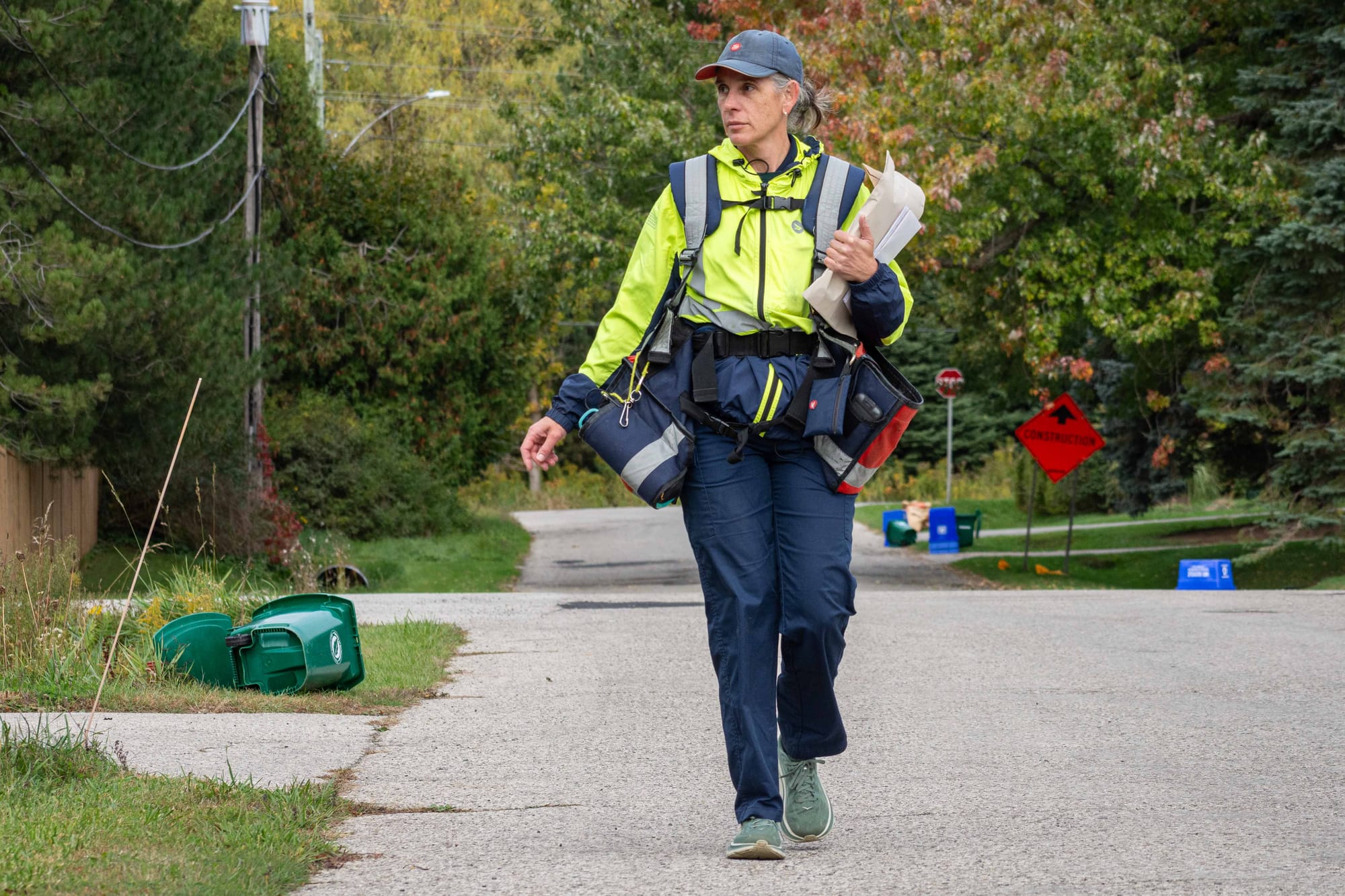
Local carriers were back on the job on Oct. 14, but with the switch in strike tactics and little notice expected for union locals ordered to return to the picket line, there could still be an outsized impact on the heavily mail-reliant foundations.
Louise Marshall Hospital Foundation director Amy Van Huss said last year’s postal strike caused “a significant drop in donations.”
“We rely heavily on the mail for the bulk of our donations,” she said, adding at least 80 per cent of donations arrive by mail.
Between $75,000 and $100,000 is donated during the holiday season each year.
This year, there’s a $150,000 ask for upgrades to a nurse call bell system.
The latest postal strike means the foundation was also unable to mail out promo materials in the lead-up to one of the year’s biggest fundraisers: the annual “Health Care Heros” radiothon on Oct. 18.
“We receive the bulk of our support for this campaign via ‘snail mail’ in response to our campaign newsletter, which we were also unable to circulate via admail through Canada Post,” Van Huss said.
There would be “considerable difficulty” reaching this year’s fundraising goal without Canada Post’s rural reach, she added.
The Palmerston and District Hospital Foundation is also relying on a combination of the radiothon and mailed donations to raise $100,000 for IT system upgrades.
Foundation development officer Dale Franklin said around 75% of donations are mailed in.
“We are down a ton in letter mail, which is challenging at this time because people want to get their donation in before the end of the year,” Franklin said.
“We do still very much have a demographic that likes to pop a cheque in the mail.”
Canada Post said last week that “uncertainty and instability” remain.
The postal union said mail and parcels will begin moving again as it fights for collective agreements.
As of Monday, four union branches remained on picket lines – in B.C., Newfoundland and Timmins.
The hospital foundations are meanwhile ramping up messaging in radio, print and social media to get the word out about fundraisers the hospitals rely on for purchases not covered by the province.
Each foundation offers alternative donation methods, such as phone, online and in-person payments.


