

Elora farmer cultivates potential in ancient crop


ELORA – Fava beans are one of the oldest cultivated plants on Earth – and they’re being grown right here in Wellington County.
First domesticated in the Middle East, the beans form the base of dishes across Eurasia, such as ful, falafel and hummus.
(The beans are also linked to Favism, a rare and potentially deadly blood disorder in those with a genetic abnormality, most prevalently among males in the Mediterranean, that presents after ingesting the beans.)
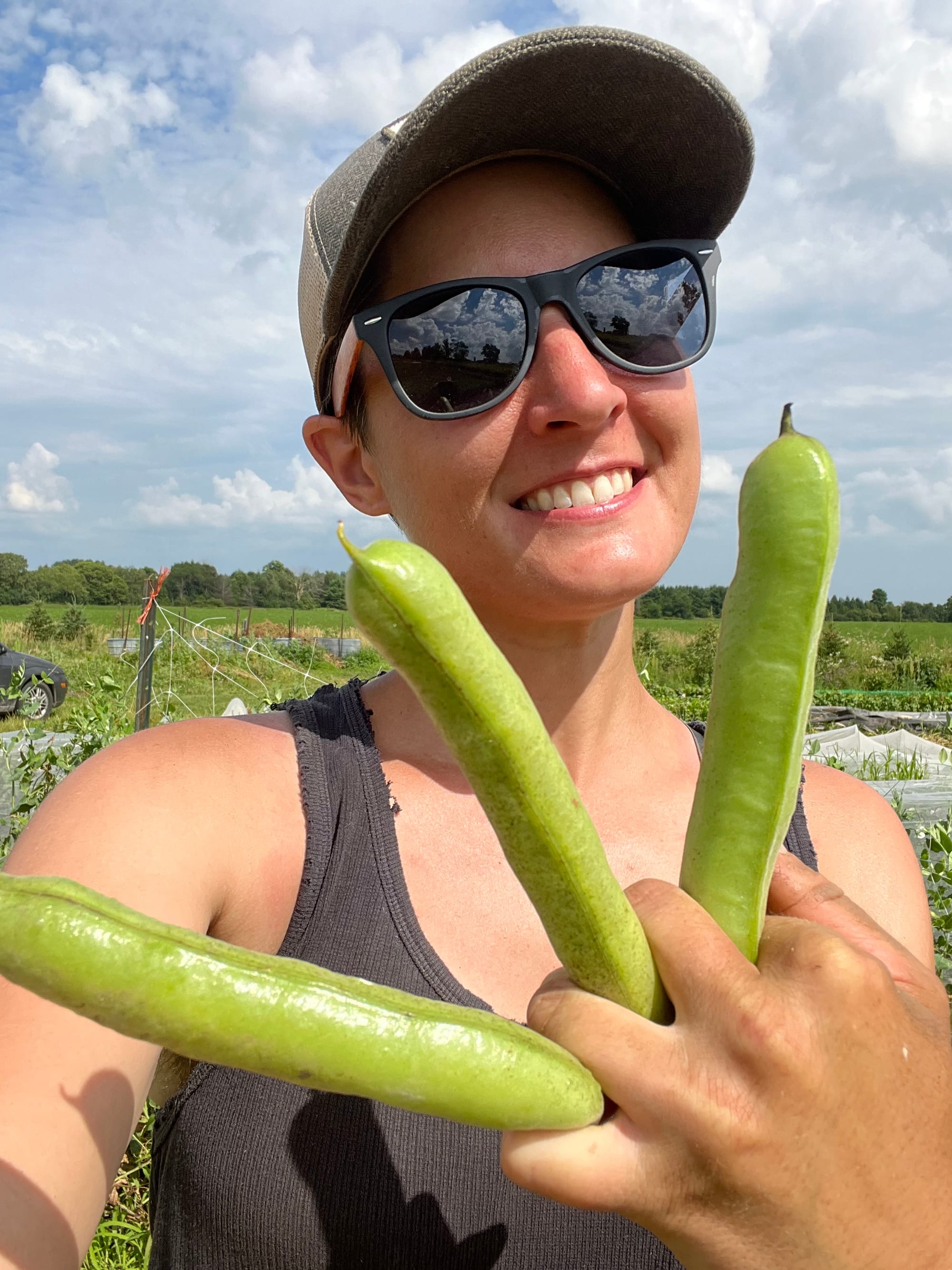
For most, however, they’re a nutrient-rich legume, contributing to healthy soils by fixing nitrogen in the ground.
“I really like fava beans. I like eating them, I like growing them,” Martina Schaefer told the Advertiser.
Schaefer grows veggies, herbs and fruits at Spiral Farm, a quarter-acre plot rented from an Elora farmer, for her community supported agriculture program.
She first introduced fava beans to her customers years ago, and they’ve since become a staple among the 40 to 50 different crops she offers.
“A lot of people love them, [for] some people it’s part of their cultural background, but even if not, I’ve found that people really like having something unique in the shares, but it’s also not something kind of scary in that it’s hard to cook,” Schaefer said.
Fava beans differ from more familiar string or edamame beans. They’re not as starchy and have a texture closer to a lima bean.
Beans grow in a spongy, foam-like padding that lessens with age before being shelled. Each bean has a little skin around it, and some blanch the beans before removing them – depending on what a recipe calls for.
“They’re really good in a tomato-based soup,” Schaefer suggested.
Hiba Sadi, who owns Guelph-based Olive Haven, sells a fava bean dip at the Guelph Farmers’ Market.
To make the popular family recipe, Sadi soaks dried beans overnight before slow-cooking and mashing by hand.
She said she eats the beans often, sourcing from a wholesaler in Mississauga.
Despite their appeal, the beans are mostly available canned or dried.
Schaefer believes there’s a viable future for fresh beans locally, but said the crop faces hurdles here.
Following an unsuccessful growth trial, beset by fungal disease in 2022, the Ecological Farmers Association of Ontario (EFAO) tried again with more varieties a year later.
The 2023 study results – from growers in Toronto, Neustadt, Peterborough and Elora – were published in September, suggesting a successful standout: Andy’s Broad Bean, sourced from BC Eco-Coop.
Schaefer participated in both trials, studying each variety for yield, weight, taste and vigour.
“Slightly bitter, but had a nice texture, softer than others. Largest beans, with some bitterness and would eat again,” Schaefer wrote in her notes about Andy’s Broad Bean
“Really nice looking and big pods, larger beans mean good yields weight wise.”
Unlike other beans Schaefer has grown, fava varieties do well in the cold here – somewhat ironic for a plant popular in warm climates.
“You can plant them before the last frost in spring and they’ll do fine,” she said.
A crop planted in April will be ready for June or July, yielding upwards of 60 pounds from an 80-foot row in a good year, according to Schaefer.
The EFAO trials, she said, help growers using ecological farming practices to home in on what varieties can be regionally adapted.
Short of a decade growing food, Schaefer has noticed increasingly unpredictable seasons, which she attributes to a warming climate.
“The more diversity of crops and varieties I have on my farm, the more resilience I have against difficult seasons,” Schaefer said.
And anything helping to create more resiliency in the food system is a good thing, she added.


