

A financial advisor/planner can help you meet your goals


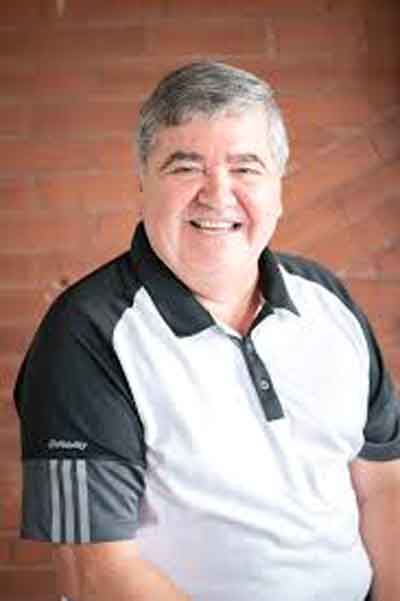
FERGUS – There’s never a bad time to get your money working for you, says Ted Ecclestone, founder of Ecclestone Financial Group in Fergus.
And if you have $25, that’s enough to get started, he says.
“Obviously, the earlier you start, the greater the return,” he said in an interview from his Fergus office.
“But the only time it’s too late (to invest) is after you die.”
His favourite phrase is “if you fail to plan, you plan to fail.” It’s true in life and in finances, he said.
Many of his clients come to him in their early 30s, when home ownership, starting a family and planning for retirement are top of mind.
But he has first-time clients in their 80s and 90s who are investing money to ease their golden years as well.
“There are lots of safe investments you can put your money into,” he said.
Financial planners or financial advisors must pass the Canadian securities course, be licensed and then continue with their education after being licensed.
Markets change, investment products come and go, and advisors must keep abreast of it all, he said.
“Planners know a lot about the scams too, so they don’t fall into the wrong things,” Ecclestone added.
Financial planners know about the stock market, mutual funds, trends in the investment world and government incentives like RRSPs (registered retirement savings plans), RESPs (registered education savings plans) and tax incentives and benefits for first-time home buyers.
Lilian Kim is a senior media relations officer at the Financial Services Regulatory Authority of Ontario (FSRAO), the body that oversees financial services like insurance, mortgage brokers, pensions, credit unions, loans and trusts, financial planners and advisors, and cooperatives.
In an email, Kim said her agency builds in strong protections for consumers “as these professionals must meet minimum education standards, be supervised by an FSRAO-approved credentialing body, and be subject to complaints and discipline processes.”
The FSRAO has a “check credentials” tool on its website “so consumers can verify credentials, standing and disciplinary history before choosing a financial professional,” she wrote.
It can be found at fsrao.ca/consumers/financial-planners-and-financial-advisors.
Planners and advisors are also bound by a code of ethics and confidentiality, which is critical when it comes to personal finances.
Ecclestone says it all starts with that first meeting with a client.
“Each lifestyle has a different motive for saving and a different horizon. We look at you, your cash flow and your financial goals and figure out how to get you there,” he said.
It will require following the plan, however, which will mean tucking money away every month.
“Some people think they can do it on their own and some can. I say good luck,” Eccelstone said. “Most people need a financial coach in their corner.”
Ecclestone stressed that he’s not a lawyer, not an accountant, not a real estate agent and not clairvoyant.
“But a good planner should be dialed in to the community,” he said, adding he often refers his clients to those professionals if asked.
The best way to find a financial planner or advisor you trust is through personal referrals, he said. Ask your friends, your family, your colleagues. Meet with the planner and follow your instincts.
If it’s a good match, you’ll spend many years with them.
Ecclestone got into the business in a round-about way. When he was 14, he studied the stock market and asked his father to invest in stocks for him as he was too young.
When he was 18 his dad signed them back and he had amassed a tidy sum. And on the side, he did taxes for friends and acquaintances “where I saw a lot of T3s and T5s,” he said, referring to statements of investment income.
This got him thinking.
He was trained as a heavy-duty mechanic, but when the dealership where he was working was sold, he landed with a job in insurance.
In 1990 he started his education as a financial planner and in 1993 he opened Ecclestone Financial Group in Fergus, “and I never looked back,” he said.
A good financial planner will listen to the wishes of their client – their goals, their aversion (or not) to risk, and their approach to life.
“You take one bite at a time and eventually you build an investment portfolio,” he said.
“If you want money at the end of the rainbow, you have to have a plan.”


